USD Is Still King of All Currencies Despite Fears of It Losing Global Dominance

‘In the end, the USD’s centrality to the system of global payments also increases the power of sanctions it imposes on other countries or individuals. In truth, since almost all trade is done in American dollars, even trade among other countries, they can always be subject to US sanctions because they are handled by so-called correspondent banks with accounts at the Federal Reserve. By cutting off the ability to transact in USD, Washington can make it uncomfortable for those it blacklists to do business.’

Professor James Allan Discusses Lawfare Against Donald Trump, Mark Steyn

Commenting on the European Court of Justice’s recent ruling against Hungary, Professor Allan opined that the Court’s ‘interpretive approach to reading the underlying legal materials is living constitutionalism on steroids.’ He added: ‘If it were an American court or a Canadian court doing it, I’d say they’re making it up at the point of application, they’re just making the law up. When that starts happening it’s very difficult to know how to deal with it.’

St Ladislaus fighting the Cumans — detail of a mural in the Early Gothic (14th c.) Lutheran church of Karaszkó (Kraskovo), Slovakia

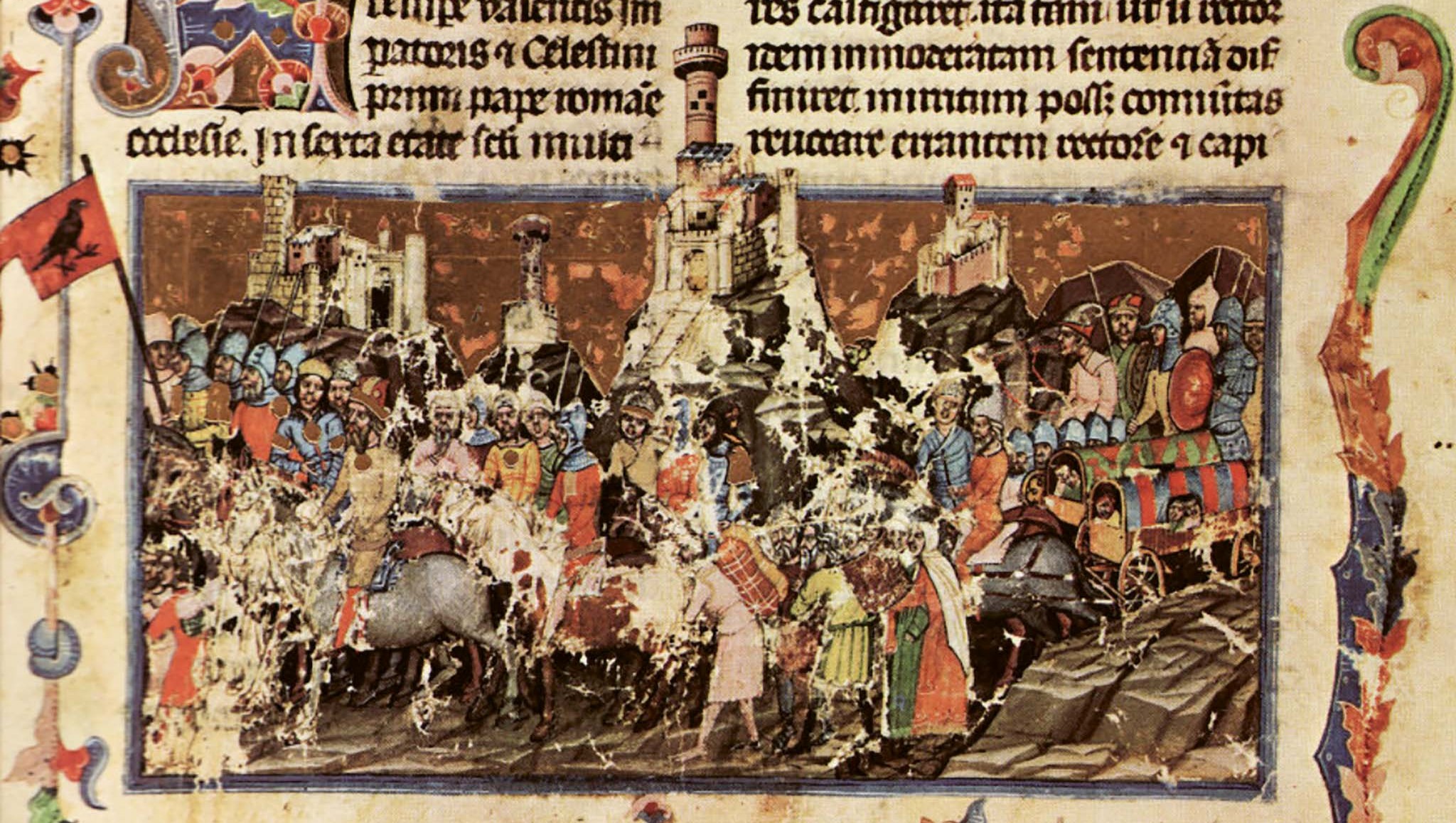
Cumans in Medieval Hungary

The great confederation of the Cumans was one of the steppe tribal confederations of Turkic origin, which successfully represented and spread the once mighty ‘steppe civilization’ to a significant part of Eastern Europe. Although the Cuman state was unfortunately destroyed in the power and political dimensions, the descendants of the Cumans still live here among us in Hungary. People with Cuman-Hungarian identity greatly enriched the medieval (and modern) Hungarian nation and strengthened the Eastern relations of Hungarians alongside the also vital Western connections.

Portrait of Vladislaus II on the letter patent of nobility of János Gersei Pethő.

The Last Jagiellonians on the Hungarian Throne and Their Chronicler — The Champions of Christianity and Their Criticism

The contrast between the brilliant achievements of King Matthias Corvinus of Hungary and the inertia of the kingdom of the Jagiellonians is almost a cliché in Hungarian history. To this day, many seek the causes of the 1526 Mohács tragedy in the damaging reign of the weak Jagiellonians. However, more recent Hungarian and international historical research has taken a much more positive view of the Dynasty’s performance.

Jean Godefroy, The Congress of Vienna (1819). Museu Histório e Diplomático – Palácio do Itamaraty, Rio de Janeiro, Brazil

Sovereign Yet Confederal?

‘The ideological models that had emerged at the turn of the eighteenth and nineteenth centuries…had transformed social thinking and humanity’s view of the world to such an extent that it was impossible to maintain and preserve the earlier, semi-feudal Europe. This in turn meant that ethnicity and nationality, previously considered less significant elements…became a determining factor, leading not only to an exploration of the historical past of a given community, in the search for national heroes, but also to a demand for political unification with ethnic or linguistic compatriots within a single country.’

A golden plaque depicting a Turkic warrior from the Gokturk period (6th or 7th century)

The Hungarians and the Turkic Peoples: Relatives, Enemies, or Friends?

The Hungarian and Turkic people (or rather, peoples) are connected in many cultural and even genetic ways. The Byzantine emperor Constantine VII Porphyrogenitus called the Hungarian conquerors ‘Turks’, and the sons of the House of Árpád (Turul gens in medieval Hungarian sources) were later called ‘Princes of Turkey’ by the Byzantines. In the origin myth of the Hungarian royal dynasty, the ‘Turul bird’ is also of Turkish origin, as the symbol of the Sky and of the supreme God of Turkish myths, where it appears as toġrïl or toğrul.

La Paz skyline (Wikimedia)

Frontiers of Our Diaspora: Hungarian Emigrants in Bolivia

Refugee groups started trickling in after the catastrophic defeat of the Austro–Hungarian empire in the First World War and the dismembering of the historical Hungarian Kingdom, resulting in the loss of many ethnically Hungarian territories for Hungary. The destruction of the war and the discriminative policies of the new states prompted many Hungarians to seek a better life beyond the sea. Latin America soon became an important emigration target, as the United States started to severely restrict immigration from Eastern Europe in the 1920s.

The execution of Saint Adalbert by the pagan Prussians on the bronze door of the Gniezno Cathedral.

Adalbert of Prague, Saint of the Peoples of Central Europe

Politics permeated St Adalbert’s tragic life as much as the birth of the then-nascent and emerging states of Poland, Bohemia, and Hungary. That is the way Adalbert became the patron saint of all three Central and Eastern European Kingdoms, helping them to preserve their independence and join medieval Europe as autonomous Christian communities.

Transylvanian fortified church, 1913

‘The Idea of a Christian Society’

‘Today, we are faced with the fact that in our pluralistic societies, it seems to pose an insurmountable challenge to agree on a generally accepted moral standard, with values that provide common foundations.’