Gustave Doré, Arrival of Charon (1857). Illustration to the Divine Comedy by Dante Alighieri. Private Collection

Navigare necesse est: The Reshuffling of the World Order as Seen from Hungary

‘As opposed to the European mainstream, which proclaims multiculturalism but in reality wraps itself up in cultural arrogance, Hungary’s openness and pragmatic stance towards the seven eighths of the world that is outside the Western realm already confer an advantage upon us. If the framework of the world as we know it crumbles against our will, this cultural openness of ours may well supply the footing for us from which to enter the next period with confidence. For navigare necesse est—Sail we must.’

A view shows aftermath of recent shelling, what local officials called a Ukrainian military strike, in Belgorod on 11 May 2024.

Can Russia Occupy Ukraine AND Attack the Eastern Flank of NATO?

‘The vestiges of Cold War thinking continue to linger on, with the fear of a hypothetical Russia–West conflict escalating into a war that ends civilization imprinted on our minds so much that it has never actually gone away. Nevertheless, it must be recognized that Russia has lost much of its power compared to its Communist era strength and would struggle if it wanted to fight against the West. To be precise, barring the suicidal option of launching a nuclear holocaust and burning everyone, including itself, to smouldering ashes, Russia is not even economically competitive enough to master sufficient military power to achieve superiority in brute force over Ukraine, not to mention having the strength to go on and attack any NATO country.’

David Cameron and Péter Szijjártó in their meeting on 8 May 2024 in London.

Szijjártó Meets Cameron in London, Delivers Remarks at Chatham House

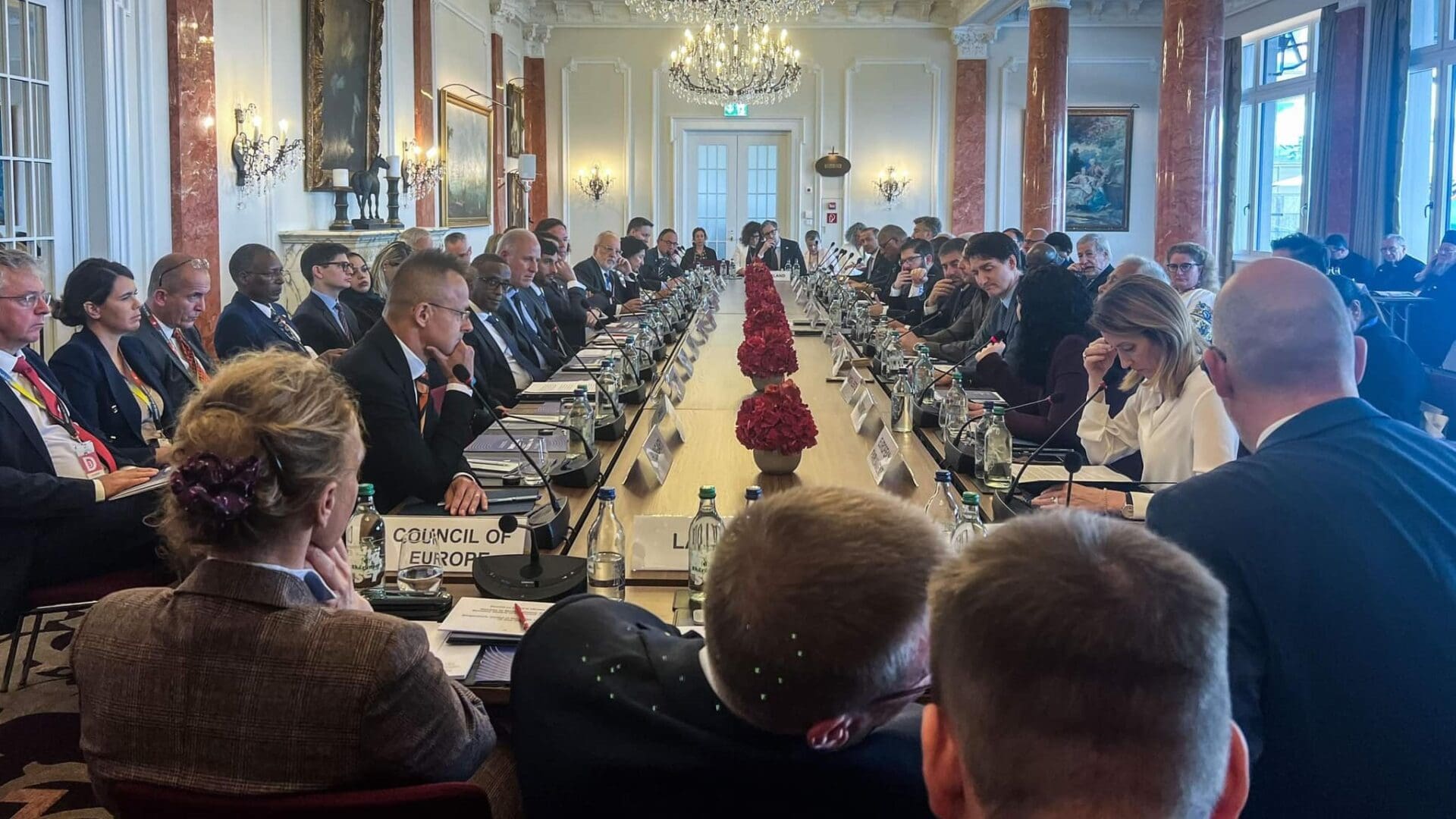
The Hungarian Foreign Minister was in London on Wednesday for talks with his UK counterpart, David Cameron, discussing the war in Ukraine, migration, and energy issues. Péter Szijjártó also participated in a panel discussion at the Royal Institute of International Affairs, arguing, among other things, for the need to replace the Brussels leadership.

Jacques-Louis David, Oath of the Horatii (Le Serment des Horaces) (1784). Musée du Louvre, Paris, France

Constitutionally Immune to International Disorders Affecting Sovereignty

‘Democracy, as a concept, is inherently subject to interpretation and enforcement from within. This underscores the imperative: political disputes find resolution within domestic arenas and nowhere else, and unwavering loyalty is owed solely to one’s political adversaries, without allegiance to any foreign entity.’

George Simion, the leader of the Alliance for the Unity of Romanians (AUR) party takes part in a rally to promote their candidates for the EU elections in Târgoviște on 7 April 2024.

Unwanted Radicalism? — Romania Ahead of a Busy Election Year

‘The complicated political system, and the fact that the people are called three separate times to the polls this year may lead to the success of the more radical messages, because they are simple and smartly formulated. However, according to a survey conducted in April, more than half of those surveyed stated that in the European Parliament elections, they would vote for the party to which their preferred candidate for mayor belongs. This reflects the tendency of trusting local policy makers rather than politicians at the national level who constantly argue with each other in the capital city.’

The Ship of Fools

‘Our continent is effectively under siege—we can see that if we are willing to move away from the narratives that interpret migration solely as a ‘refugee issue’ and acknowledge that mass migration can also be a tool for terrorism and destabilization. The number of irregular migrants arriving in the Canary Islands more than tripled in January this year compared to the previous year. Germany is overwhelmed. Reception capacity was already exceeded in 2023, when 330,000 asylum applications were submitted in just a year, mostly from Muslim countries.’