‘Young people are interested, but just not familiar enough with Hungarian organizations’ — An Interview with Hungarian American Coalition Fellow Luca Mórocz

Luca Mórocz, who came to the U.S. in 2017 as a Hungarian American Coalition (HAC) intern and has worked as a foreign exchange diplomat at the Hungarian Ministry of Foreign Affairs assigned to the U.S. State Department’s Global Coalition to Defeat ISIS, is currently living and studying in Washington, D.C., organizing various HAC events and a leadership training program. In the interview she talks about her experience in the US, her professional career, and shares her thoughts regarding the challenges of youth engagement Hungarian organizations in the United States face while introducing her new project, the HYPE Network.

General view taken on 4 April 1949 in Washington of the official signing ceremony creating the North Atlantic Treaty Organization (NATO)

Congressional Foreign Policy in the Era of Renewed Geopolitical Competition: US Commitment to NATO

‘The four camps of congressional foreign policy suggest different readings on the transatlantic alliance. From a liberal universalist perspective, NATO is not just a political and military alliance focusing on collective defence, but rather a collective security cooperation based on shared values. A pragmatic liberal argument views NATO as an institution where allies’ interests and values can be aligned, whereas a prudential realist understanding highlights the alliance’s role in pursuing US interests in accordance with US values. Lastly, from a strict realist perspective, NATO is the contemporary embodiment of an American sphere of interest in Europe.’

Viktor Orbán: May the European Right Be Reborn!

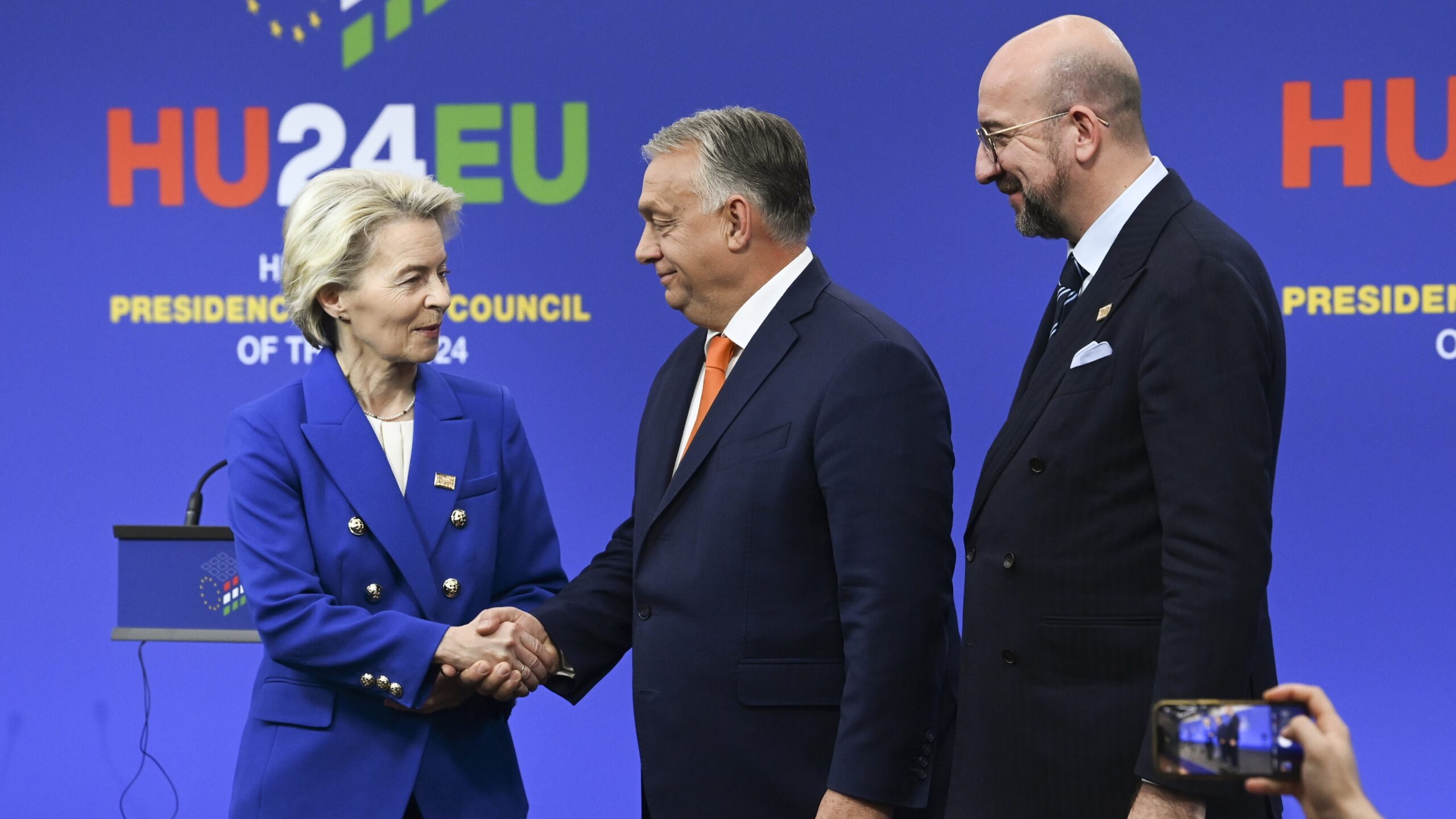
Hungarian Prime Minister Viktor Orbán gave an interview to the Italian newspaper Il Giornale, in which he stressed that the current European Commission led by Ursula von der Leyen has failed regarding everything from war to agriculture. He emphasized that there is no other choice: the European right must take over after the elections.

Conservatives Win Big in Supreme Court Election in Georgia

Incumbent conservative judge Andrew Pinson beat his liberal challenger John Barrow by 10 points in an election for a seat on the Supreme Court of Georgia last Friday. That is despite the fact that Barrow made abortion rights the centre message of the campaign, which is perceived as one of the strongest issues for Democrats in the 2024 presidential election.

Germany, the leading power of the EU?

Führungsmacht Germany?

‘Germany’s slow and opaque stance on helping Ukraine in its war against the Russian invasion can also be seen as reactive rather than proactive…One reason for Germany’s caution is of course a certain degree of self-consciousness—the country that produced Nazism wants to be seen as kind and respectful, not powerful or dominant. Yet all others know that it is indeed powerful, and interpret even Germany’s silence.’

Johann Wenzel Peter, Adam and Eve in the Garden of Eden / Adam and Eve in the Earthly Paradise (1800– 1829). Vatican Museums, Vatican City, Rome, Italy

History’s Relentless Turn

‘The emerging multipolar, multicivilizational world still needs and will be grateful to have a strong, rational, reliable, and consistent Western civilization…But for that to happen, common sense will have to rule us, and we must consign postmodern liberalism and the Cult of Woke to the trash heap of history.’

Ludwig Seitz, Faith and Reason United (ca. 1887). Galleria dei Candelabri, Vatican Museum, Vatican City, Rome, Italy

Could Europe Turn to the Right?

‘The forthcoming European Parliament elections hold particular significance…As Orbán emphasized in his address on 15 March: “We are on the brink of a sovereign revolution in America and Europe, where normal life can be restored, and a great era of Western nations can commence.”’

Gustave Doré, Arrival of Charon (1857). Illustration to the Divine Comedy by Dante Alighieri. Private Collection

Navigare necesse est: The Reshuffling of the World Order as Seen from Hungary

‘As opposed to the European mainstream, which proclaims multiculturalism but in reality wraps itself up in cultural arrogance, Hungary’s openness and pragmatic stance towards the seven eighths of the world that is outside the Western realm already confer an advantage upon us. If the framework of the world as we know it crumbles against our will, this cultural openness of ours may well supply the footing for us from which to enter the next period with confidence. For navigare necesse est—Sail we must.’