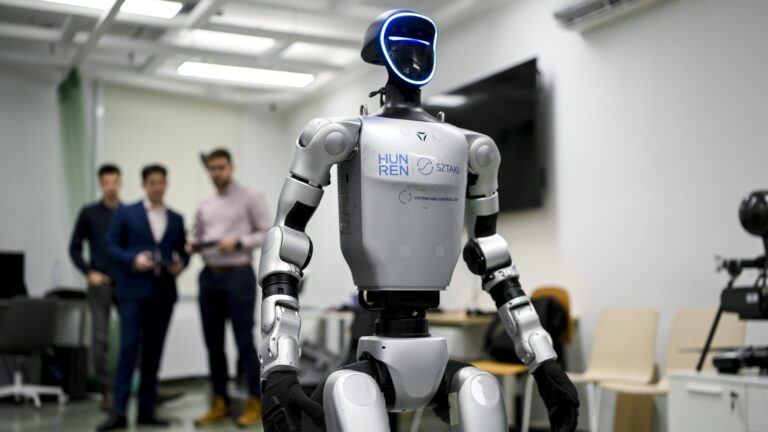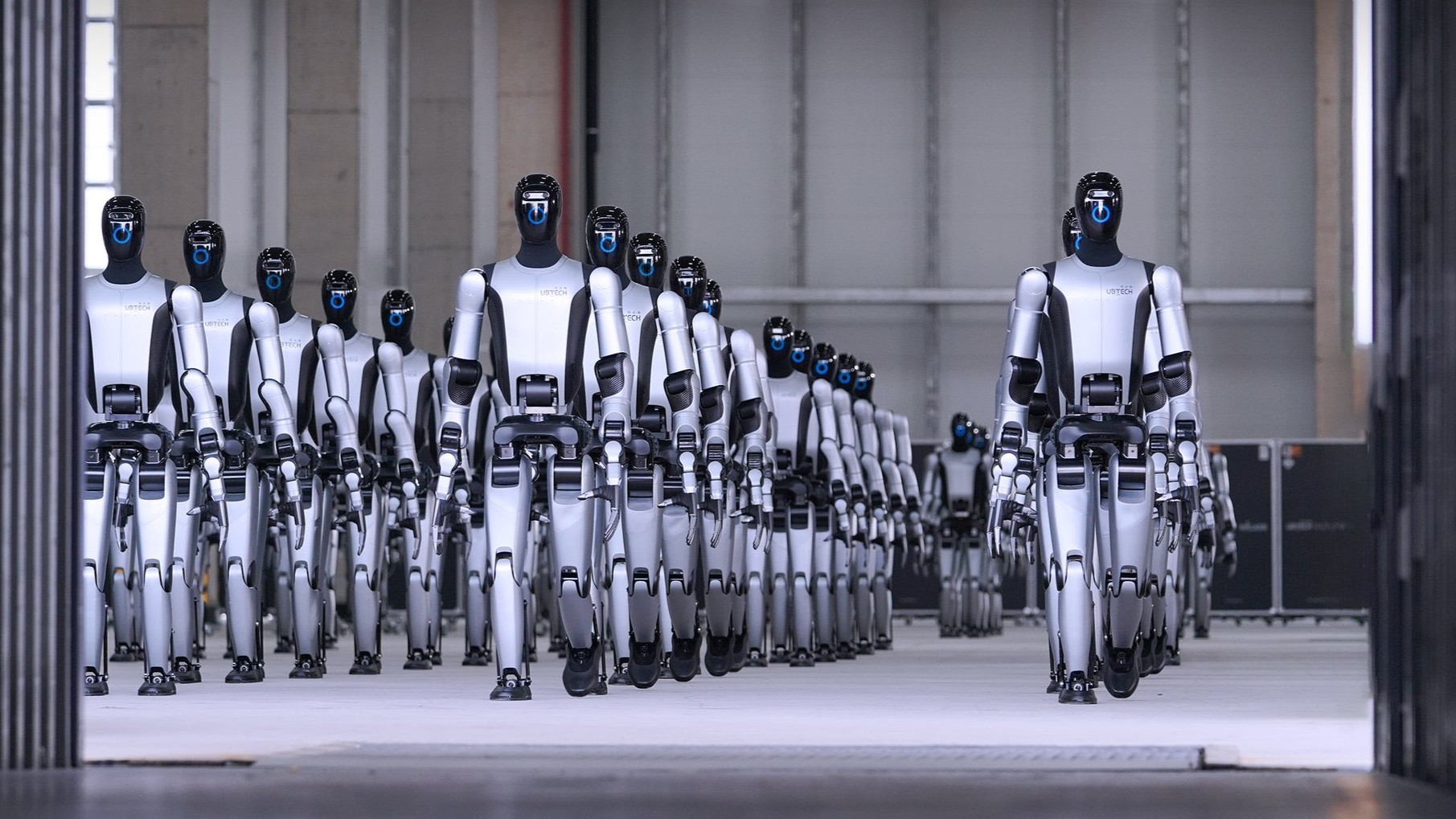
China is preparing to introduce unconventional new units at the Fangchenggang border crossing in the Guangxi region along its frontier with Vietnam: humanoid robots developed by Shenzhen-based UBTech Robotics. Under a contract worth roughly 264 million yuan (about $37 million), the industrial-grade Walker S2 humanoids are scheduled to support patrol, inspection, and logistics operations at the busy transit hub.
The initiative reflects Beijing’s broader push to integrate advanced robotics and artificial intelligence into public-facing infrastructure and security environments. UBTech’s Walker S2—launched in mid-2025 and described as the first humanoid robot capable of autonomously replacing its own battery—will assist officials with crowd guidance, inspections, and operational support rather than fully replacing human personnel.
Technically, the Walker S2 is designed for continuous real-world deployment. Its dual-battery system enables autonomous battery swapping in roughly three minutes, allowing near-24-hour operation without shutdown, while standardized modules and backup power ensure uninterrupted task execution. Such capabilities are central to China’s ambition to scale humanoid robots from experimental prototypes into reliable infrastructure for logistics, manufacturing, and public-service environments.
China Deploys Humanoid Robots at Vietnam Border Crossings
China Deploys Humanoid Robots at Vietnam Border Crossings China is rolling out humanoid robots at key border crossings near Vietnam-their most visible public security use yet. Designed to assist, not replace humans, these robots guide travelers, manage queues, patrol checkpoints, and support staff, equipped with AI, sensors, and self-charging capabilities.
The deployment is also viewed as a stress test for large-scale humanoid use in complex, high-traffic settings. Border crossings must process steady flows of trucks, buses, and daily travellers without disruption, making them an ideal proving ground before potential expansion to airports, seaports, and major railway stations.
The company behind the humanoids, UBTech, is rapidly expanding into global industrial markets. Orders for its humanoid robots exceeded 1.4 billion yuan (around $200 million) in 2025, and the company has secured international partnerships—including supplying Walker S2 units for Airbus SE and semiconductor manufacturing—signalling accelerating commercial adoption of embodied AI systems. Production is likewise scaling sharply, with hundreds of units already shipped to factories and ambitions to reach thousands of robots annually within the next few years.
Humanoid robots could also be a game changer for European border protection. Such potential development would build on an already rapidly advancing technological landscape shaped by persistent migratory pressure. Frontex, the EU’s border and coast guard agency, is increasingly relying on high-tech surveillance tools to enhance situational awareness, detect cross-border crime, and reduce the operational burden on ground personnel.
‘Humanoid patrol robots could represent the next step in Europe’s gradual shift towards automated, AI-supported border control’
These unmanned systems already support intelligence, surveillance, and reconnaissance missions across thousands of kilometres of land and maritime borders, contributing to reductions in irregular crossings and criminal activity while enabling continuous monitoring and emergency response. At the same time, Frontex integrates satellite-based Copernicus data, aerial surveillance feeds, and EU-wide risk analysis into a 24/7 operational picture of migration flows and security threats. In this context, humanoid patrol robots could represent the next step in Europe’s gradual shift towards automated, AI-supported border control—offering a persistent physical presence at crossing points as migratory routes remain volatile.
Hungarian Government Commissioner for Artificial Intelligence László Palkovics visited Israel at the end of last March, stating that technological cooperation between the two countries could soon yield groundbreaking results, including the manufacturing of humanoid robots in Hungary. According to the government commissioner, these high-tech machines are already market-ready in Israel and awaiting delivery to commercial firms. ‘The technology is now beyond the experimental phase and ready for mass production,’ he explained. The robust automotive sector in Hungary makes it a perfect place for mass production of humanoids, indicating that the country, placing significant efforts on border protection, could be the first to follow the Chinese example in Europe.
Related articles: