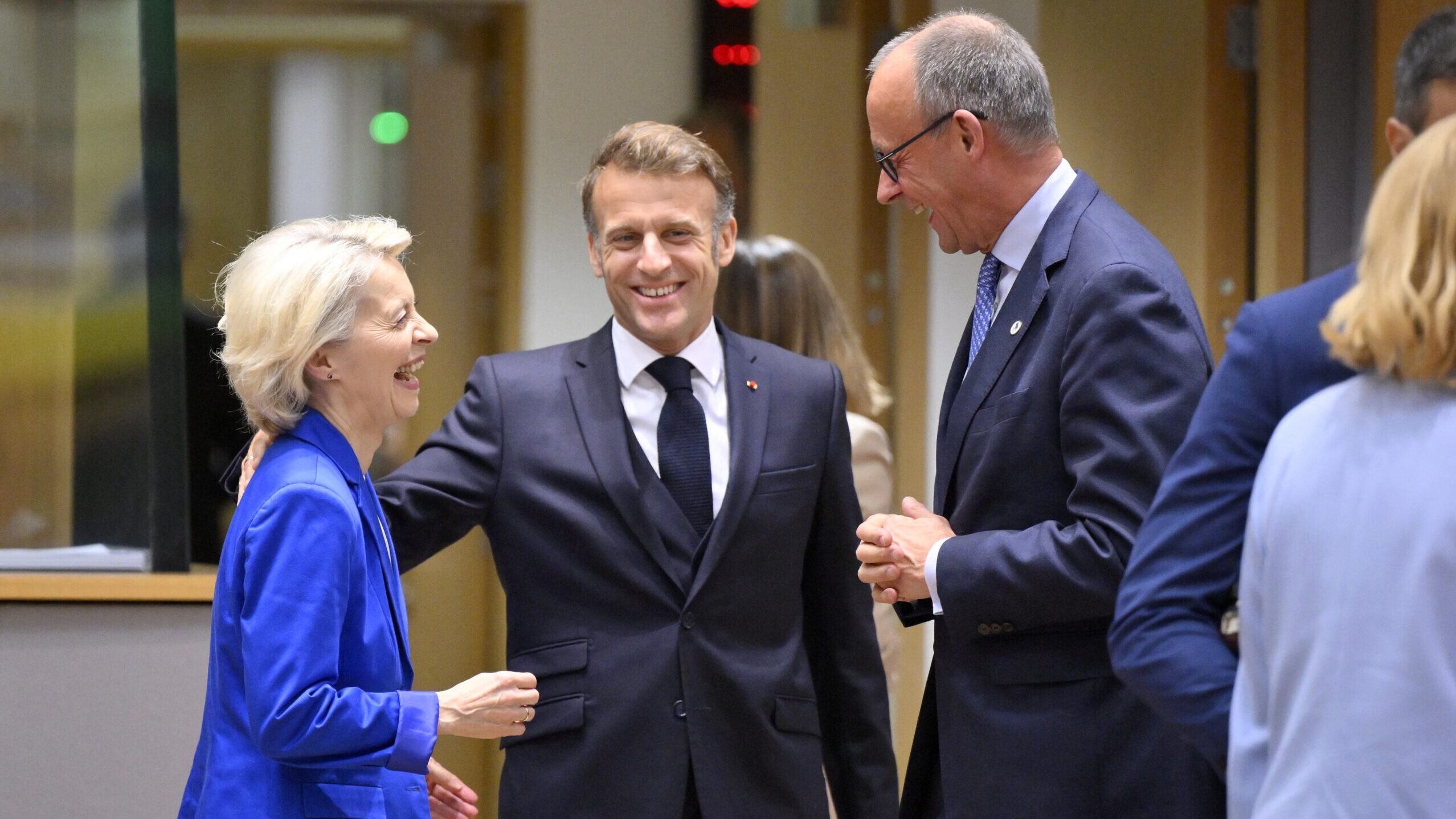
‘It is not on us, when it comes to elections, to decide who the leader of the country will be, but on the people of this country…That’s the sovereignty of the voters, and this must be protected,’ European Commission President Ursula von der Leyen responded recently to US President Donald Trump’s statement on the weakness and incompetence of European leaders. However, considering recent developments in EU member states, von der Leyen’s words amount to little more than bare hypocrisy.
In the past years, the European Union and the globalist-progressive elites ruling EU institutions and most Western European member states have moved increasingly towards authoritarianism, oppressing dissenting voices and political forces, often using clearly undemocratic tools to do so.
Stolen Election in Romania
The most vivid example is the annulled presidential race in Romania in December 2024. At the time, right-wing ultranationalist and Eurosceptic Călin Georgescu won the first round, advancing to a run-off against the pro-EU Save Romania Union’s Elina Lasconi. However, the outcome was swiftly thrown into turmoil: on 6 December, the Constitutional Court annulled the first round, citing alleged Russian interference that amplified Georgescu’s online presence. Declassified intelligence claimed Kremlin-style TikTok operations and up to €1 million in undeclared third-party financing. These claims, however, were never proven.
EU leaders and then-Democrat US President Joe Biden welcomed the decision, stating that it was essential for the integrity of Romanian democracy to ban candidates like Georgescu. Massive demonstrations erupted in support of Georgescu, but the EU mainstream ultimately succeeded: Georgescu was barred from running in the rearranged elections, and pro-EU candidate Nicușor Dan won the race. Since then, as the pro-EU coalition has implemented Brussels’ recommendations, Romania has been heading towards state bankruptcy.
While attempting to justify the annulment as election-interference prevention, EU elites openly admitted to interfering in member-state electoral processes. Speaking on French television, former European Commissioner Thierry Breton—the same Breton who sent a warning letter to Elon Musk instructing him not to interview Donald Trump on X during the 2024 presidential race—claimed that the EU indeed has mechanisms to overturn elections. ‘We did it in Romania, and obviously we will do it in Germany if necessary,’ Breton said, referring to the February 2025 German elections.
Myriam Palomba on X (formerly Twitter): “Incroyable. Le censeur pro européen Thierry Breton vient d’avouer que l’UE avait fait annuler les élections en Roumanie et qu’elle se permettra de le faire aussi en Allemagne si l’AFD gagnait. Il n’y a donc plus aucune élection libre dans cette Union Européenne de misère ! Le… pic.twitter.com/chsfMvX33F / X”
Incroyable. Le censeur pro européen Thierry Breton vient d’avouer que l’UE avait fait annuler les élections en Roumanie et qu’elle se permettra de le faire aussi en Allemagne si l’AFD gagnait. Il n’y a donc plus aucune élection libre dans cette Union Européenne de misère ! Le… pic.twitter.com/chsfMvX33F
Not Compatible with Free Democracy
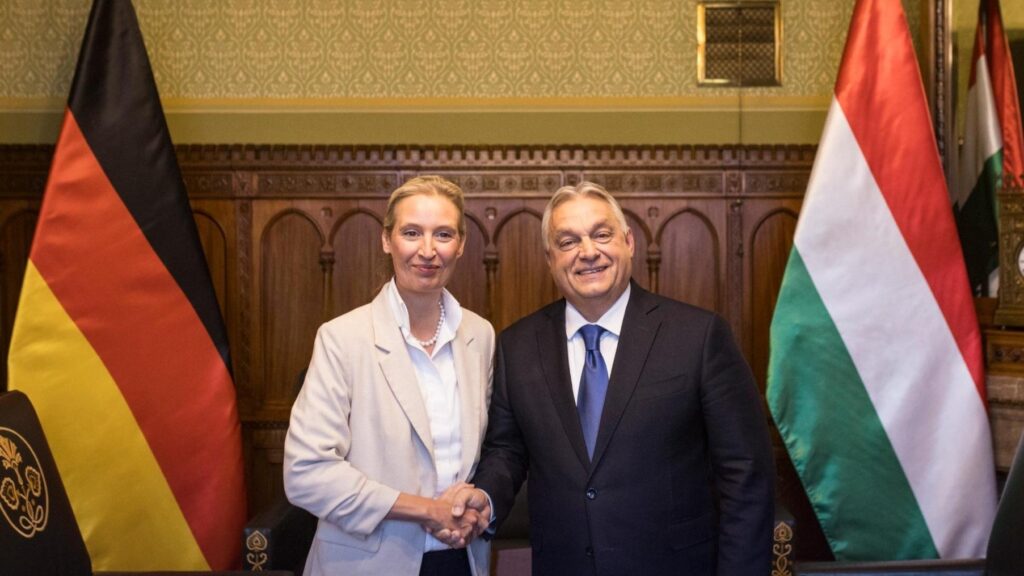
This leads to the next clear example of Western Europe’s democratic crisis: the case of Alternative für Deutschland (AfD). Currently the largest party in Germany, the right-wing anti-immigration AfD has been the target of relentless smear campaigns, demonization and even state surveillance by German and EU mainstream institutions. For its dissenting views, AfD has been designated an ‘extremist’ party ‘not compatible with free democracy’, granting secret services expanded powers to investigate it.
More recently, in the state of Rhineland-Palatinate, authorities have barred AfD members from running for mayor unless they sign an affidavit guaranteeing they ‘uphold the democratic constitutional order’. This clearly authoritarian rule has already been applied to individual AfD candidates such as Roberto Kiefer, and previously to Joachim Paul in Ludwigshafen. Stripped of bureaucratic phrasing, this is a de facto exclusion of AfD candidates from public office.
‘Stripped of bureaucratic phrasing, this is a de facto exclusion of AfD candidates from public office’
Given how aggressively the European Commission pursues alleged rule-of-law breaches in member states such as Hungary, one would expect legal proceedings to be under way against Germany for such blatant anti-democratic practices.
On the contrary, the Commission and the majority of the European Parliament applaud Germany for cracking down on AfD. Von der Leyen recently labelled AfD ‘Putin’s puppet’ and accused the party of amplifying Russian influence, undermining democratic norms and acting against European interests.
Le Pen’s Struggle
The situation is no brighter in France. Ruled by one of the leading figures of the EU elite, Emmanuel Macron, the country has been mired in a democratic crisis since July 2024. At that time, mainstream and left-wing parties combined forces to prevent Marine Le Pen’s right-wing National Rally from winning early elections and forming a government. In doing so, they plunged the French Parliament into a deadlock that has remained unresolved for more than a year.
Meanwhile, a French court convicted Le Pen of allegedly embezzling European Parliament funds, claiming that between 2004 and 2016 she and several National Rally MEPs used EU funds intended for parliamentary assistants to support party-related work. The court barred Le Pen from running for office for five years, making her ineligible for the 2027 presidential race. The trial was widely described by many—including Hungarian Prime Minister Viktor Orbán and Donald Trump—as political persecution.
‘The European Union in its current state is not a defender of democracy’
That interpretation gained further credibility by the fact that on 28 March, just three days before Le Pen’s conviction, the French Constitutional Council ruled that politicians could be barred from holding office immediately after conviction, even while appeals were pending. The Council’s president, Richard Ferrand, is not only a long-time political ally of Macron but one of his earliest and closest supporters from the 2016 campaign. Macron appointed Ferrand to head the Constitutional Council in February 2025.
While this case raises serious questions about judicial independence and the rule of law, the European Commission has neither commented nor acted. This brings us back to von der Leyen’s statement and the sheer hypocrisy of EU elites when speaking about democracy. As the examples above illustrate, the European Union in its current state is not a defender of democracy. It has become one of the greatest enemies of democracy and electoral sovereignty in Europe.
Related articles: