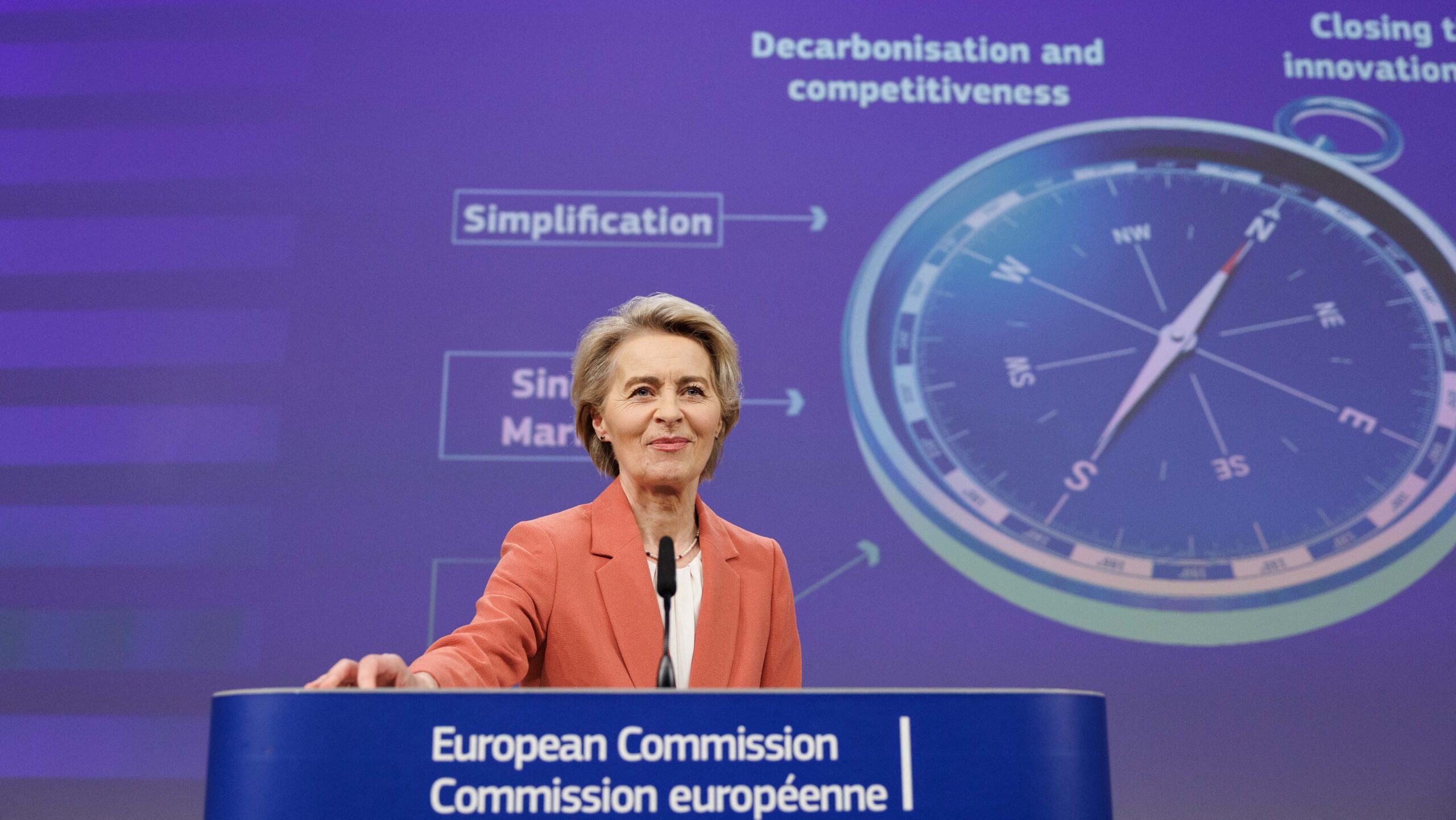
Introducing the so-called Democracy Shield—the continuation of the Commission’s Defence of Democracy package, a set of initiatives aimed to protect European democracy—was one of Ursula von der Leyen’s key re-election promises. Eventually, the Commission President formulated concrete actions to deliver the package only about a year after her re-election. After this long period of silence, Ursula von der Leyen followed up on it in her annual State of the Union address, while the Commission published a paper outlining the initiative’s key elements two months later, in mid-November. The stated aim of the European Democracy Shield initiative is to strengthen Europe’s information integrity and to tackle election interference.
The package is specifically focusing on Russian interference in the bloc through ‘state or non-state proxies’. ‘By spreading deceitful narratives, sometimes including the manipulation and falsification of historical facts, they try to erode trust in democratic systems’—warns the Commission about foreign interference and calls EU Member States, as well as candidate countries, to counter and prevent the spread of these narratives.
To a large extent, exaggerated fears in Europe about Russian election meddling are connected to the experience of last year’s Romanian presidential campaign. Allegedly, Russian bots supported the ultranationalist candidate Călin Georgescu to rapidly gain popularity online and subsequently win the first round of the 2024 election. The second round was about to begin when the Romanian constitutional court annulled the election and ordered a re-run. Later, Georgescu was barred from running, and a radically different, liberal candidate became Romania’s President.
Shortly after the cancelled elections, Brussels launched an investigation against TikTok, the platform that allegedly enabled the interference. Now, Brussels is using the Romanian case to justify the need for preventive measures outlined in the Democracy Shield.
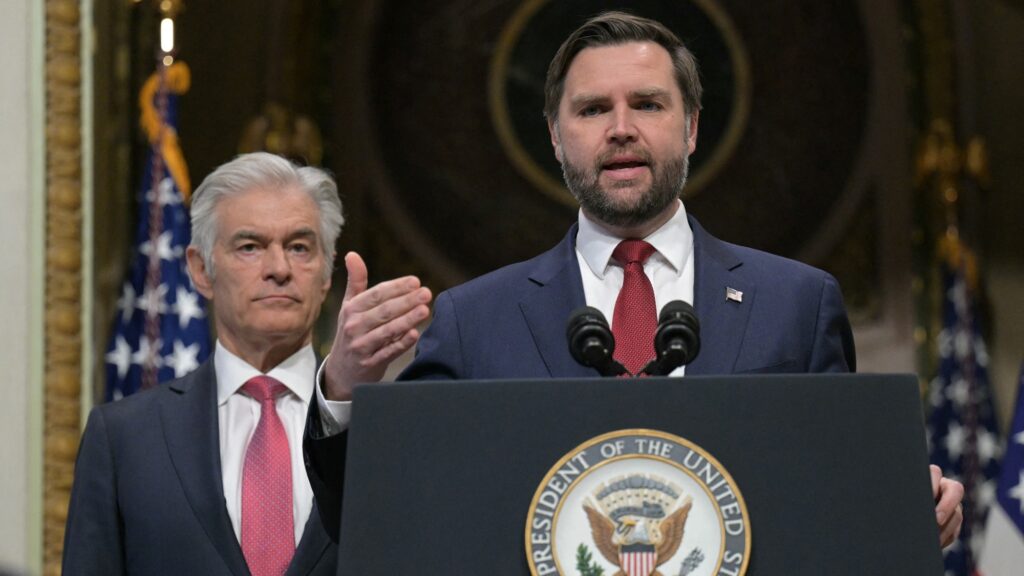
‘US Vice President JD Vance already warned Europe…that the real threat to European democracies is not Russia or China, but an internal enemy’
Part of Ursula von der Leyen’s action plan to ‘shield democracy’ is to set up a hub to detect, monitor and prevent harmful foreign interference and misinformation campaigns. The centre is called the European Centre for Democratic Resilience. According to the Commission’s plans, it would draw on expertise from Member States and rely on the knowledge of fact-checking networks to do its work.
Needless to say, the European Union already funds members of civil society and academia for verifying information and monitoring the media. That is, the centre’s role would be to harmonize the efforts of these actors across the 27-member-strong bloc. In addition, the Commission also pledged to put together a ‘voluntary network of influencers to raise awareness about relevant EU rules and promote the exchange of best practices’.
Extension of Brussels’s Competences
It is important to note that the European Union has no competence in ‘defending democracy’. On the one hand, the European Commission seeks to cover such a wide range of areas in its Democracy Shield initiative—from fact-checking to detecting malicious foreign influence—that many of these fields do not fall under exclusive EU competences. On the other hand, it is essential to stress that several aspects of safeguarding democracy, such as countering foreign interference—a key aim of the initiative—clearly fall within the Member States’ exclusive national security competence, which is (or should be) beyond the scope of the Commission’s powers.
Perhaps because it had to acknowledge this limitation, some elements of the Democracy Shield are only optional for Member States—ie, joining the European Centre for Democratic Resilience is voluntary. Ironically, within the Brussels bubble, the initiative received criticism precisely for its non-binding nature. Little did these critics remember that one of the EU’s principles is the conferral of competences.
Brussels’s Ministry of Truth
However, the issue with the Democracy Shield is not merely that the EU lacks competence in this field, but also that such initiatives may easily slide into censorship. US Vice President JD Vance already warned Europe in his influential Munich Security Conference address that the real threat to European democracies is not Russia or China, but an internal enemy—one that seeks to censor and suppress free thought.
Right-wing forces fear that the Democracy Shield will become yet another example of liberal media censorship, undermining free speech. ‘New tool for Brussels’s censorship: The European Commission has launched the so-called “Democracy Shield”—another move to control free speech,’ Fidesz MEP Kinga Gál warned on X.
Kinga Gál on X (formerly Twitter): “New tool for Brussels’ censorship: The @EU_Commission has launched the so-called “Democracy Shield” – another move to control free speech.”Fact-checkers” and politically driven NGOs would get control over public debate. This isn’t about defending democracy, it’s about… pic.twitter.com/q9VLU7IW8L / X”
New tool for Brussels’ censorship: The @EU_Commission has launched the so-called “Democracy Shield” – another move to control free speech.”Fact-checkers” and politically driven NGOs would get control over public debate. This isn’t about defending democracy, it’s about… pic.twitter.com/q9VLU7IW8L
The Commission’s initiative, however, is more than just stigmatizing content deemed ‘false’ by Brussels’s fact-checkers. It is also about setting up a closely aligned network in Europe that can coordinate to spread ‘correct’ and ‘truthful’ information—while being paid by Brussels. Doesn’t it, however, compromise journalistic independence? Will journalists and those involved in verifying information report on the EU’s missteps as well when Brussels pays them?
The Hungarian experience shows that news sites and institutions (such as 444.hu, Political Capital, and Mérték Médiaelemző Műhely) that financially benefit from the EU’s fact-checking funds have a clear liberal bias and tend not to report on, or downplay, issues in the European Union.
Related articles: