The relationship between South Korea and Japan has always had strains. Given the hundreds of years of warfare and the intense Japanese occupation of the Korean Peninsula, especially during the Second World War, there has always been serious, underlying friction between the two.
Those tensions seemed to disappear for a moment after the heavily publicized meeting between Japan’s new Prime Minister Sanae Takaichi and South Korean President Lee Jae Myung. Pictures of the two at the meeting quickly went viral online due to their humorous nature. Before the meeting, President Myung had voiced some concern of Prime Minister Takaichi’s hawkishness and former public claims about Japan’s role in WW2, but those fears seemed to be quickly abated as the two held a public joint K-Pop jam session. Both leaders were seen playing drums and singing the latest hits from bands such as BTS and the soundtrack to the new hit film, KPop Demon Hunters. As with President Trump, it seems Prime Minister Takaichi has successfully established a very positive and friendly relationship with President Myung, and that relations between the two countries are set to greatly improve.
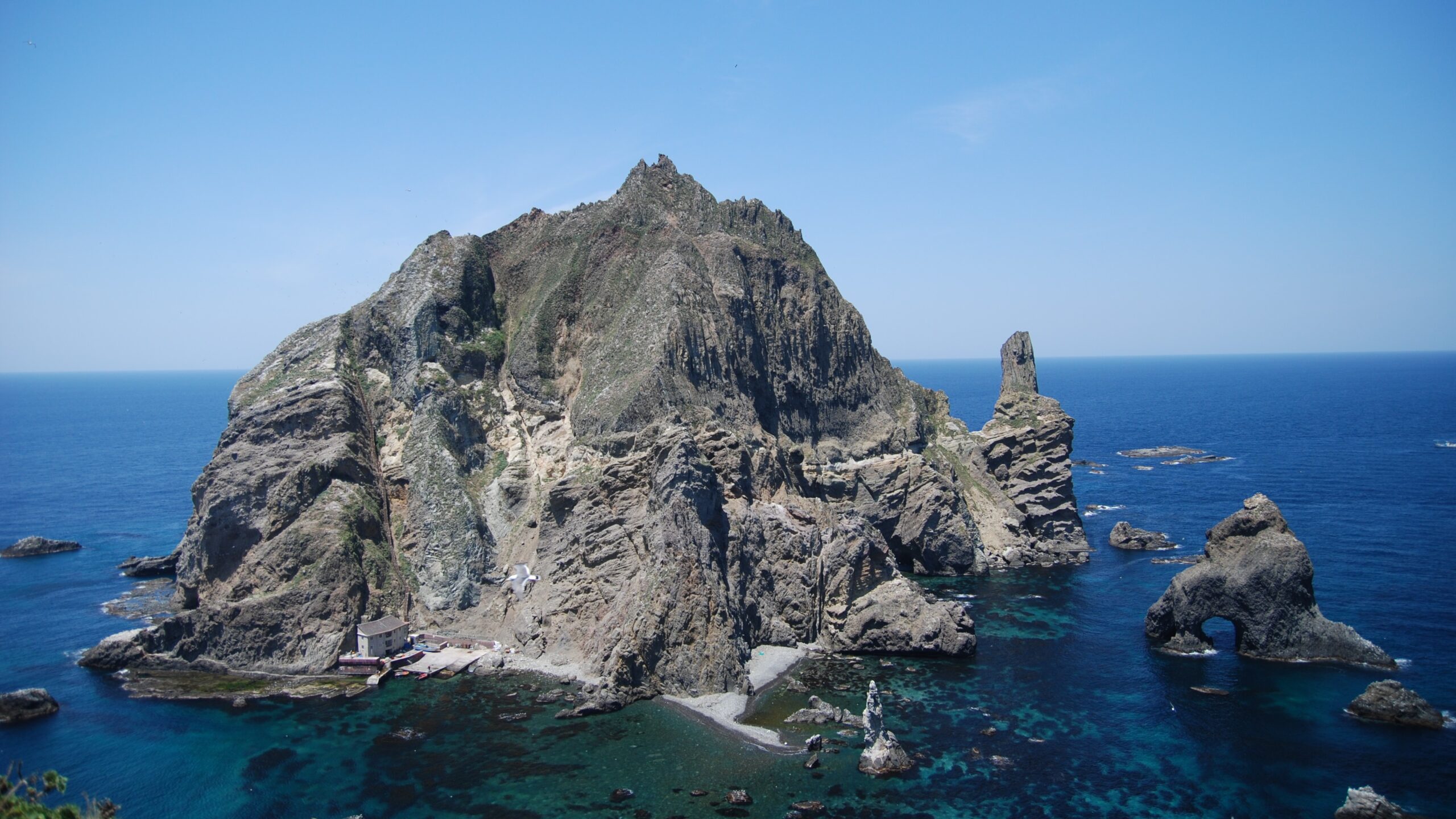
But now, amid this positive momentum, South Korea has lodged official protests with the Japanese government, claiming that Japan violated its sovereignty and was attempting to undermine the legitimacy of South Korean territory. The reason? The prefectural government of Matsue, Japan, held a celebration commemorating Japan’s claim to an island it refers to as Takeshima, which is currently administered and also claimed by South Korea, which refers to it as Dokdo (독도).
Sovereignty over the islands has been disputed between Japan and South Korea since the 1600s. South Korea contends that the issue of sovereignty over the islands was resolved back in 1696 in an agreement over fishing disputes between Japanese and Korean fishermen. Japan would later invade and annex the islands in 1905 during the Russo–Japanese War, declaring them part of Shimane Prefecture. After Japan’s defeat in World War II, however, the islands, along with all other territories Japan had conquered in the region, were expected to be returned to their original owners.
The modern-day dispute over the islands dates back to the 1951 Treaty of San Francisco. The Japanese argue that since the islands aren’t explicitly named in the treaty, sovereignty remained with Japan, while Korea argues that the 1905 annexation was invalid and that sovereignty over the islands was rightfully restored after WWII. South Korea currently administers the islands and has maintained a police presence there since 1954. The islands are closer to Korea than to Japan, being 87 km away and visible from the Korean island of Ulleung-do, and 157 km from the nearest, internationally recognized Japanese islands, Oki.
‘Will this issue derail all the positive progress made in the South Korean–Japanese relationship? Short answer: No’
Will this issue derail all the positive progress made in the South Korean–Japanese relationship? Short answer: No. While many news media outlets have been quick to sensationalize the event to draw clicks and attention, this sort of diplomatic back-and-forth is normal and to be expected. While the Japanese event may be seen as offensive to many in South Korea, it is important to note the restraint shown by the Japanese side. Before becoming Prime Minister, Takaichi had publicly advocated that cabinet-level ministers attend the annual ‘Takeshima Day’ celebration in Matsue. However, as Prime Minister, she decided not to send any of her cabinet members to attend.
The dispute over the islands has long sparked patriotic fervor on both sides, leading to domestic demonstrations in both South Korea and Japan. The United States has no official stance on the sovereignty of the islands and officially encourages a peaceful resolution between the two countries. While contentious, the issue isn’t new, and the event didn’t spark a new debate. Both sides have shown restraint, and it is unlikely to greatly impede the future of South Korea–Japan relations.
Relations between South Korea and Japan are expected to continue improving as both countries cooperate to address evolving challenges in the Indo-Pacific. Their partnership is likely to deepen further in the coming years.
Related articles: