President Donald Trump’s capture of the illegitimate President of Venezuela, Nicolás Maduro (and his wife, Cilia Flores), and extraction of them to the American homeland to stand trial for accusations of narco-terrorism against the United States sent a clear message to U.S. adversaries that he is willing to use military force to defend both U.S. citizens and interests when they are threatened.
He did this when he bombed Islamic State fighters and weapons sites in Syria in retaliation for an ambush attack that killed two American troops last month. This action—like when he targeted two Islamic State-linked camps in Nigeria for killing Christians on Christmas Day—is to be commended, as whenever an Islamic militant is killed, it is a victory.
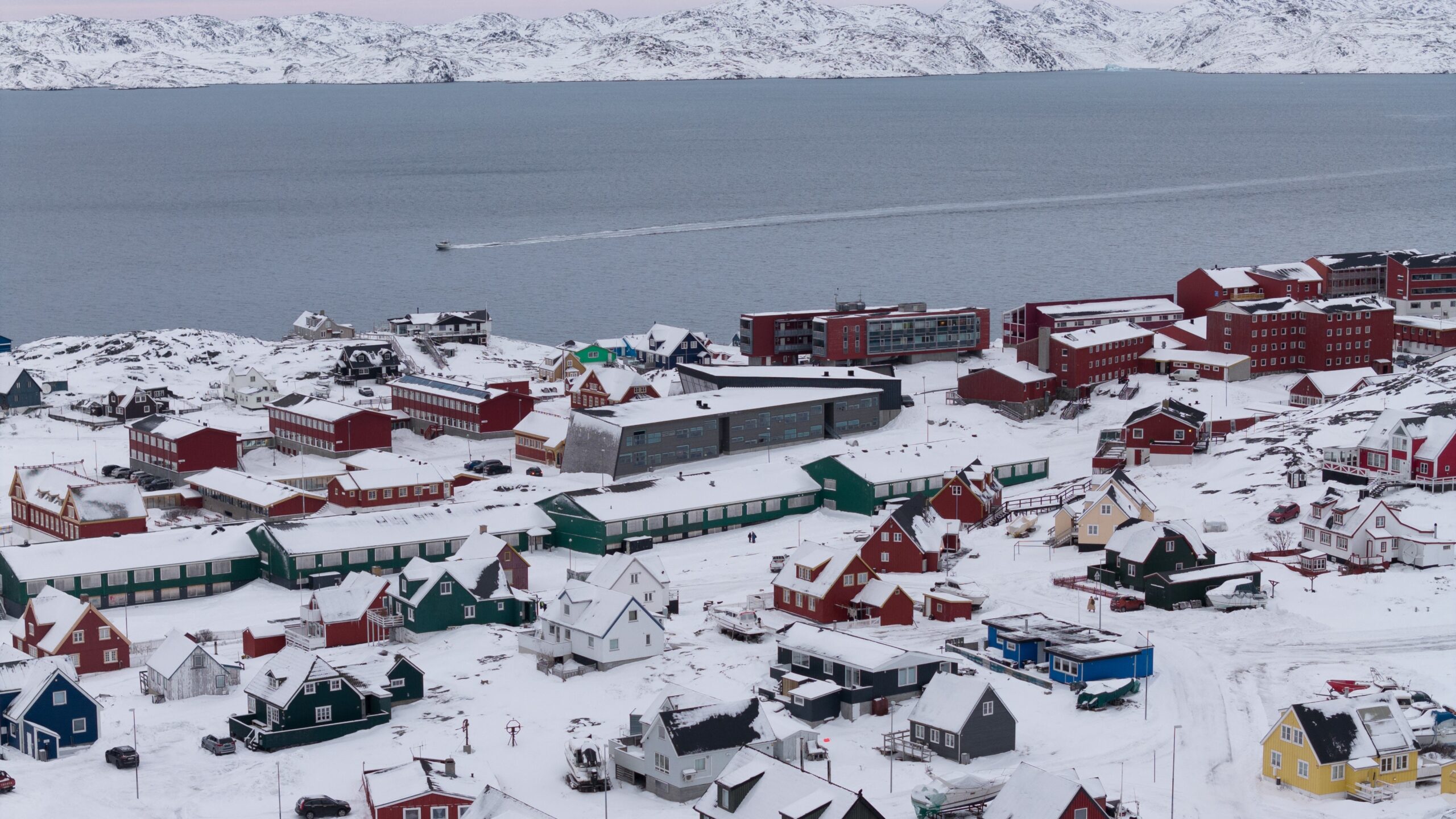
The president is, once more, talking about purchasing the semiautonomous Danish territory of Greenland, even taking it over by force for both national and international security reasons. And he is right.
Chinese research submarines for the first time traveled thousands of feet beneath the Artic ice last summer, a technical feat with military and commercial implications for the America and its allies. US national-security officials say that undersea expeditions of China offer clear evidence of its growing threat in the Arctic region, known as the High North. Yet Greenland’s prime minister, Jens-Frederik Nielsen, has repeatedly scoffed at the idea of being bought, recently saying: ‘Our country is not for sale.’
Trump, however, does not need to ‘take over’ Greenland by force or by acquisition. Instead, he should rely on his artful strategy that has thus far been marked by business pragmatism and a preference for power politics—peace through transaction, that is, cutting a deal.
On 8 August 2025, for example, he managed a ‘peace deal’ with the leaders of Armenia and Azerbaijan that halted nearly four decades of conflict. Subsequently, positioning the United States as the guarantor of security in the South Caucasus, Trump was able to get exclusive rights to develop a transit corridor through southern Armenia, linking Azerbaijan to its exclave of Nakhchivan.
In Gaza, he was able to reach a ceasefire—albeit a tenuous one—between Israel and Hamas, ensuring that firms would get preferential access to the Gulf’s oil and markets. On 27 June 2025, he oversaw a peace agreement, a feeble one, between the Democratic Republic of the Congo and the Republic of Rwanda, thus securing U.S. access to Congolese minerals with the hope that enough revenue will be generated to offset China’s dominance in the Congolese mining sector.
‘In Gaza, he was able to reach a ceasefire…ensuring that firms would get preferential access to the Gulf’s oil and markets’
Transactions for land grabs have always been part of American foreign policy. In 1803, President Thomas Jefferson bought the Louisiana Territory from Napoleon, thus doubling the size of the continental United States at the time—Jefferson never received congressional approval for this; he simply took it upon himself to do so.
At the outset of the 20th century, President Theodore Roosevelt promised to defend Latin American governments from internal rebels and external European intervention to ensure debt payments to American bankers. He was able to secure transactions, even when it required the U.S. military to take control of customhouses, as occurred in the Dominican Republic in 1905 and Cuba in 1906. Similar actions were later taken by Presidents Taft in Nicaragua in 1911, Wilson in Haiti in 1915, and Coolidge in Panama in 1926.
In a similar manner, during the Suez Canal Crisis of 1956, President Dwight D. Eisenhower blocked British access to financial assistance from the International Monetary Fund (IMF) to force the withdrawal of troops, after the United Kingdom and France, in coordination with Israel, invaded Egypt to retake the Suez Canal following its nationalization.
Peter Ernstved Rasmussen, a Danish defense analyst, said that in practice, if U.S. forces made reasonable requests, ‘it would always get a yes.’
‘It is a courtesy formula,’ he added. ‘If the U.S. wanted to act without asking, it could simply inform Denmark that it is building a base, an airfield, or a port under the 1951 Agreement with the Kingdom of Denmark, a NATO ally.’
This is a lot easier said than done, for the island’s approximately 85 per cent of the near 57,000 inhabitants have reportedly opposed the idea of an American takeover. All things being equal, I personally doubt they would prefer the Chinese over the U.S. to enter and manage their rare earth minerals. This is where President Trump can do what he claims to do best: make a business transaction.
Related articles: