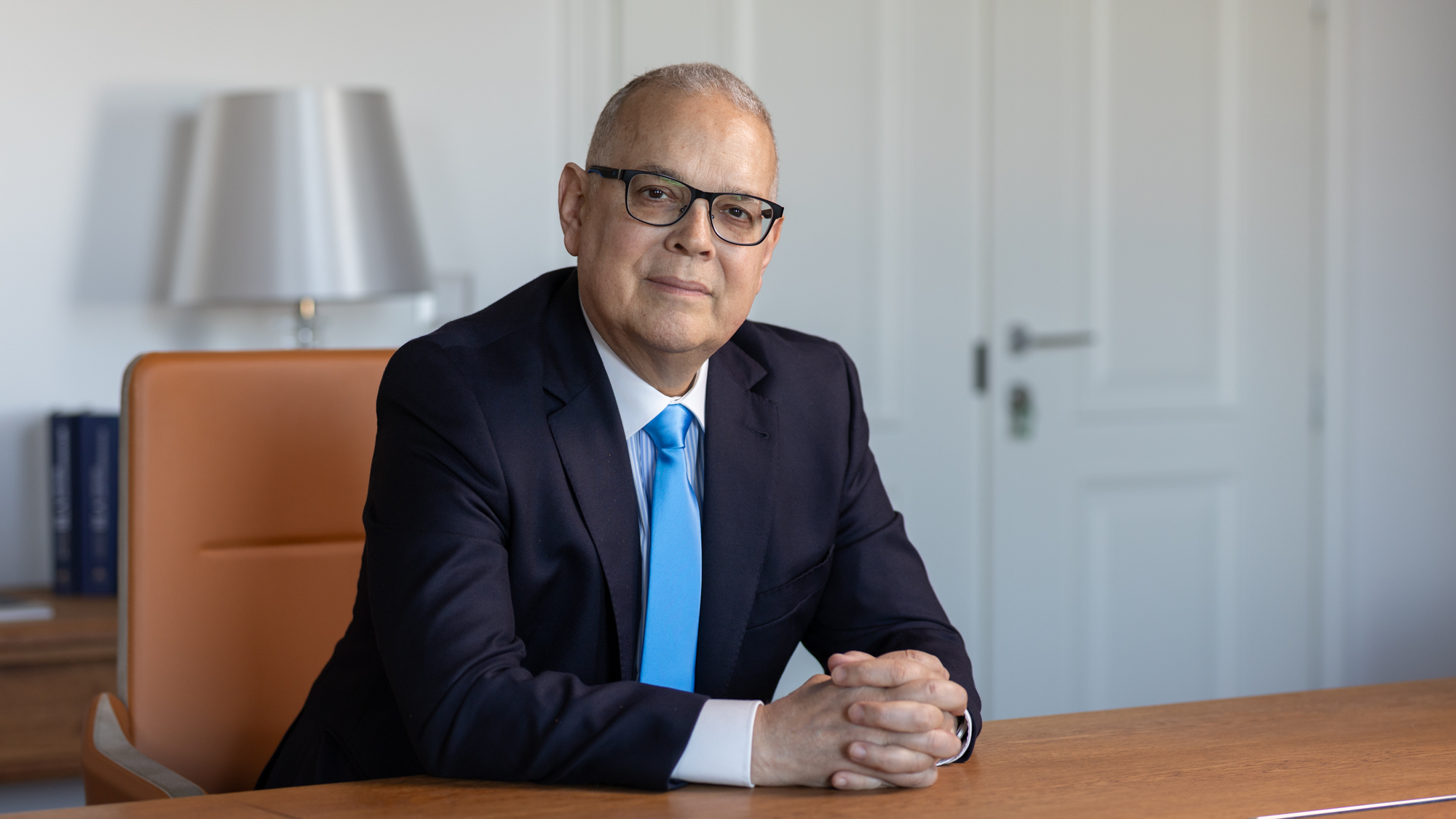
Alejandro Peña Esclusa is a Venezuelan writer, analyst and political expert who participated in the anti-socialist struggles of the political opposition in Venezuela and finally had to leave his country. He has written five books on the Marxist cultural war and the influence of the São Paulo Foru, and is now a leading expert at the Christian Democratic Institute and Senior Fellow at the Center for Fundamental Rights in Budapest.
***
I interviewed you last year, and at that time, you said: ‘If there is a strong government in the USA that will help Latin America fight against drugs and terrorism, that’s all we need.’ Now it has happened, but not exactly in the way we expected, right?
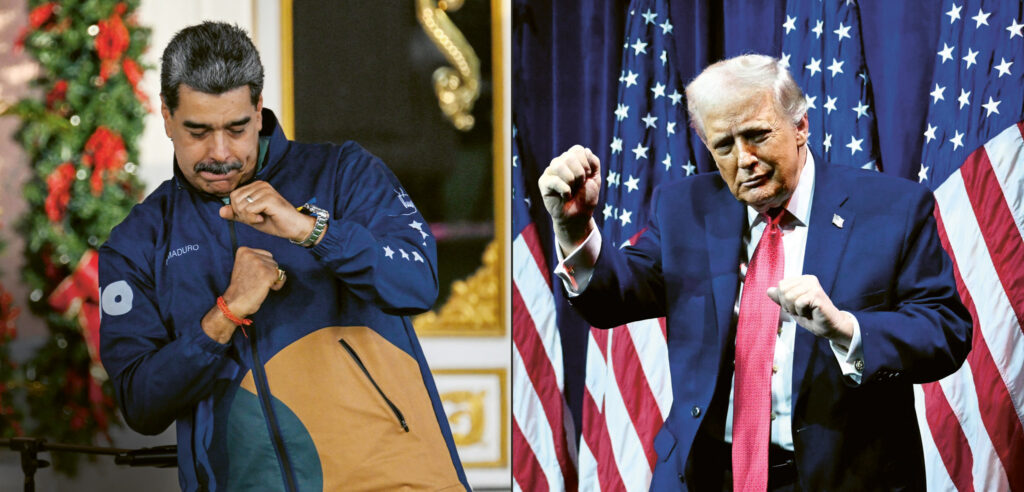
Yes, but we must understand that the Venezuelan regime is not a government, and Nicolás Maduro lost the election in 2024; he’s not the president, he’s an indicted individual in the United States, because he’s the head of the most powerful drug cartel in the hemisphere, the Cartel of the Suns. It’s impossible to fight against a criminal organization through votes, through dialogue. It’s necessary to use force.
This is exactly the accusation from the American courts against Mr Maduro. But what is the proof that he is the head of the cartel?
There’s a lot of proof of that. One of the founders of the Cartel of the Suns is a General, his name is Hugo Carvajal, and he’s now in the United States on trial. So in order to obtain a lower sentence, he’s collaborating with the American authorities, and he’s saying everything: how they shipped the cargo of cocaine, who was involved…
‘The Venezuelan regime is not a government, and Nicolás Maduro lost the election in 2024; he’s not the president’
And it is the result of many investigations. For example, an important NGO called Inside Crime published a well-written report on how the Cartel of the Suns is responsible for distributing 20 per cent of the cocaine that is consumed in the western hemisphere. So it’s a criminal organization.
Is Venezuela a narco state, as they call it recently?
It’s not only a narco state—it’s even worse, because it is the only time in history where all the institutions of the state, that is, the foreign ministry, the National Bank, the armed forces, everything is at the service of the Cartel of the Suns. That is why it’s so powerful, and that is why it moved so much money. This is the wealthiest criminal organization in the history of Latin America.
Have you ever thought this would happen to Nicolás Maduro?
Well, this is what I have proposed publicly to happen for many years, but Joe Biden wouldn’t do it. But this is what it needed. It was the only way to liberate Venezuela, and it was done in a very efficient way. No American soldiers were killed. The casualties in Venezuela were not that many. Those they killed were all the 32 bodyguards of Maduro. By the way, all of them were Cubans. It’s proof that Maduro is a Cuban puppet. But in any case, less than a hundred casualties, 150 combat planes were used, and a convoy of helicopters. This was an operation done in a magnificent way.
I wonder whether the American Secret Service and the Pentagon consulted you or any former leaders of the Venezuelan opposition about how to do it. Did they approach you?
Well, not that I know of, because they were very secretive. They didn’t even inform Congress, because they didn’t want to have any leaks. And, you know, there were CIA and DIA agents inside Venezuela collecting information. They had spy planes, so they had the information to do what they did.
You claim that Maduro is an illegal president of Venezuela. But the intervention was illegal too. The Americans attacked the sovereignty of another state; it was not self-defence, and there was no authorization from the UN, so it wasn’t done in a legal way.
There’s another legal way, which is to obtain authorization of the authorities. And they did that, because the legal president of Venezuela, Edmundo González and his vice president, María Corina Machado, agreed with this intervention, and until today, they say it was the only thing that could be done. Maduro was not the president of Venezuela. He was usurping that position. He was an indicted individual. And when you say that this kind of operation can be done only in the case of self-defence, well, it was that, because the Cartel of the Suns turned drugs into a weapon to kill American youngsters. When Donald Trump says that drugs coming from Venezuela have killed more Americans than Vietnam and Afghanistan together, that is true. Besides, Venezuela was being used as a platform for the enemies of the United States: China, Russia, Iran, Hamas, Hezbollah, and Islamic fundamentalism—it was threatening the security of the United States. So I believe it was totally justified.
‘It was [done in self-defence] because the Cartel of the Suns turned drugs into a weapon to kill American youngsters’
And one more thing: the international law did not work at all. When Maduro stole the election, nothing was done by the international community. It’s been 26 years of bloody dictatorship, and the International Criminal Court has not yet issued a sentence. So the international system is not working, it’s weak, and when that happens, then it opens the door for this kind of intervention that we, Venezuelans, wanted and asked for. And we’re very grateful, because we are the ones who suffered under that dictatorship.
Many say that the real intention of the Americans was to lay hands on the oil reserves—Venezuela has the world’s largest ones. What is the American intention, in your opinion?
Well, they’ve said it. The United States has enough oil, they don’t need Venezuelan oil. But the Venezuelan oil was used by Chávez and by Maduro to strengthen Russia, China and Iran. And that was a problem for the United States. Of course, Venezuelan oil will also favour the US economy. But it’s not that the US needs our oil to fill the tanks of the cars; they have enough gasoline for themselves.
But there are other considerations why the US intervened in Venezuela. The illegal regime of Maduro provoked the migration of 9 million Venezuelans. That’s 1/3 of the population. The other reason is the use of the Venezuelan territory as a platform for the enemies of the United States. The third reason is that Venezuela has developed a model of a coup d’etat to be exported to other countries, the use of electronics to commit electoral fraud. I wrote a book on this matter; everything is explained in it.
Hugo Chávez grabbed the power in the 1998 presidential election. You ran against him as a candidate, and he won. You said in the interview one year ago that the reason you ran against him was that you knew ‘Chávez would destroy Venezuela’. How did you know that back in 1998?
Because in 1994 he went to Cuba and he cut a deal with Fidel Castro, saying that he would do the same in Venezuela. Publicly, he said it. And then, in May 1995, he went to a meeting of the São Paulo Forum, which is an organization that articulates the ideology of the Latin American Left, and he entered the Forum. In that very moment, I knew that his ideas, his programme, were going to be controlled by Fidel Castro and the Latin American Left. And socialism destroys, and socialism in Latin America is also equal to organized crime. So since then, I knew that Chávez would destroy Venezuela, and he did.
But Chávez got the support of the majority of society for more than a decade. How come the thrill hasn’t gone? The liberties were gone, the economy was going down, and the good life that was promised was just evaporating. How come people didn’t recognize that?
First of all, because he lied. He said he would bring progress. He didn’t say: I’m a Cuban asset, I’m going to destroy democracy. He said: I’m going to bring justice, social justice, development, progress and all of that. So he lied. And then there was one more thing: there was a need for change. The system had been there for too long, people wanted change. So the combination of lies and a desire for change created the conditions for Chávez to win. Once he won, he did the total opposite of what he promised in the elections.
‘Socialism in Latin America is also equal to organized crime. So since then, I knew that Chávez would destroy Venezuela’
With these abundant oil reserves, he could have made Venezuela a paradise, right? How come they didn’t manage to handle the economy well?
Because socialism is irrational. An intelligent dictator would have said: Well, let me develop the country and create wealth so I can stay in power for many years. But socialism cannot be explained through rationality. The ideas of socialism automatically destroy the economy, because they don’t like private property, they don’t like private initiative, and they don’t like dissidents. And the combination of censorship, lack of freedom, all of that destroys the economy. Venezuela, the richest country on our continent, became the poorest one in only 26 years of socialism.
You lost the election, and a few years later you went to prison—actually twice. What was life like for dissidents in the early 2000s?
Well, at the beginning, the dictatorship wasn’t that harsh. One was able to speak out and express ideas. But with the passing of time, it became more and more difficult. I was first put in jail in 2002. I was the first political prisoner in Venezuela. Then I was imprisoned again in 2010 for one year, and the conditions they put me in were terrible. I couldn’t speak, I couldn’t write, I couldn’t give interviews. I couldn’t go outside of Venezuela. I couldn’t hold a passport. I had to go once a month to the judge to report that I’m here. Anyone who spoke against the government had been persecuted. As we speak now, there are more than 900 political prisoners in my country.
How come they let you get out of the prison after one year?
Well, it was a providence, because Chávez got cancer, and he died later. So when he got cancer, he decided to let some prisoners out, and I was one of them.
And you left the country finally.
Only after ten years. Because there were rumours that they were going to put me in jail again. So after ten years of being persecuted and silenced, I decided to go through the jungles without a passport to Colombia, where I stayed one year before coming to Europe.
How did you manage to get through the Colombian border?
Well, what I did was to travel to the frontier of Colombia, to a city called San Cristóbal, very close to the Colombian border, at two in the morning in a taxi. So they weren’t following me in that moment, and when the sun came out in the morning, I was already very far from Caracas. They didn’t know where I was. And then from San Cristóbal, I went to San Antonio, just close to Colombia, and I walked through the jungles and through a river with my wife. I had friends there who were expecting me. They took me to Bogotá, and a year later, they gave me papers that permitted me to travel to Italy. I then asked for political asylum, which I was given in Italy.
‘I was first put in jail in 2002. I was the first political prisoner in Venezuela’
Are you planning to go back to Venezuela when the situation finally and profoundly changes?
Yes; there’s my house, there are my friends, and there’s my past.
What percentage of society supports the ideas you just shared? What percentage of the Venezuelan people support the American military intervention and the idea of regime change?
90 per cent.
90 per cent?
They’re not celebrating in the streets because the repressive structure is still there, and they’re afraid. But inside their houses, they’re celebrating because anything that can take Maduro out, people support. Because Maduro has destroyed our country, and he’s so ruthless in terror. He killed so many people. He put so many people in jail. He ordered so many tortures. He destroyed the economy in such a bad way that people would pray to God every day: Please take him out. So when the Americans captured him and took him to New York to face justice, everybody was saying: Thank you, God, for listening to our prayers.
Maduro will get his sentence; that is his fate. But what is the fate of the regime? What do you expect from politics?
The capture of Maduro was such an overwhelming use of force; it demonstrated the impotence of the Venezuelan armed forces, and now the regime is afraid. They know now what the US military power can do in two hours. In only two hours, they destroyed all the defences, the radars, the communications. In two hours, they went silently into the most guarded bunker in Venezuela and probably in Latin America, and they were able to capture Maduro.
‘It demonstrated the impotence of the Venezuelan armed forces, and now the regime is afraid’
So what Trump expects is that they dismantle themselves, or there will be another attack. What will they get in return for doing so? They will be permitted to leave Venezuela and live somewhere else. Only then, when the violence is dismantled, can we have elections and a new Venezuelan Government.
The Venezuelan oil will stop going to Cuba, and the energy crisis will deepen there. Do you expect that by the end of the second Trump administration, the Cuban regime would also collapse?
Yes, there will be a collapse of the Cuban regime, because, as they depended in the past totally on the Soviet Union, they now depend totally on the Venezuelan economy. Trump has already said that not one drop of oil will go to Cuba, so they had better cut a deal, because if not, they will strangle their economy. Without Venezuela, Cuba is nothing. Cubans and Venezuelans work like Cuba is the brain that is an expert in social control, and Venezuela is the muscle, the country that has oil and the power to do things. Now Cuba lost Venezuela, and it’s very difficult for them to survive.
Watch the full podcast below:
Related articles: