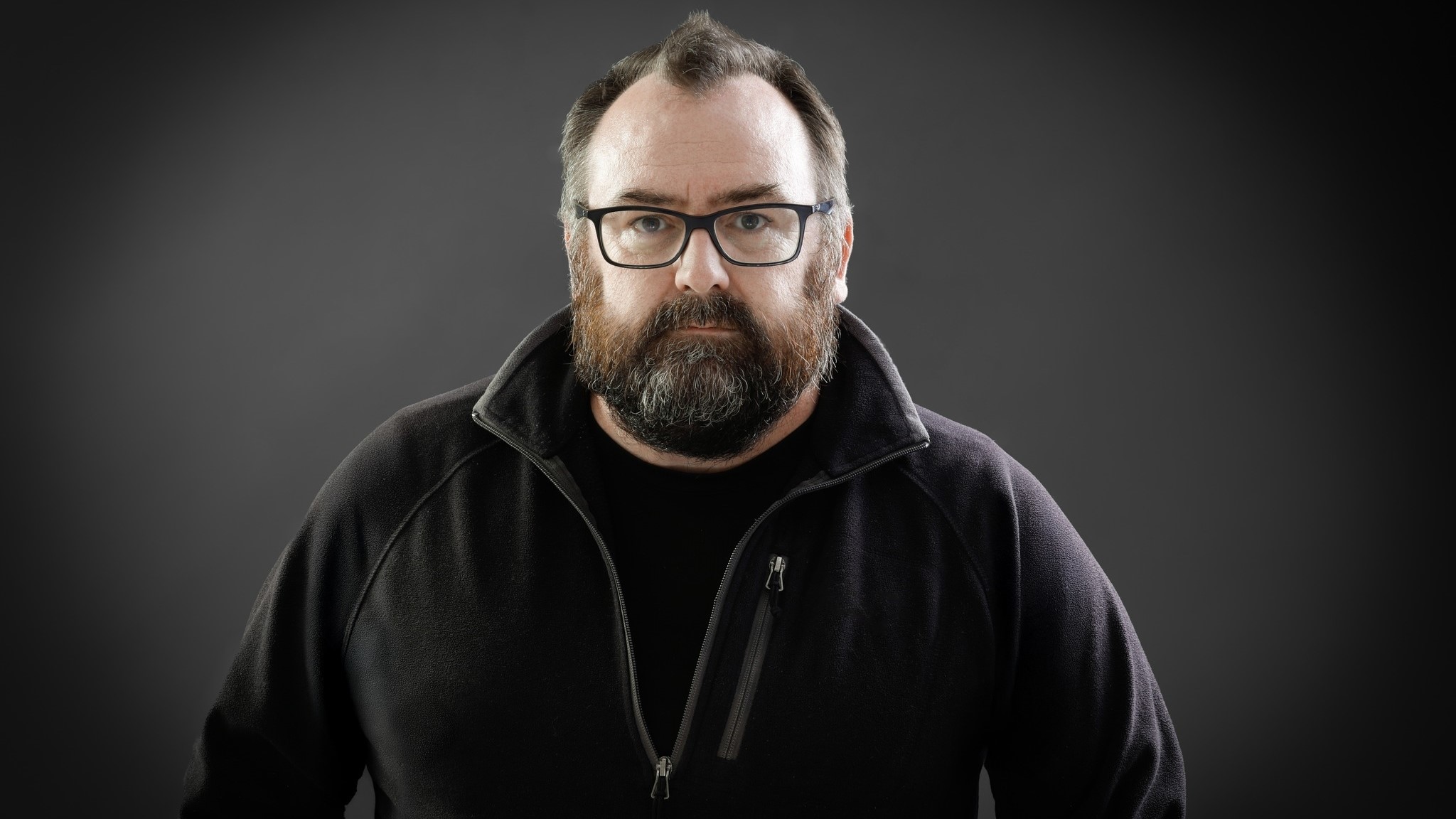
Dr Eoin Lenihan is an independent journalist and researcher. Lenihan holds degrees in History and Archaeology from the National University of Ireland, Galway, and a doctorate in Pedagogy from the University of Augsburg. Focusing primarily on politics today, he has written for a wide range of international news outlets, including The Federalist, The European Conservative, Gript, Daily Caller, Quillette and Post Millennial, and has featured on Al Jazeera and Fox News, among others. His peer-reviewed study of Antifa uncovered damning evidence of how Antifa in the US infiltrated the national media and remains the largest empirical study of the group to date. His new book, Vandalising Ireland, has become an Irish bestseller. Hungarian Conservative has previously reviewed it.
***
Please tell the readers about yourself and your professional focus.
From 2017 to 2022, I actually focused on political extremism in the US, and conducted the largest peer-reviewed academic study of Antifa to date. It made some waves in the US and helped bring down several networks of Antifa journalists working in the national press. And in 2022, I was kind of forced. I felt compelled to change direction when Ashling Murphy, this incredibly talented, beautiful young teacher, was brutally murdered by an immigrant. She was stabbed several times, and it shocked the nation to its core.
But it wasn’t just a murder that was the issue for me. What I had a big problem with was how it was portrayed in the media and by the NGO class. There was an immediate effort to try and spin what was an obvious failure of immigration policy into blaming all Irish men and a culture of misogyny for her murder. It was opportunistic, and it was grotesque, and that somewhat radicalized me into returning and turning my focus to Ireland and how it’s changed radically in the past 25 years, as Ireland has gone at full speed down the globalization route.
When did you decide to write Vandalising Ireland?
I wrote a couple of articles skirting around issues that I was seeing in Ireland. I first wrote, and actually continued to write for international outlets. I was trying to bring attention to what was happening in Ireland to the outside world, because in Ireland, the media is largely locked down. In Ireland, it’s quite literally the case that the media is owned by the government, both public and private.
What I was seeing was that there was this distortion of narratives that was taking place in the Irish national media, so that the message, any criticism of the political direction of the country, wasn’t being heard within Ireland. So, what I had to do was resort to going to publications outside of Ireland to try and exert some influence or pressure to get political conversation. Doing that naturally just evolved into Vandalising Ireland.
And this may be interesting for Hungarians. And a warning to Hungarians, too, is that, because Ireland is so small, it’s incredibly easy to capture all the various institutions, with money, of course, being the great equalizer. The Irish government is the chief sponsor of what I call our NGO-industrial complex. They’re the chief sponsors of our journalist class, our public and private media. We’re a quasi-socialist state. And what happens is that, when the government controls the public purse completely, then groupthink is inevitable, if you want to be kind about it. Putting people with like ideologies and ideas into positions of power is inevitable, if you want to be less charitable about it. And I think it’s a combination of the two in Ireland.
Have you received abuse since you undertook this project? How much from ‘Official Ireland’, and how much from ordinary people?
What’s been very interesting is that the book has received overwhelmingly positive reviews on Amazon. So, it became this phenomenon. It became a grassroots phenomenon whereby, first, it was just within my own little social media bubble, and people reacted incredibly enthusiastically to it, a lot of them, because a lot of the ideas in there were what a lot of normal, regular people have been expressing for the last ten years. But they aren’t given a voice in the national media. They’re often, in fact, mocked, ridiculed, and called far-right in the national media for expressing very, very lukewarm opinions on mass immigration, for example, or on illegal immigration. And, so, the response was overwhelmingly positive.
The book went to number one in the national charts based on word of mouth, which is unheard of. It’s spent over a month at number one in all books on Amazon, and it still remains the number-one book across all political categories on Amazon Ireland since its release. So normally, anything that is this kind of a unicorn, the media should be all over it, because it’s such an unusual tale. But because it’s picking apart a lot of government narratives and how they’re supported by the national press, well, the book was ignored for the first couple of months by the national media.
Then what happened was, when they did pick it up, I noticed two things. First, I was on an incredibly combative podcast in the Irish Times, whereby the host of the podcast didn’t want to talk about the book, and he quickly moved to try and play the man, as such. He was trying to discredit me as a researcher, and I just refused to play that game, because I know the game very well from my time working with the American press. You know that when people try to attack the man instead of the book, you shut him down.
It’s cuckoo, but this is the level of discourse in Irish public life. In the Irish papers nowadays, we have people who can’t even accept basic historical realities. That’s the era we live in, particularly if you’re coming from a conservative background. I would say that, in Ireland in particular, but in many countries now, the national media has been co-opted by the left, and in many cases, hard-left activists. And what often happens is that they project their own dehumanization of people on the right, their own assumptions that you’re stupid, that we are the left. We are the side of university-educated, intelligent people. The writer is backwards, a Neanderthal, whatever. They catch themselves out very easily, because this book is far from a rant.
This book is a methodical forensic analysis of Irish society, folklore, culture, and identity, which is driven by 40 pages of sources at the back. But the only problem is, the Irish media is so left-wing and captured at the moment that nobody is there to point this out. Nobody is there to say: ‘Well, hang on a minute, colleague. You clearly haven’t read this book. This book is absolutely not this bogeyman that you’ve projected onto it. You have to engage with the text before you slam it and put it down.’
‘This book has broken outside of my social network and outside of the bubble’
But in my experience, so far, the reactions to this book have broken into two camps. Those who have read it love it. And that’s not just inside the bubble. This book has broken outside of my social network and outside of the bubble. You see it in various channels like Amazon, and I have no idea who they are. They’re all over the world writing unbelievably moving and deep reviews of this book. Love it. And then you have those who haven’t read it, many who seem to be in the national media and are cutting it down without actually engaging in any way with the contents of the book.
Of course, their first choice would have been to ignore it. So, the fact that they can’t is tremendously encouraging.
Precisely, they would if they could. They tried to ignore it, and when they couldn’t, the attacks happened. And what opened this new lid was that the Irish Independent, actually the Sunday Independent, the biggest Sunday paper in Ireland, ran this broadly favourable review of the book, and that kicked the hornets’ nest. You see, they were able to ignore it until that point, and since then, it has really kicked off.
By publishing this book, have you crossed a certain Rubicon in your career?
Yeah, there’s no doubt about that. Because what’s interesting is, I don’t see myself in any way as a radical. I don’t see myself in any way as a reactionary. I don’t see myself in any way as having extraordinary politics. In the last chapter, you see that I lay out a vision of Ireland, and how to reclaim it; that’s very middle-of-the-road. I just say that we should celebrate what our identity is. Celebrate what is culturally ours, what makes us unique.
Just look at how many Americans come to Ireland every year. Irish Americans worship at the altar of our culture. Basically, to find their own roots. People outside of Ireland seem to appreciate our culture an awful lot more than Irish people do right now. And I just think we need to get back to that positive sense of self and identity, and then combine that with a smart economic model, one that isn’t overwhelmingly reliant on foreign direct investment, and one that looks to build on domestic industry. That’s very, very, very far from radical, in my view. And that was common sense 25 years ago.
So, I would definitely think that Ireland has lurched so far off the political spectrum, so quickly, that it has lost complete sight of itself and has no understanding of itself in this moment. Sadly, I think that in Ireland, as it is right now, yes, I’ve absolutely crossed a Rubicon. There is no place for me. Whatever I have to do after this will be again based on my own writing, my own two feet, and it will bring a lot of attacks—as we’ve seen already, personal, vicious attacks. And I do think that it would be very, very difficult for me to now get a job in, say, public service, which is my background. I was a teacher and lecturer in a normal field. But I think that we’re at a point where things are so radically out of step. In Ireland, things are heading, in my opinion, in such a dangerous direction that you have to stand up and be counted, I suppose.
You have publicly lobbied Irish bookstores to carry Vandalising Ireland. Tell us about that.
There’s been an incredible amount of work behind the scenes. The book, the whole process started with becoming recognized as a journalist. You have to build up your reputation. You have to build a background for credibility and being a reliable voice. So I did that, and I built up that profile on Twitter, then I built up a very interactive community on there. I took the risk of speaking hard truths, like in my coverage of Ashling Murphy and so on. And that, I suppose, secured me a very interactive base.
So, the first step, then, when the book came out, was that I had a feeling this book would sell like 50 copies or go big. In my mind, there was nothing in between, because I had a feeling that my network would come good for me. And they did more than that, more than I could have dreamt of. They were unbelievable. They took this book to be theirs. They used it as the tip of their lance to get their voices heard, as I said, voices that have been drowned out of the national media for a long time. And so, if they can drive this book to a certain degree of success, to make it so that it can’t be ignored, then I need to capitalize on that and pay them back by making sure that I break this into public discourse on a broader level.
So, before the book came out, and certainly as soon as it came out, I was contacting every single independent bookstore in the country, literally. I was spending day after day in the seat, just sending out personalized emails to everyone, asking: ‘Hey, will you stock this?’ And giving them the best offers from publishers and whatnot. Some were amazing and stocked it. My home bookstore, the Ennis Bookshop in County Clare, has been amazing at keeping it in stock. I’m so proud because I have a long family tradition there. My father is also an author, and he’s done many events there, and I’m very proud that my home bookstore backed me.
But there were other ones that were terrific, too, at backing the book. What I very quickly saw, especially if you’re going after the independent bookstore market, is that these are going to be very liberal institutions, and very often, the owners are going to be very liberal. I think it’s like certain industries—teaching is going to skew liberal. Bookstores skew liberal. So a lot of them just flat-out didn’t get back. I was rejected on ideological grounds, but I got enough to get a toehold, and then that was enough to keep the book in the national charts for two months, and it was hovering around the top-five for a long time. So, I got exposure this way.
‘I’m very proud that my home bookstore backed me’
Then, after very long and protracted negotiations with Easons [Eason & Son, an Irish book retailer], basically because of the noise on social media, because of getting a toehold in some of these bookstores, I was able then to say: ‘Hey, come on, Easons, you have to stock this. This can’t be ignored.’ And so, they did eventually. Now they’ve only taken on a limited run, which I’m hoping will expand, but fair juice to them. They stocked it, and they stocked it in their flagship store on O’Connell Street, which is big in Irish society. That’s a big tick of approval.
So then that Irish Independent article came out, and that really okayed the book in the public’s mind, that this isn’t taboo or scary. Then that gave the green light for other bookstores to stock it. Now it’s beginning to make a real impact in regular bookstores, corporate and independent, but that was after a massive behind-the-scenes push, having to negotiate with people, and having to make them understand that this book isn’t taboo. And that ties back to what we’re seeing in the national media, why people are attacking the man and projecting their own takes on this book, driven by their own left-wing ideology, instead of dealing with the content and reading it. Because if they did read it, they would see that it’s not a left or right book. It’s dealing with data, evidence, and facts. It’s explaining Ireland in the moment. And thankfully, that seems to have come true now in a lot of these bookstores.
So, I would say this started as an unbelievable grassroots movement, something I’ve never seen before, to draw it into the public consciousness. Then I tried to capitalize on that by forcing it to stay there, by getting it into these bookstores. And, so far, we’re having success. We’re not seeing bulk orders as you would see for any other book that’s had this level of success. We’re still seeing very limited runs, but I’m going to keep pushing and pushing. I’m not going to let this one slide. I think that the reviews, including from Hungarian Conservative [book review here], show that this book has hit a nerve, has tapped into the public consciousness. And, so, I feel like I owe it to the people who backed me to keep pushing it.
I chuckled this week when you posted a photo of a copy of your book sitting next to Piers Morgan and Kamala Harris on the bookshelf.
That was funny. The Kamala Harris one was [prominently] faced outward, yeah, of course, of course. And my spine [facing outward]. But I thought that that was really brilliant, that somebody posted it, and that person was joking. But, after what we’re talking about here, I’m laughing with this weight on my shoulders. Because, if only people understood how difficult it is to get into an Irish bookstore and to get published by another Irish publisher—just as Irish media is in the pocket of the government, financially, the Irish publishing industry is as well. None of these publishers can exist without various arts funding. That’s why, if you look at Irish publishing, it’s all sports biographies, self-aggrandizing autobiographies of politicians and chick lit, because these are safe, you know.
Books like that don’t threaten the government. That’s why I had to go to America. Can a small Christian publisher in the US get it published? It’s bizarre, but that’s the way it is. But, yeah, when I saw that art, that photo of Kamala Harris out there and my spine out, I said: ‘That’s Ireland in a nutshell. That is exactly what I have had to push against this entire time.’ That’s what I was battling, to try and get that book on the bookshelves. And it’s incredible, I look at it as an amazing victory for me, but also for everyone who pushed it. Bought it. You would have seen online that people didn’t just buy one copy. They bought five, they bought four, they bought three. They said one for me, three for my friends and family who thought I was crazy all this time. Three for the people who wouldn’t listen to me when I told them what was happening. So, it’s been a hell of a journey getting it into the public consciousness.
It’s a wonderful contrast. Kamala Harris has been pushed on Americans, even though voters have never asked for her, and ordinary people are clamouring for your book and can’t get it.
Yeah, when my book was riding high in the charts, there were a number of books out by Irish radio personalities, which came nowhere close. While I was up at number one on Amazon in books, they’re down around 48 or 60, whatever. And even though they had the entire public news media machinery behind them and they were going on each other’s shows to advertise their various books, nobody was buying them. Nobody’s interested. As you say, it was pushed on people, and that’s the contrast here: something authentic and grassroots versus something shoved down people’s throats. I’ve been very heartened to see that people are not only hungry for authenticity, but we’re beginning to find the channels and ways of getting it into the mainstream.
You’re immersed in the problems and failings of modern Ireland. Sometimes it’s hard to step back and appreciate how well-known these topics are among people who don’t read about them daily. In your opinion, how well-known is the subject matter of this book outside of Ireland?
I think up to, maybe two or three years ago, not at all. If we look at who the big external player is that Ireland looks to, it’s America, and Irish America in particular, that’s always been the great external power hub that influences us in real terms. We’re overwhelmingly reliant on American multinationals for our foreign-direct-investment economy. Culturally, soft power and political soft power in America—I would have said up until a couple of years ago—there was still very much this handed-down revolutionary-period idea of what Ireland was about, and that would lend most people to supporting Sinn Féin. They still had their grandfather’s and great-grandfather’s idea of the noble struggle of looking for a 32-county Ireland, and Sinn Féin are the guys to back for that.
But for most of these people, it’s all by design, when Gerry Adams and these guys used to go out to the US and have their big dinners, passing around the begging bowl. They wouldn’t be talking about gender pronouns and socialism out there, but that’s what they are. They are, and have been since the 1970s, not a nationalist party, but a 32-county republican socialist party. That’s what they are. And when they go to America, they like to leave out the socialist part. And so, a lot, several generations of Irish Americans, unwittingly [supported Sinn Féin], and it’s not their fault. They’ve been intentionally blinded, have been supporting the open-border socialist push in Ireland, and that’s been very, very, very damaging to Ireland.
Thankfully, in the past couple of years, we’ve seen JD Vance talking about pushing back on the Irish FDI economy that we’ve had. We’ve had some of the Trump administration talking about how Ireland is now a major player in censorship for the EU. There’s a greater awareness of just how much of an EU attack dog Ireland is, how socialist it is, and the negatives of our open borders and reckless policies over the past 25 years. Stories are getting out, not just the murder of Ashling Murphy. The stabbing of those children by an Algerian man in 2023, which led to Dublin riots. If you look at the media in Ireland, all you would see is about the riots, not what caused the riots, just riots and the bad rioters. But if you look at the international media to see what caused the riots, that would have shocked a lot of people overseas. Many people still had this pastoral idea of Ireland, Kerrygold, Guinness and green fields. But Ireland has evolved at a remarkable pace.
The two to blame for that are Fianna Fáil and Fine Gael. They’re two traditional parties that have ruled in Ireland since we became an independent state in the 1920s. But they are two parties without grounded ideologies. They had outsourced their social policy and education policy to the Catholic Church, and then, after the collapse of the Irish economy in the 1950s, they were scrambling to come up with a new economic model. So, both parties went all-in on the EU, on the EEC, and went all-in on promoting American foreign direct investment. And it’s been that way ever since. They’ve never had any major policy differences. They’ve never struck off on different paths from one another. And, so, they went into government together for the first time in history in 2020, and it just confirmed what everyone knew, that they were the same party all along. It was a uni-party, you know.
‘We don’t have a functional democracy. You can’t vote your way out of this’
The problem was that they were overly focused on foreign direct investment and nothing else. We had Sinn Féin, who are overly focused on winning the culture, and that was a socialist vision of Ireland. And they were hugely successful. For the last ten years, they’ve managed to drag Fianna Fáil and Fine Gael—because they have no roots—further left on every issue. You name the social issue: abortion, surrogacy, gay marriage, whatever. They are all in lockstep agreement on everything. And Sinn Féin are in lockstep agreement with the FDI economy model that Fianna Fáil and Fine Gael came up with, which is a scam, really. It makes Ireland a tax haven with a 12.5 per cent corporation tax that gives us a hell of an advantage over any other European nation in attracting American multinationals. But the point is that none of the big three [Fianna Fáil, Fine Gael, Sinn Féin] disagree with each other on any issue. They’re all extremely left-wing socially. So, Ireland is a crippled democracy. We don’t have a functional democracy. You can’t vote your way out of this.
Related articles: