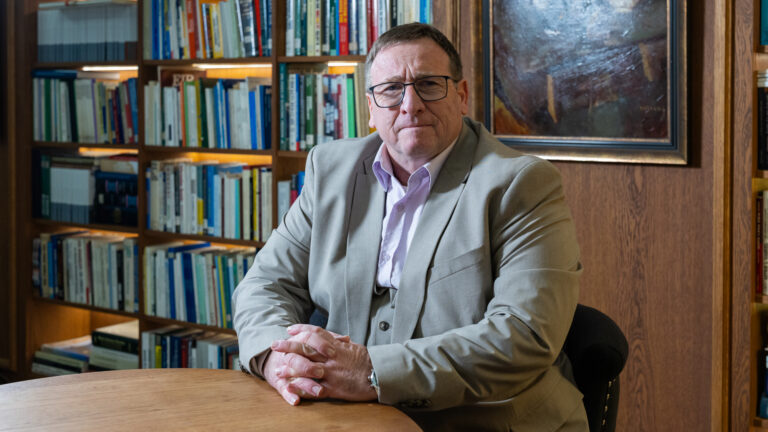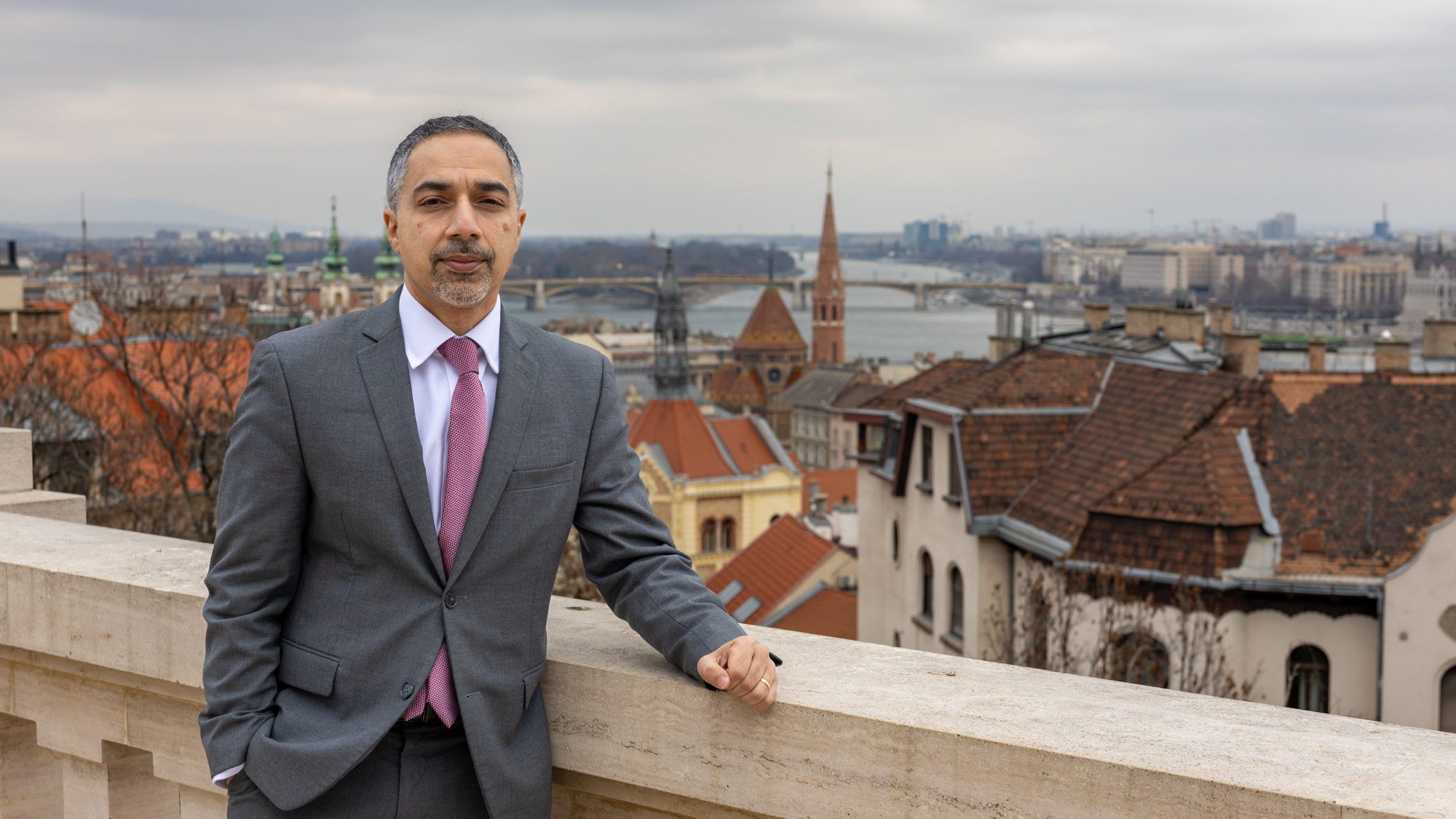
Trita Parsi is an Iranian-born Swedish writer and analyst specializing in US–Iranian relations. He is the Executive Vice President of the Quincy Institute for Responsible Statecraft and the founder and former president of the National Iranian American Council. Parsi earned a master’s degree in international relations from Uppsala University, as well as a second master’s degree in economics, before completing a PhD in international relations at Johns Hopkins University. Early in his career, he worked at Sweden’s Permanent Mission to the United Nations, serving during a Security Council term, and later gained experience on Capitol Hill. He is the author of Losing an Enemy: Obama, Iran, and the Triumph of Diplomacy, among several award-winning books.
***
In the last two decades, there were a dozen street protests—like in 2009, in 2017, in 2019, in 2022, and recently this January—but none of them succeeded. What’s the reason for that? How come the regime cannot be toppled by street protests?
I think it’s important to recognize that in some aspects, the protests have been successful. For instance, the 2022 protest against the mandatory hijab did not change the laws of Iran, but clearly the state has capitulated to the demands of the public; in Tehran, the implementation of that law is essentially non-existent. The 2009 protest was not in favour of regime change. They wanted to make sure that the votes in the elections actually were counted and that the voting fraud was reversed.
Later on, however, we have seen that the demands have become more and more oriented towards regime change, because faith that the system can be changed from within has increasingly been lost, particularly among the young population. They see two lost decades in which there was a struggle for reform that not only did not achieve it, but in many ways Iran is less politically open now than it was two decades ago.
There is a very crucial factor: there is not a unified opposition outside of the country, and there is not a democratic opposition. In order to be able to get defections from within the establishment, you need to be able to show your own democratic credentials, and that people who defect actually will get amnesty. Instead, you have opposition groups that are already talking about revenge, and that gets the existing system to coalesce and present a united front.
In January, some protesters chanted that they needed a military intervention to topple the regime. When will the crowd be so “radicalized” that it can achieve really effective results?
They’re doing it because there’s been no improvement in their lives, and they’re increasingly seeing that the government is incapable of providing a better future for them. And particularly if you’re a young person in Iran right now, you have 60 years ahead of you—you’re not going to be incentivized to just sit and wait; you want to see some changes now. So I’m not surprised that people are going out and protesting. But given the very brutal crackdown that occurred, it’s not clear to me whether protests will be out there again soon.
‘In many ways Iran is less politically open now than it was two decades ago’
It’s very important to note that there were calls for military intervention. This does not seem to be a majority opinion, but the fact that such calls are even being made publicly is a huge development and a clear sign of radicalization, which is primarily the result of the regime’s own repression.
Can change come from within the regime? Can an internal opposition push the Ayatollah-led system to reform itself?
I think even the population can overthrow or change the government, but they cannot do it from this position of weakness. And this position of weakness is a result of the economic sanctions on the country. A very strong middle class is the backbone of the force behind political change. In Iran, however, as a result of the sanctions and government mismanagement, one third of the middle class went into poverty between 2018 and 2019 due to Trump’s economic sanctions.
Sanctions don’t work in terms of pushing countries towards democracy; there are almost no cases of embargo-style economic sanctions leading to democratization. Governments become more oppressive, and societies weaker, less capable of exerting pressure. These economic sanctions have actually made the Iranian democracy movement—and its backbone, the middle class—much weaker, which means they are now protesting not from a position of strength, but from a position of desperation.
Is there a possible scenario then that from within the regime there could come some changes, reforms?
There are elements in the Iranian regime who don’t want reforms and will do everything to stop them. The question is whether society has the strength to assert its demands. The United States, on the surface, claims to support the Iranian population, but undermines the society’s ability to exert that pressure, driving them toward desperation.
How much of Iranian society supports the regime staying in power?
In the past, they had the active support of about 25 per cent of the population. I would suspect that number is now lower, around 15–20 per cent, because even their own base tends to turn against them when they see their excessive measures. There is a segment that wants to get rid of the regime no matter the cost, but they’re probably no more than 10–15 per cent as well. So there’s a large middle group who want a different system, but not at any cost—they remember the 1979 revolution, when Iran overthrew one dictatorship only to face life under an even worse one. They want change, but positive change.
Hyperinflation, poverty, decreasing standard of living, oppression. Where can the psychological boiling point be, from where the regime cannot control social tensions?
We don’t know. If the system has the support of 15–20 per cent, perhaps that point will not come, at least not in a very short time. There’s another line of thinking, which is that change has to lead to democracy. And if you want to have democracy, you cannot have an impoverished middle class. You cannot have an economy that is in shatters. Those are not the building blocks of a democracy.
‘Given the very brutal crackdown that occurred, it’s not clear to me whether protests will be out there again soon’
Let me give you an example. When in 2004 the US government itself produced a report on why it was so difficult to govern Iraq after having invaded and taken over it, one of the key points was that a decade of sanctions had destroyed the social fabric of Iraqi society. This made it extremely difficult to govern because the country was so impoverished and broken. So the question is: you might be able to get rid of a very bad political system, but if what you’re leaving afterwards is just complete chaos, you haven’t really achieved anything particularly useful.
There are groups that wait for a regime change to form a government—Mojahedin-e-Khalq (People’s Mojahedin Organization of Iran) or the Monarchists, followers of the Shah’s regime. You say they are not democratic. So is it an illusion that Iran will ever be a democratic country?
Iran had a constitutional revolution in 1906, so the struggle for democracy is not new—it goes back more than 120 years. In 1953, Iranians had an embryonic democracy: a parliament elected by the people, which then elected the Prime Minister. That system was overthrown by a CIA and British MI6 coup, installing the Shah as sole ruler. So many building blocks for democracy already exist inside the country. And I think you find far more of a democratic opposition inside Iran than outside it.
We see an American military build-up in the region, and the Trump administration is trying to force Iran into a new nuclear agreement. Will Tehran sign it to preserve its power?
I don’t think they see an agreement with the United States as a way to save themselves. Their perception is that the US seeks capitulation, and capitulation ultimately means their collapse. For a country that has fought so long for its independence, the idea of surviving through capitulation simply doesn’t exist. I fear the Trump administration, at least publicly, is seeking capitulation. If they were pursuing a deal to ensure Iran does not build nuclear weapons, that’s a different story—a deal that could be achieved and would benefit the United States.
‘The struggle for democracy is not new—it goes back more than 120 years’
Trump also has a lot of pressure from his own base. They don’t want to see more wars in the Middle East. They’re already quite frustrated that he spends so much time focusing on international issues rather than focusing on the domestic ones, and he has midterm elections coming up in November, which may end up being crucial for his political future. If the United States adopts a position in which the red line is only no nuclear weapons, there is a clear pathway towards a nuclear deal.
Can we expect the Iranian government to sign an agreement to downgrade its nuclear programme?
I think that the Iranian government will sign a deal imposing significant limitations on its nuclear programme, far more than the JCPOA did. I don’t suspect they will agree to zero enrichment, and I don’t think at all they will agree to anything on ballistic missiles. From Tehran’s perspective, their only useful deterrent now is their missile programme. They no longer have groups such as Hezbollah as an outer defence of Iran. Giving it up would leave them with no defences at all. There’s no way they could agree to this—particularly mindful that Israel has made it clear it wants to attack Iran again. The only reason Netanyahu went to Trump, begging him to attack, is because Iran’s ballistic missiles were very effective in penetrating Israel’s air defences in June.
‘Their perception is that the US seeks capitulation, and capitulation ultimately means their collapse’
Last year, Americans and Israelis dared to take a radical step bombing Iranian nuclear facilities. If the Iranian regime chooses to refuse the American offer, there could be another military conflict. What would be the likely outcome if that happens?
It all depends on what happens on the battlefield, but the Iranian government’s calculation is that they would strike back very hard and very fast. If you look at what happened in the June war, the Iranians expected a long conflict and thought perseverance would be most important. They actually didn’t use all of their missiles.
Do they have the capacity to execute a blitzkrieg?
We don’t know. But their calculation appears to be that they will strike very hard and very fast, both at US bases, naval systems, potentially at civilian infrastructure in the region, the oil flow, as well as on Israel. The bet they are making is that once Trump realizes that this is going to be a very costly war, and not a quick one, he will take huge hits and back down, and perhaps there will be new negotiations on a different basis. This is an extremely risky calculation, but one they seem to think is their only option.
I think there is one option they have refused to entertain, and that is talking directly to Trump. It seems more difficult for them than even considering certain compromises on the nuclear issue. If they just had that conversation with Trump, it could be a significantly de-escalatory event, and perhaps the parameters of the negotiations would change. I’m sure Netanyahu is very happy that the Iranians refuse to talk directly to Trump, because if they did, a lot of this could change.
Watch the full podcast below:
Related articles: