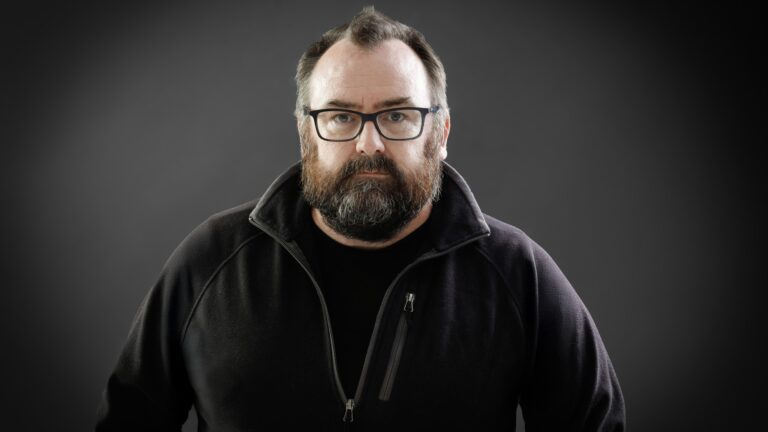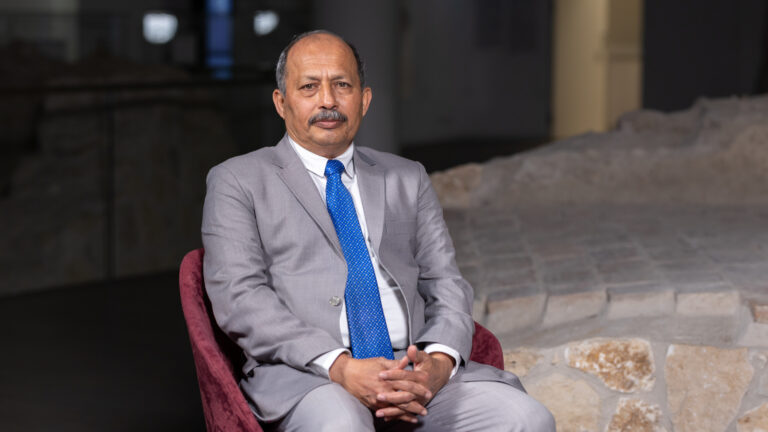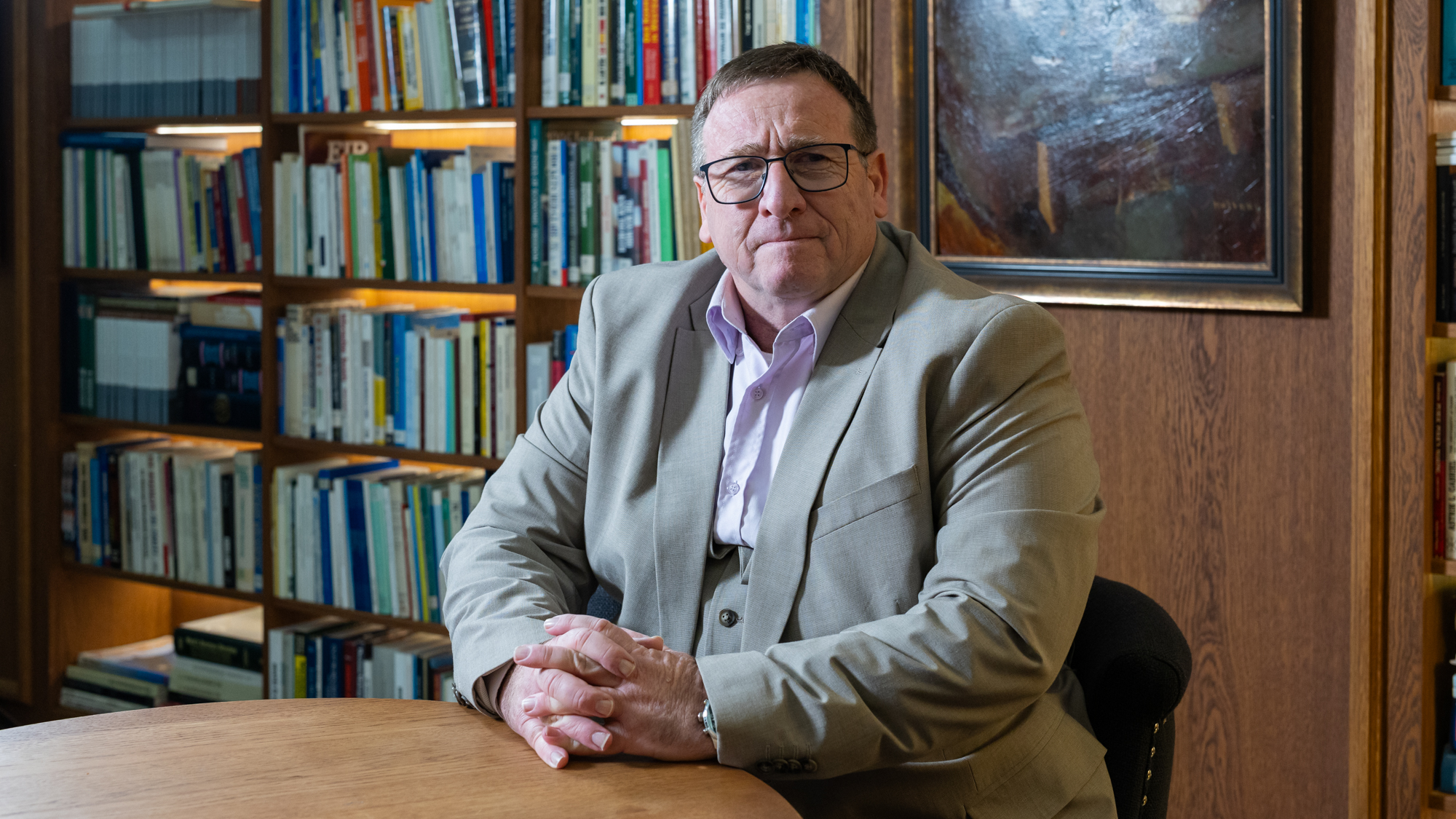
Ronen Itsik is a Senior Researcher in the IDSF Security Research Department, specializing in military–social relations, and also serves as Senior Researcher and Head of the Military–Social Relations Department at the David Institute for Security Policy. Colonel Itsik holds a BA in Economics from the College of Management, an MA in Political Science from the University of Haifa, and a PhD in Social Sciences from Adam Mickiewicz University in Poznań. He advanced through the ranks of the Israel Defense Forces Armored Corps, serving as commander of a Reserve Armored Brigade and as Chief of Staff of the Pillar of Fire Division. Following the completion of his military service, Colonel Itsik became a Research Fellow at the Menachem Begin Heritage Center.
***
The second phase of the ceasefire has just started these days. What’s going on on the ground?
Almost 50 per cent of the Gaza Strip is under full Israeli control, where the Israel Defense Forces are removing Hamas’s military infrastructure and clearing the area. They are controlling the border between the Gaza Strip and Egypt in order to neutralize weapons smuggling and the bomb infrastructure that Hamas established there before the war. We are now waiting for the Trump administration to decide who will be on the committee that will control this area. I think the most important thing is to see Hamas removed from there permanently. If Hamas remains on the ground, it would mean the continuation of the war.
How is Hamas operating these days? Where are they?
Since 2005, when Israel withdrew from Gaza Strip, they built a metro tunnel all around the Strip. Those tunnels are 15–40 metres under the ground, and they are all around the Gaza Strip. Most of those tunnels were neutralized by the Israel Defense Forces, but some are still operational. Hamas is trying to challenge our troops at the yellow line, from where 50 per cent of the area is under Israeli deployment and the other 50 per cent is under international—mainly American—control.
‘The most important thing is to see Hamas removed from there permanently’
Hamas is challenging us from tunnels that have not been destroyed yet. These challenges are here and there, sporadically, but they are not so serious.
The original goal of the Netanyahu government was to eliminate Hamas. What phase is this operation in? How strong is the Islamist resistance in Gaza?
The war was not the goal of Israel: Israel has come into the war because they declared a war on us. Now, our main goal is not only to destroy Hamas, but to keep our citizens secure. Since 2005, we withdrew to the international line established by the UN resolutions, and we are still keeping to it. But Hamas built a terror state in the Gaza Strip. After what happened on 7 October 2023, we have to demolish Hamas and get them out of the area, not just for the sake of the Israeli people, but also for the Palestinians in Gaza. Because they live under a dictatorship; terrorists and murderers are controlling them. So I think that’s for the greater good of the whole Middle East if Hamas gets thrown out of there. And some of them will have to be judged in the ICC, because they are real criminals against humanity.
The main purpose of President Trump’s peace plan is to demilitarize the whole strip.
Yes.
Is it possible? Because, as you said, Hamas will not give up, and getting rid of them will be a tricky task for the IDF or for the International Stabilization Force.
Well, I think we are in a situation which is not unprecedented in history: the United States once declared an area demilitarized, and it was in Kosovo, Serbia. All of those countries are sticking to that, and the situation has been very stable since 1999, so I think when the United States declares a place demilitarized, they know how to do it. They know how to operate and to cooperate with other countries in order to keep the place safe. After President Trump got elected, almost every time he gets what he wants, so we can be optimistic that something good will happen here too.
Behind the scenes, Hamas, Hezbollah and all the proxies were organized by Tehran. But the sanctions, the Israeli–American bombings and the fresh protests have weakened Iran. How strong is the regime?
We have a country in the Middle East that has been keeping terror groups in countries around Israel for almost 30 years. They bring them weapons. They bring them everything in order to make an infrastructure of terror against Israel. They organize all this orchestra in order to destroy Israel. What happened on 7 October is that Yahya Sinwar started the attacks without cooperating with their proxies, and they were also surprised in the first 12 hours of the attack, since all IDF were deployed around our borders. So the Iranian regime and its proxies couldn’t do anything operational on the ground. They targeted us with missiles and rockets, but they couldn’t manoeuvre because our forces were deployed all around.
‘They organize all this orchestra in order to destroy Israel’
After a year and a half, the Iranian regime started to play with us again—they fired rockets and drones to Israel. In retaliation, Israel destroyed almost all of their rocket systems, the infrastructure used to build them, and also their nuclear research centres and infrastructures used for building nuclear bombs. After this, their regime became very weak. Why? Because almost all of its proxies were damaged by Israel. Hezbollah, Syria, the Assad regime, Yemen, Houthis: they got bombed by Israel very seriously. Tehran itself has faced major economic problems in the last six or seven years because of the sanctions, and now, they are very weak.
Did Israeli agents help the Iranian protesters?
I don’t know.
But this is the very interest of Israel that the Iranian regime collapses. When do you expect that event?
The citizens of Iran don’t want this regime, because it’s a totalitarian regime. We’re talking about normal life. You cannot get out from your house without the hijab if you’re a woman. People are struggling for their freedom. They don’t need Israel or the US or anyone else for being so frustrated that they get out from the houses and do what they have to do. And that is not the first time they are doing it. Maybe it’s the four or the fifth time in the last 20 years. And every time, it’s bigger and stronger.
The regime is very weak, which was not the case five, seven or ten years ago. I think it is now up to the Iranian people to remove this regime. This is not the responsibility of Israel or the United States. In 1979, Khomeini removed the shah—now it is time for a new republic to emerge, one that returns the country to the public. This is now a civilians’ war. They have to do it themselves. I think the Western world can assist with supplies to help feed the population, but it would be wrong for another country to be the one to overthrow the Islamic regime. You have to handle it. You have to win it. It is an Iranian situation.
What about the Abraham Accords? If the influence of Iran is weakening in the Middle East, then there will be a new structure of security, in which Israel and Saudi Arabia can get closer to each other. Do you expect that?
This is a very interesting situation, because it hasn’t happened before in history. The expansion of the Abraham Accords would mean that Saudi Arabia, all of the Emirates, as well as Syria, Jordan and Egypt, would cooperate with Israel, creating a bridge from India in the east to Europe in the west. It would be time for the Middle East to become stable and for things to move forward.
‘Now it is time for a new republic to emerge, one that returns the country to the public’
This is the IMEC project, as you have mentioned. Economy and trade.
We have been stuck in the Arab–Jewish conflict. Why? Because of a small piece of land. Well, we, the Jewish people are here. Israel is our nation state, and we will stay here forever. And Saudi Arabia, the main Arab country understood it. They understood that Israel is not the problem of the Middle East. Israel is the opportunity, because we have researchers, we have innovations and projects, and we are going on very well with our production. So Israel is an opportunity for them. The problem is the terror. The problem is those terrorists. And after Iran will be weakened, things will be stable, and then you can build that great bridge between the East and the West.
Under one condition, I think. Many Muslim states insist on solving the Palestinian issue, and they insist on the same old story, which is the two-state solution. Will there ever be a Palestinian independent state?
I don’t understand the Arab world in this case, because today more than 80 per cent of the Palestinian people live under the control of the Palestinian Authority. More than 80 per cent of the population has autonomy. So what else do they want? I will tell you: from the river to the sea, that is what they want. But they will not get it, because there is a state there: Israel, the state of the Jewish people.
From the river to the sea, and that is a problem, too.
But with a place that has an autonomy for the Palestinians. They have autonomy, they have self-governance, all that they need to have. Just one thing is missing, a demilitarized zone. Because we understand what will happen if we don’t demand this place to be demilitarized. What has happened since the Oslo agreement in 1993 is that the places we have withdrown from have become a terror state.
‘Israel is our nation state, and we will stay here forever. And Saudi Arabia, the main Arab country understood it’
So we have one condition for full autonomy: there has to be demilitarization. Not a sovereign state with borders next to Jordan and next to Syria, because if there will be any problem in Syria, Jihadists immediately come into this territory, and we will have jihad on our borders. 80 per cent of their population live under Palestinian control, and they have autonomy, and the other 20 per cent of their population live in Judah and Samaria under Israeli control, and they are happier because the Authority is very corrupted, and they don’t have democracy. So I think they should have their autonomy, but they have to understand it, keep it and cherish it, and end the conflict in this way, because you will not have a Palestine from the river to the sea.

Don’t you think that this reasoning is part of the problem? It can add to the growing antisemitism in Europe and the Western Hemisphere. Many Europeans are antisemitic; some consider your country a terrorist state, and some believe that Israel blocks Palestinian sovereignty. Aren’t you afraid of this phenomenon?
Antisemitism is not something new. It has evolved and developed and has now entered a new phase. It is not what it was in the 1940s, or even in the last decade; it has transformed into a different kind of antisemitism. People hated Jews in 1940; today, they hate Israel. Hatred of Jews has shifted into hatred of Israel because we now have a nation state. This is the trend of the postmodern world; in the postmodern world the word ‘truth’ is not understood—there is no truth. And when you are talking to someone in the US, who has an MA degree, asking him whether he understands what is happening in the Middle East, and what was historically there, he usually doesn’t know anything. He doesn’t know that we had kingdoms there 3,000 years ago, that we had a state there—not only in this area, but also in Judah and Samaria, where Israeli kingdoms existed. This is written in the Holy Bible, which Christians also believe in. This is historical truth.
‘Hatred of Jews has shifted into hatred of Israel because we now have a nation state’
But when you ask a scholar, he will give you this answer: ‘From the river to the sea, Palestine will be free.’ So you may have a degree, but you are ignorant, because you do not know history and do not even want to know it. This is not antisemitism. This is stupidity that has become deeply embedded in Western thinking. And this is unbelievable.
Israel has got an ally in Europe: Hungary. How did this right-wing government, led by the Fidesz party, come to openly support Israel?
In 1995 when I was a young officer, I read a book that told about the war between civilizations. Samuel Huntington wrote this book, because after the Soviet Union collapsed, all the academic scholars told us that there would be no wars and everything was going to be great. Then Huntington came and said: Look at that line from Eastern Europe down to Lebanon, draw it to the border between Israel, Syria, and Jordan, and in the junction with Africa. To the east of this line you have one civilization, to the west another. Along this line, you have states with different cultures, and once in a while, there is a cultural attack that can involve a great war along this line.
Hungary lies on this line, and what is between Israel and Europe is also along it. So together we are standing in a line, defending our cultures, as nation-states and patriotic citizens who believe in our strength and rights. But what lies to the east of this line is a big threat for both of us. Because of that, it is very good that we became allies, something that was not the case 20, 30, 40, or 50 years ago. This is a great opportunity for all of us to build a bridge between East and West, which is very interesting.
Watch the full podcast below:
Read more of our interviews: