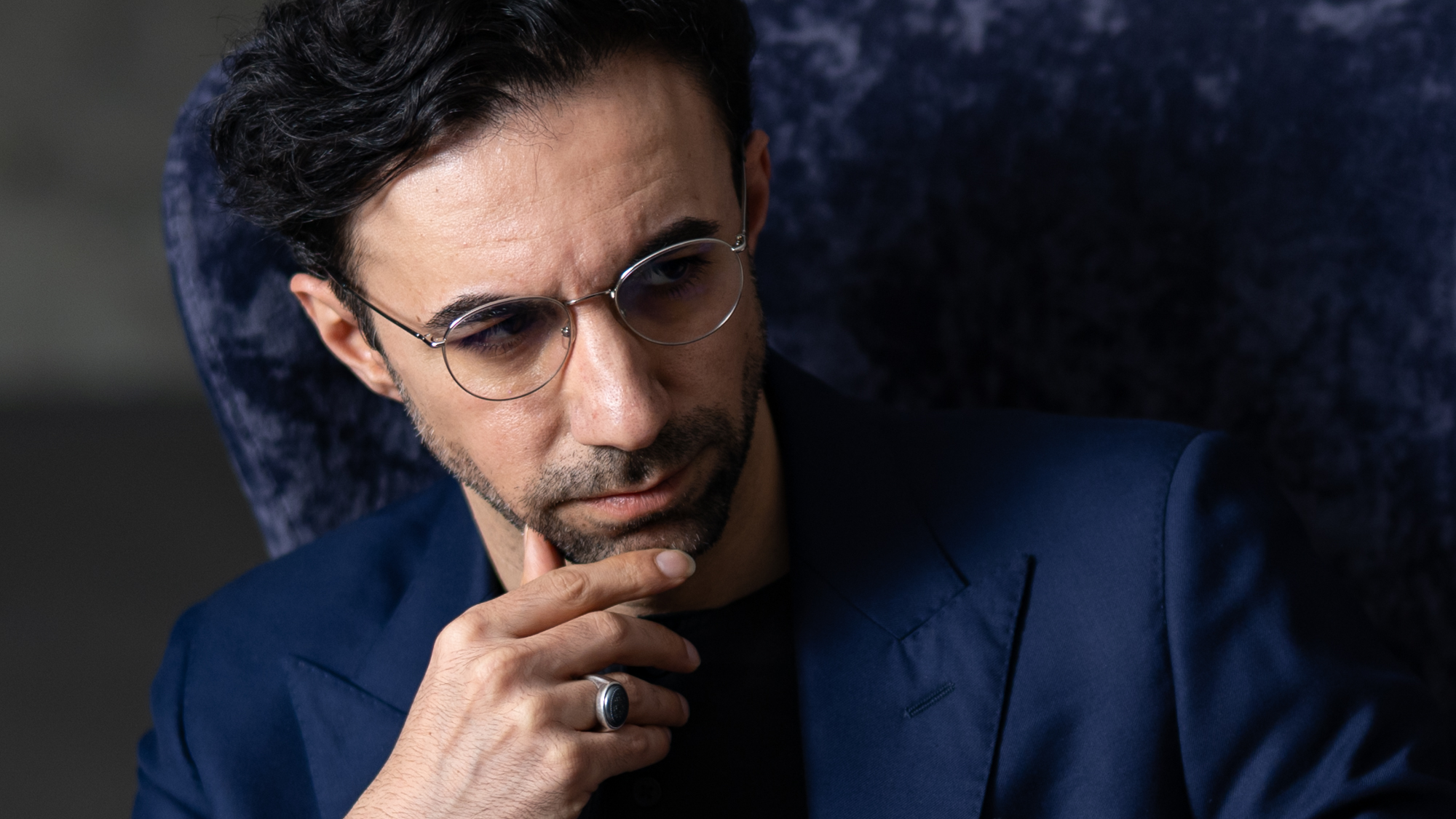
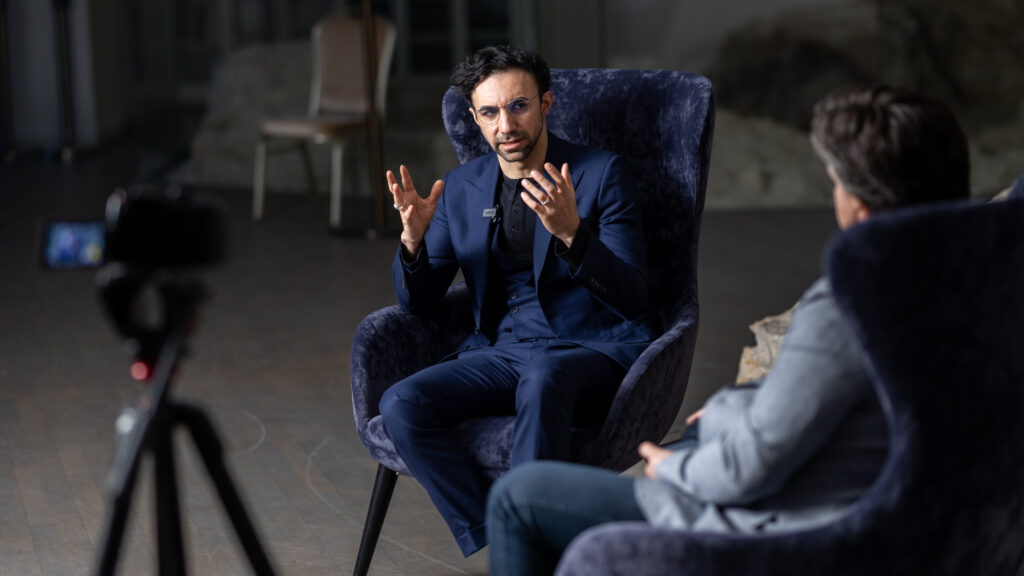
Hessam Habibi Doroh is an expert on Iran, a researcher at the Austrian National Defence Academy, and a PhD candidate at the University of Public Service in Budapest. He graduated from the University of Vienna (South Asian Studies) and Danube University Krems (Diplomacy and Global Affairs). He is the author of Sunni Communities in the Islamic Republic of Iran, 2013–2021 (Brill Publisher, 2023). He teaches courses on International Relations, intercultural studies, and interreligious studies. His fields of interest are borders and borderlands in contemporary Iran and the international relations of the Middle East.
***
This is a preventive war, according to American and Israeli arguments. Does this reasoning make sense to you?
No, definitely not. First of all, it’s not a war that has just started this month, but it’s a process of a war which actually started in June. That war, which was between Iran and Israel, and in a later stage, the United States entered with the aim of destroying or damaging Iran’s nuclear facilities, had no closure; the war was left between stages. Some Iranians said that the war might continue in September or in October, but then there were waves of demonstrations in Iran, and I think, from the logic of Israel and the United States, that was the best moment for attacking Iran, because there was public unrest, and they assessed that the security apparatus was in its weakest position.
‘Last best chance’, as Donald Trump said.
Yes, that’s right.
The American President tried to negotiate with Iran before the military attack, but it failed. We don’t know the details, but probably the Iranians didn’t accept the conditions of the Americans and the Israelis. Was it the ‘last best chance’ for America to do this?
When the war happened in June, the Iranians were in the middle of a negotiation with the United States, and the first strong message to the Iranian public was that we were at the negotiation table, we wanted to reach a deal, and then the United States, with the support of the Israelis, attacked us. So don’t trust the negotiation. But then they started to negotiate again. And before the war started, actually on Thursday, the day that the Iranian delegation met with the American counterpart in Geneva, there was a sense of optimism in Iran.
‘That was the best moment for attacking Iran, because there was public unrest’
I can remember that I talked to many colleagues, many scholars in Iran, and I remember that everyone sounded very optimistic. Everyone said that it seems the Iranians showed a certain flexibility. We wanted to reach a deal. But then the war broke out.
What is your explanation for this change in American attitude? I guess Donald Trump gave an ultimatum to the Iranians about their nuclear programme and their ballistic missile programme, and the Iranians couldn’t accept that. The ballistic missile programme is very crucial for them; if they give it up, they will have no defence left.
Yes. This is part of the defence. Many Iranians, even those who are not supporting the regime, are saying that it’s part of Iran’s defence strategy, and it should not be negotiated. But maybe the Iranians miscalculated or misunderstood the Americans, and there is another aspect, and I’m always surprised that how it’s possible that they were so positive about reaching an agreement with America. They were even planning to negotiate again on a technical term in Vienna on Monday. How can this happen that all of a sudden everything’s changed? So it might also be an intelligence failure that they didn’t understand the signs. Some Iranians criticized the government, saying that there was a play by the Americans, the negotiation was only a tactic to make use of the situation to prepare for a war which the Iranians didn’t prepare for.

Then was Ramadan in the Muslim world, and then was Shabbat in Israel when the war broke out, and so it was an unexpected attack. But I guess the Iranian army prepared for this scenario.
Yes, absolutely, not just because of the current situation, but because of the bigger picture. I lived in Iran for many years, I studied, I went to school there, and I can remember as a child, it was always a sense that there would come a day, there was going to be a big war with the United States and Israel, a kind of end-of-the-world scenario. So ideologically, it was always there. The military also tried to reorganize its forces in the last couple of years. So they prepared themselves for this situation.
What is your evaluation? How strong is the Iranian army? How strong is the regime itself? Can they stand against the very strong series of American and Israeli attacks for weeks, for months?
That is very difficult to say. If the scale of the conflict is going to expand in the same model that we are seeing in these few days, I wouldn’t say that the system can remain in power for several months. From the practical point of view, just to give you an example, the internet in Iran is completely controlled, so there is no access to the internet from the outside world. And there are millions of Iranians who use the internet to make money; they work in online businesses, trying to sell their products, and so on. You have to think about how people are going to survive, the situation regarding the medicines, and the food. Iran depends on certain goods from abroad. The continuation of the conflict has definitely had some impact on the population. A large part of society protested in January, and people are still mentally angry. The first thing that they are thinking is that this situation is the mistake of the Islamic Republic.
‘The continuation of the conflict has definitely had some impact on the population’
Can we expect people to go out into the streets to protest, maybe a littlemore aggressively than they did in January?
It is not possible to expect people to take to the streets during wartime. First of all, people are thinking about their survival there. They try to remain safe at home in order to stay alive. The second thing is that they’re constantly warned by the state that any activities which can weaken the state’s capacity are seen as cooperation with the enemy. So people are facing very hard consequences. And the third aspect which we shouldn’t forget is that Ayatollah Ali Khamenei, the supreme leader of the country, was killed; still, he has a base of supporters in Iran, and they are, at the moment, on the streets. If Iranians go out to demonstrate, it can cause clashes between the supporters of the state and the demonstrators, and that could create a civil war scenario.

Can the US–Israeli coalition win the war by only using airstrikes and naval attacks, without troops on the ground?
The Americans have had lots of experiences in the region, and they made lots of mistakes, but I think they have already evaluated them and learned from them. But on the other hand, the security forces in Iran also saw what happened in Iraq or Syria. They were there too, and they also observed. So that makes it also difficult to see how this war will develop. But if the war continues, the pressure on the United States will rise from the American communities, from the American political system, and the pressure from the Gulf states and the Arab countries would also increase on America to stop the war. And at the end, the Iranians can say, we remained there, the entire world was against us, but we survived. But this is also kind of a miscalculation, because the continuation of the war for a long time can also destroy Iran’s institutions and capacities, so it can become a failed state.
Where are Iran’s allies, Russia and China, in this conflict?
I think in Iran, some people ask the same: what happened to the partnership that was signed between Iran, Russia and China?
No military contracts are between them, only a strategic partnership.
Exactly, not military. Maybe in certain cases, there is intelligence sharing. Politicians in Iran have also learned from the experience of the Ukrainian war that Russians have their own objectives, as the Chinese have their own objectives, and sometimes their objectives are not in line with Iranian goals.
‘The continuation of the war for a long time can also destroy Iran’s institutions and capacities, so it can become a failed state’
I don’t think Russia will risk joining the war, as it could dramatically impact its war in Ukraine.
Can Americans reach out to the Kurds so they join them in attacking Iran from Iraqi territory?
Iran is a multi ethnic country, and it has very complex ethnic dynamics. You have Kurdish people, and also the Kurds are diverse; you have Sunni Kurds, you have Shiite Kurds, you have different other ethnic groups, and minority groups. So, the worst-case scenario for Tehran is that there is an attack from abroad, and at the same time, pressure from those ethnic groups. The ethnic groups historically located on a borderland, which means that any activity from their side is automatically a threat to the territorial integrity of the country. They can change the borders. From the Kurdish perspective, this war might be a good opportunity to fight for their rights. But it might be the worst scenario for them: the Iranian army might attack them, because Tehran needs something to show the world that it is in charge.
Can it be a regional war? Iran purposely attacked civilian targets connected to Western interests in neighbouring countries. Isn’t that a clear indication of their real nature and intentions?
Iran is a state without any friends, a state which is alone. They call it strategic loneliness, even as a theory. So historically, Iran could only cooperate with non-state actors like Hezbollah, Hamas and Shiite militias in Iraq. And by the weakening of those groups after 7 October, Iran had to change its military doctrine—a sign of this is that it is now directly involved in this conflict. And one of the last things that Khamenei gave to the next generation was that this war cannot be just a war between Iran and the US and Israel, but it should be a war for the whole region. So in case we are sinking, the whole region should go down with us. And in the case of Iran winning, we can say that nobody can mess with us.
Could it be that after this war, it turns out there was no Iranian military nuclear programme? As in Iraq 20 years ago, no weapons of mass destruction were found after the US invasion.
Everybody should listen to what the International Atomic Energy Agency (IAEA) is saying. At least from their data, there is no direct threat from Iran’s nuclear programme. In case the Americans completely manage to destroy the whole establishment, and they declare victory, then I think it will be very hard to find any elements as proof for that.
‘Iran is a state without any friends, a state which is alone. They call it strategic loneliness, even as a theory’
I think not just the Iranians, but also the international community has certain concerns when it comes to this kind of accusation, because they have heard the same story in Syria and in Iraq.
If the US and Israel can reach regime change in Iran after this war, what would be the geopolitical consequences of it for the Middle East?
Regime change cannot just happen with bombs and destruction. Because a regime is a kind of community of different people, and regime change can work successfully if certain groups of people participate in this process among the Iranians. If the Americans and the Israelis manage to shape certain political elites in Iran, they can reach a regime change which might also be in their favour without causing chaos in Iran. Because regime change, if it goes wrong, can completely lead to the collapse of the whole establishment. While we are talking, there is also an ongoing procedure of selecting the next Supreme Leader of the country, which can shape the whole region and the country in two different direction: either to continuation until a total destruction of the whole region, or there will be a rational voice inside the system that can say, this is the end, and we start a new path. Every day that the war continues, there are more chances that potential people who can bring a new direction are in danger or might be dead. But if the country completely collapses, then there is no chance for a better future. It’s just the chaos that remains.
Watch the full podcast below: