Nadežda Kokotović has been the Chief Executive Officer of the Brussels Energy Club and is a professional in the fields of public affairs, energy, and management. She has nearly 20 years of experience in managerial positions in Government Affairs, corporations, and development organizations. She was a long-time Chief of Staff to the CEO of the Serbian oil and gas company NIS and the deputy CEO of Gazprom Neft, as well as NIS representative in Brussels. Before that, she worked for the Austrian SOS Kinderdorf International’s Continental Office for CEE/CIS/Baltic states as an Advocacy Adviser. She holds a BA and MA in Russian studies from Belgrade University and an MA in International Relations from the University of Kent.
***
The European Commission has decided that by the end of 2027, importing Russian pipeline gas and LNG into the EU will be prohibited. Is it a wise decision from a political and economic perspective?
Is it a wise decision? It’s a very complicated question. The energy transit routes were always subject to geopolitics. It’s not new. Even in 1968, when the first deal of the century was established about the famous Ukraine transit, at that time, Soviet gas, they were talking about American sanctions and difficulties with building this pipeline. So this issue sounds very dramatic now, but it’s actually something that was bubbling under the surface for many years. The first sanctions against Russia in the 21st century started in 2014; they were against the oil companies and also against certain oil technologies. In 2022, it was escalated. In many aspects, this led to very fragmented energy markets in oil and gas.
If we’re talking about gas, over the last four years, out of four pipeline trans routes from Russia to Europe, only one is active now, and this is the Turk or Balkan stream that is bringing gas through Türkiye, Bulgaria, Serbia to Hungary. Very small quantities of Russian gas are coming to Europe. In 2021, it was about 150 billion cubic meters coming to Europe. In 2025, it was about 38 billion, and the majority of this gas came as LNG. In the case of Hungary, we’re talking about 16 billion cubic metres per year.
The European Commission’s reasoning for this tough decision is that if we don’t buy Russian gas and oil, Russia cannot finance the war against Ukraine to the same extent as before. Is that reasonable?
It depends on which perspective we’re talking from. I think that with this ban, the European Union is pursuing two key goals. The first one is to isolate itself from Russian energy. We’re not talking only about gas, but also oil, which is upcoming. And the second one is to stop the revenue stream for the Russian state. While the first goal will probably be successful, the second one can only be partially successful. The revenue stream for Russia, in terms of oil and gas supplies from Europe, is significantly lower. Will that change Russian politics? This is the key question. And I’m not sure that we are seeing that exactly. Russian energy companies are switching heavily to Asia or to Asian markets, primarily to China and India. But Chinese supplies now cannot replace the European revenues.
So there will be a financial loss in the short or medium term for the Russian economy.
Yes.
How many years would it take for Russia to restructure its energy supply routes from the West to the East?
At least ten years. For example, Russia is now supplying 38 billion cubic meters of gas to China through the Power of Siberia pipeline. This is a fraction of what was supposed to be supplied to Europe before. So it cannot be replaced.
‘Will that change Russian politics? This is the key question. And I’m not sure that we are seeing that exactly’
But now they’re in the first agreements about the building of Siberia 2, through which they can supply about 50 billion cubic meters. At the same time, Russian private companies like Novatek are trying to invest in LNG supplies. So Russia will supply gas through two different streams. Russian LNG and the energy infrastructure production are under sanctions, and Russia does not have the technology. They’re developing this technology, but it cannot be very quick, so they can expect a certain rebound of Russian revenues from these types of sources after 2030.
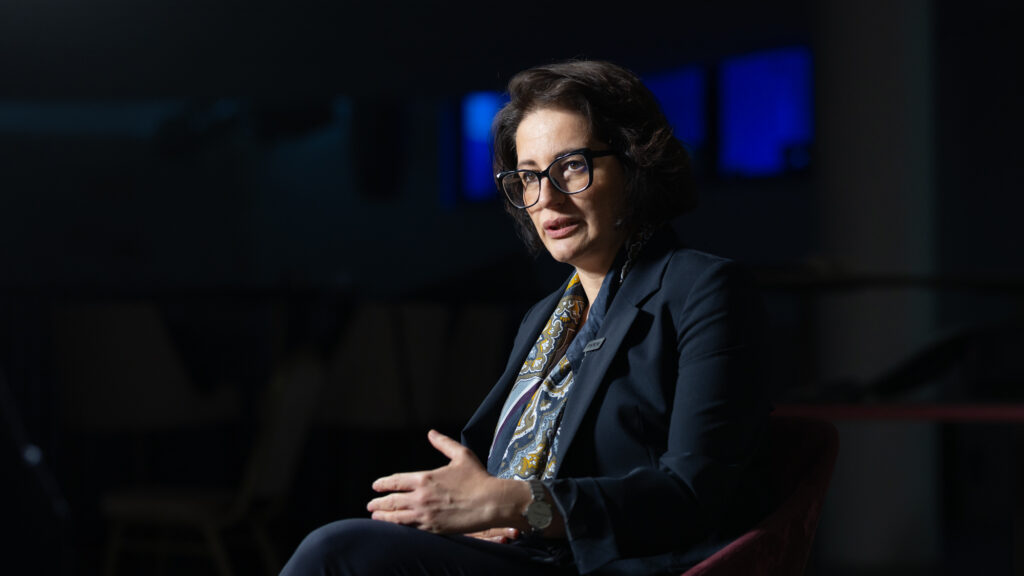
Let’s talk about what will happen to the European market after 2028. Europe tries to replace the missing Russian energy with gas supplies from the US, Norway, Algeria, Qatar, Azerbaijan, and oil from Kazakhstan and Saudi Arabia. After 2028, will the European energy sector work efficiently, without major problems?
In the previous ten or 15 years, Europe was doing a lot to diversify. Even when the gas was coming normally to Europe, Europe was investing in LNG terminals, in interconnectors, and so on. What will happen after 2027? The market is well supplied; most of Europe could be supplied by LNG. The key question here is European competitiveness globally. We saw that in the previous four years, it affected the European industry in a bad way; the gas and electricity prices were going up. So if Europe is competing on global markets with China and the US, it doesn’t look very promising in that respect. The most affected region will be South and Central Europe.
Has Hungary done enough in terms of diversification during the last three years?
Hungary has done a lot. Hungary has a lot of interconnectors with other countries. It has a big gas storage. It plants several gas-powered plants, and it consumes around eight–nine billion cubic metres. But about 60–70 per cent of this gas is coming through the Turk Stream. The CEO of MVM, your energy company, said that Hungary will be able to compensate for the Russian gas with different LNG supplies. However, this is not so much the question of supplies. This is the question about the pricing, especially for consumers and households.
‘Hungary has done a lot. Hungary has a lot of interconnectors with other countries. It has a big gas storage’
The Hungarian government fears that the economic impact of this full ban will be huge; their recent declaration says: ‘it would increase household utility costs to three and a half times the current level, and would almost double the fuel prices.’ Do you agree with this prognosis?
I don’t know the exact calculations, but it sounds very right, because this is something that the rest of Europe also experienced in previous years. In some way, this region was shielded from the Russian supplies due to the high volatility. But in the previous years, Hungary really did a lot to decrease demand, to reorganize themselves, so this effect will not be as strong as it could be without all these preparations.

Hungary has a small gas field in Azerbaijan, and through the Southern Gas Corridor and the new interconnectors, degree by degree, we can have more and more gas from Azerbaijan and from Turkmenistan. Hungary has port rights in Trieste, so we have some maritime access to LNG. Is it enough for the gas sector, or not?
You also have access to Omišalj port in Croatia, and Hungary, I think, booked one billion cubic meters capacity in that terminal. And you also have Azeri gas, you also have booked capacities with American LNG producers, with, I think, Chevron and also with the French energy company Engie. Will that be enough? It will replace certain content; for sure, it will give you an additional cushion of stability. But will it be enough to feed all your economic visions? I’m not sure. So this is something that will be, after all, a matter of price sensitivity for you.
Oil sector: The Adria pipeline is an important supply route, and a new cooperation is forming with Kazakhstan on oil imports. What kind of infrastructure investments does this project require from Hungary in the near future?
Hungary and Croatia are talking about expanding the capacity of the Adria pipeline to accommodate 11 million tons per year. Because you use, I think, 12 million of crude oil per year in Hungary. The other project that Hungary is working very actively on is the pipeline between Hungary and Serbia, and it will be connected also to the supply of Kazakhstan oil, because via Druzhba, you don’t get only Russian oil, but also Kazakh oil.
‘So this is something that will be, after all, a matter of price sensitivity for you’
The problem with these other fields is that they’re not as rich as Russian oil and gas fields. But Hungary also made a big breakthrough this year: they’re signing the deal to buy the Serbian oil industry.
MOL, a Hungarian energy company, will buy a majority stake in NIS, the biggest energy company in Serbia. What’s the significance of this deal?
The other shareholder of this big deal is Abu Dhabi National Oil Company, so ADNOC and MOL together will buy the biggest stake in NIS. This is a historical landmark, not just for Hungary, but also for Serbia. First, it will give Hungary exposure to the South European market. NIS has more than 400 petrol stations in these countries, but it also has one of the most modern refineries in Europe. So it really gives you an additional weight in this region, and it also allows you to optimize all the logistics, including the pipelines, the oil supplies and so on. So this is the deal of this year for Hungary.
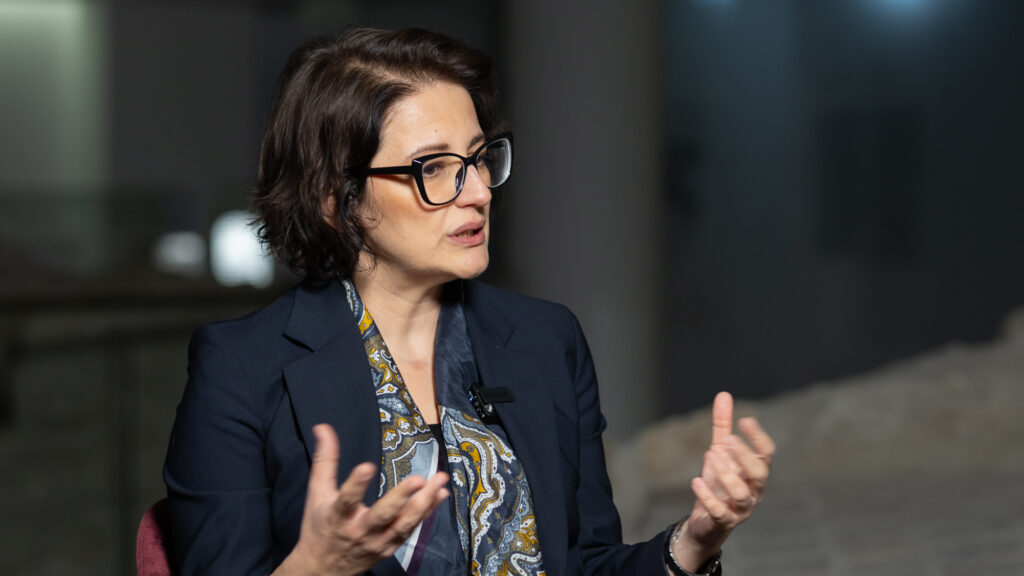
And there was also a deal back in 2009, when MOL acquired the majority stake of the Croatian energy company, INA. MVM, the other Hungarian energy company, just bought two Serbian companies too. Do you see any strategic planning in the Hungarian energy sector to expand in the Balkans?
I think it’s already there. If we look at the oil industry, MOL will be the dominant player in Croatia, in Bosnia-Herzegovina and in Serbia. Practically, the key players of the former Yugoslavian market are going to be heavily dominated by MOL. Talking about MVM, they bought two electricity construction companies in Serbia, but they’re also present in Croatia. MVM is of crucial importance for the region’s gas supplies, because all these LNG supplies that you’re going to get now and in the future are coming via MVM. So the strategic importance of these two companies for South and Central Europe is enormous, and I think that they will be even more important in the coming years.
‘ADNOC and MOL together will buy the biggest stake in NIS. This is a historical landmark’
Will the transition year of 2028 be a difficult year for the average consumer in the European Union?
We have black swan events almost on a daily basis. So speaking about what will happen in two years is really difficult. From how it looks now, the situation will be a bit more challenging than before, but the events are evolving very quickly. I would still be optimistic for 2028 for our region.
Watch the full podcast below:
Related articles: