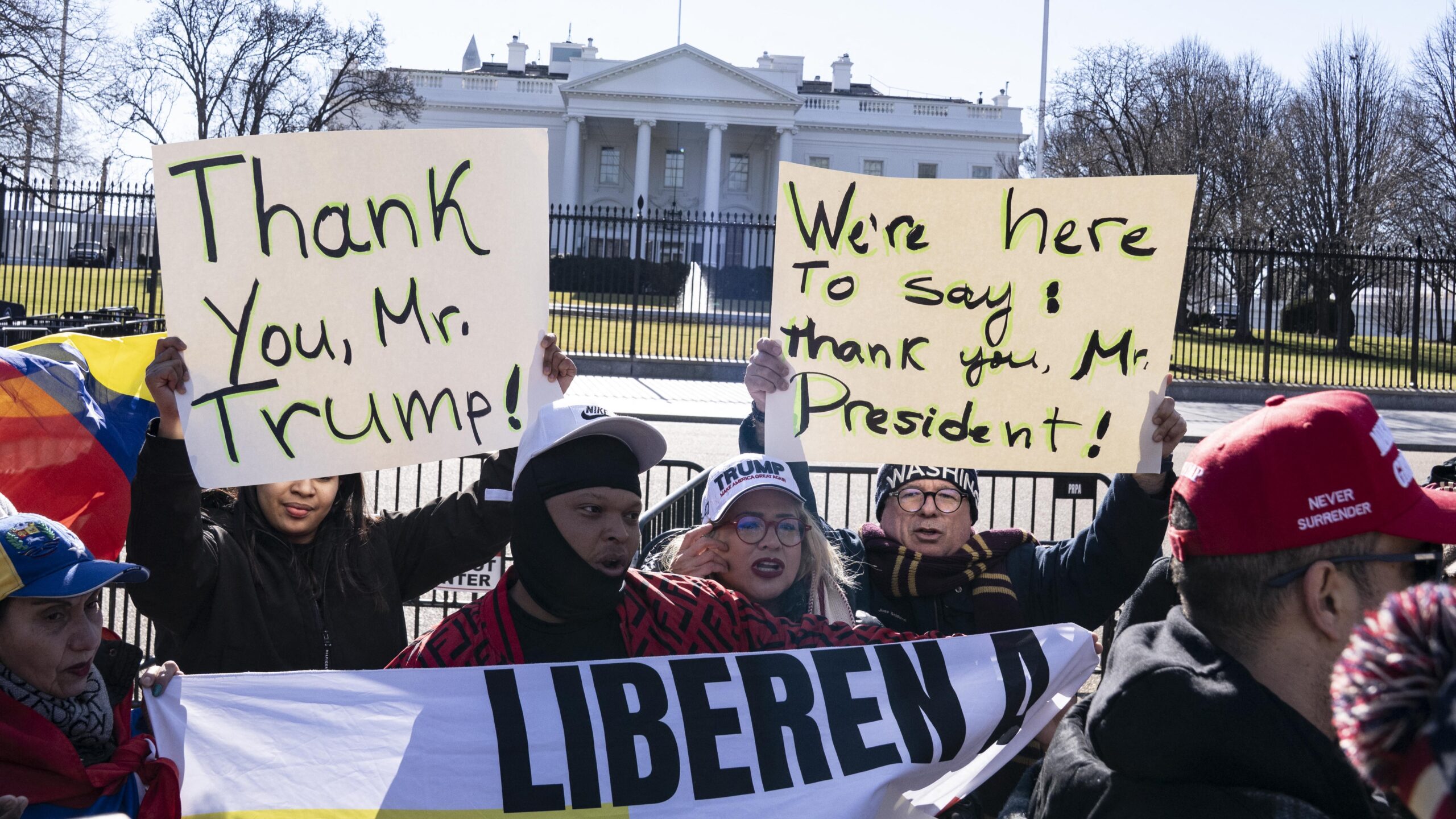
Reactions across Europe to the arrest of Nicolás Maduro by United States personnel have been more complex than early headlines suggested. While legal reservations and sovereignty-based critiques have dominated institutional and media narratives, most of the European right has, in fact, reacted with cautious approval. In many cases, this applause has been accompanied by important qualifications: the operation was described as sub-optimal, legally uncomfortable, or a necessary evil rather than a model to emulate. Yet even this guarded endorsement reveals a deeper European dilemma—how to reconcile moral instincts, legal norms, and strategic necessity when power is exercised decisively by an ally.
The arrest of Maduro, carried out through a tightly controlled and casualty-free operation, constitutes one of the most consequential geopolitical events in the Western Hemisphere in decades. Yet some of its most revealing effects, however, are not being felt in Caracas, but in Europe.
Venezuela has become a stress test. And Europe’s response has exposed both its instincts and its inhibitions.
A Strategic Decapitation, Not an Ideological Crusade
The US operation was neither impulsive nor symbolic. It followed years of legal preparation, intelligence penetration, and coordination with regional actors—including the Vice President Delcy Rodríguez. The arrest of Maduro represents a classic decapitation strategy aimed at dismantling a state that had long ceased to function as a sovereign political entity and had instead evolved into a transnational criminal hub.
Crucially, Washington did not frame the action as a humanitarian intervention or a democracy-promotion exercise. It was presented as a law-enforcement and national security operation grounded in indictments related to narcotrafficking, money laundering, and state-level criminality.
‘The United States acted because it assessed that continued inaction would further degrade regional security’
The United States acted because it assessed that continued inaction would further degrade regional security. Europe, by contrast, has responded—and still is—as if procedure itself were the primary political outcome.
European Reactions
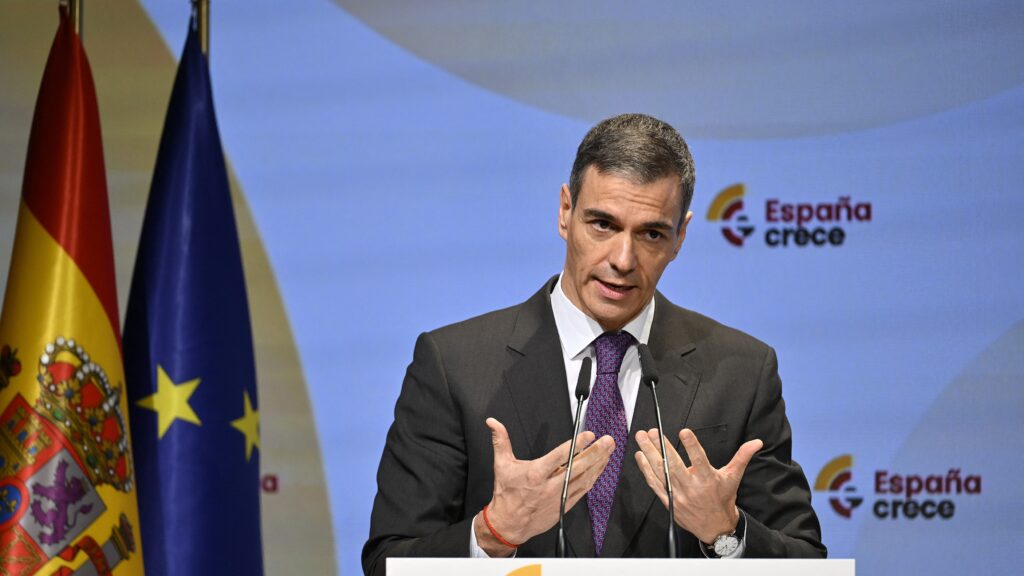
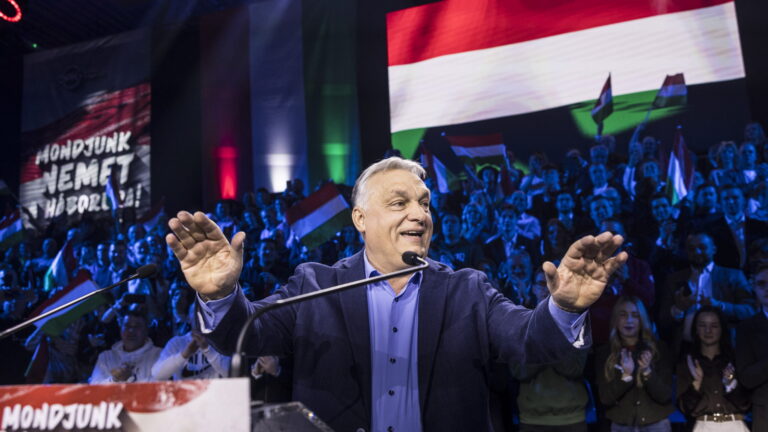
European reactions broadly fall into three overlapping categories. First, applaud or, at the very least, qualified approval, particularly among conservatives and the national-populist right. Many have openly welcomed Maduro’s removal as strategically beneficial while simultaneously stressing that military intervention should remain exceptional. This framing—necessary but undesirable—has been common across Central Europe, parts of Southern Europe, and among Atlantic-oriented conservatives.
Second, strategic silence. Several leaders, especially in Central and Eastern Europe, have chosen not to comment much publicly. This silence is not neutrality; it reflects an understanding of the operation’s utility combined with a reluctance to articulate support in a legally sensitive European environment.
Third, legalistic condemnation, which has come mostly from the centre to the left of the political spectrum, yet also in some parts of the right, most visibly in France. Figures such as Marine Le Pen and Jordan Bardella—also Nigel Farage in Britain—have framed the operation as an unacceptable violation of sovereignty. This reaction is deeply rooted in France’s Gaullist political culture, marked by suspicion of US extraterritorial power and a rigid conception of international law.
What unites these responses—approval included—is Europe’s inability to articulate a doctrine that bridges legality and enforcement.
The European Right’s Dilemma: Sovereignty Without Agency
Contrary to caricatures, the European right is not broadly anti-American. In Italy, Poland, Hungary, much of Central Europe, and the Nordic states, Atlanticism remains a core strategic orientation.
Venezuela has instead revealed a subtler vulnerability: a tendency to treat sovereignty as restraint rather than responsibility.
If sovereignty is inviolable, does it shield regimes that operate as criminal enterprises? If national interest is paramount, can Europe tolerate narco-states exporting organised crime, migration pressure, and regional instability? And if not, what mechanisms—legal, political, or strategic—is Europe willing to activate?
Too often, it seems, sovereignty is invoked not to justify action, but to excuse abstention.
A Familiar Pattern of Strategic Anxiety
This episode echoes February 2025, when several European conservative leaders aligned publicly with Donald Trump during CPAC Washington amid an escalating tariff confrontation. At home, they were swiftly portrayed by national media as unpatriotic or submissive to American interests.
The lesson many absorbed then was not how to defend strategic alignment coherently, but how to minimise exposure. Venezuela has reactivated that instinct. Applauding the outcome while distancing oneself from the method has become the default European posture—safe, but strategically thin.
Washington Is Taking Notes
The United States is watching closely. In Washington’s strategic community, Venezuela is not an isolated case but a signal. Would Europe support decisive action against state-embedded criminal networks elsewhere? How reliable is Europe when legality and security diverge? Can Europe’s conservative movements translate rhetorical sovereignty into operational responsibility? And, more importantly, how aligned with the America First doctrine are European conservatives?
‘Too often, it seems, sovereignty is invoked not to justify action, but to excuse abstention’
These questions matter. US analysts openly note that Colombia, Mexico, Honduras, and Nicaragua remain under scrutiny, with electoral timing carefully considered. Greenland has also re-entered strategic discussions. Here, too, Europe’s reaction to Maduro is shaping American expectations.
International Law or Moral Alibi?
International law matters. But law without enforcement is not order; it is ritual. The Maduro regime hollowed out Venezuelan sovereignty from within while invoking non-interference as a shield. To defend such sovereignty in abstract terms risks turning international law into a moral alibi for paralysis.
Europe must confront a fundamental question: Does sovereignty protect states, or does it protect regimes?
The Price of Strategic Innocence
In Suicidal Empathy (2026), Gad Saad describes a psychological pathology in which empathy, severed from prudence and self-preservation, becomes self-destructive. Individuals, he argues, can become so fearful of causing harm that they accept their own erosion.
The Venezuelan episode suggests that states—and perhaps entire continents—can suffer from the same ailment.
Europe’s discomfort with enforcement, its instinctive retreat into legal formalism, and its preference for moral signalling over strategic responsibility all point to a form of geopolitical suicidal empathy. A continent shaped by historical trauma has become hesitant to exercise power even when inaction carries greater moral and material costs.
Sovereignty must include responsibility. And empathy, if it is to remain virtuous, must be bounded by realism.
Maduro is no longer in Caracas. And Europe—the right, the left, and the rest—must wake up once and for all from the dream of strategic innocence. This is our moment of truth. For our allies and for ourselves. We should cease it.
Related articles: