‘The planned seizure of frozen Russian assets by Brussels is effectively a message of war,’ Miklós Szánthó, Director General of the Hungarian conservative think tank Center for Fundamental Rights, wrote in a Facebook post on Saturday, 13 December.
That same day, the governing Fidesz–KDNP coalition held an anti-war rally in Mohács, Hungary, attended by Prime Minister Viktor Orbán. In his post, Szánthó summarized what the Prime Minister described as the three greatest dangers currently facing Europe.
‘The first danger is war,’ Szánthó wrote. ‘What we are seeing in Brussels is no longer cooperation based on treaties, but open political domination. Instead of unanimity, they want to decide on the use of immobilized Russian assets by a qualified majority, deliberately bypassing Hungary. This is not only a violation of national sovereignty, but also an attack on legal and financial stability, undermining trust in custodians and in the European financial system as a whole. While they promised the war would come at no cost, it has now become clear that taxpayers and future generations will bear the financial burden of the conflict in Ukraine.
The second danger is migration. The same Brussels mindset is at work here as well: instead of respecting national decision-making, they seek to manage the crisis through centralized coercion, ignoring the security and social realities of the affected countries. Rather than protecting borders, they are imposing quotas and redistribution mechanisms that will only increase instability in the long term. War and migration are interconnected, and Brussels expects European citizens to pay the price for both.
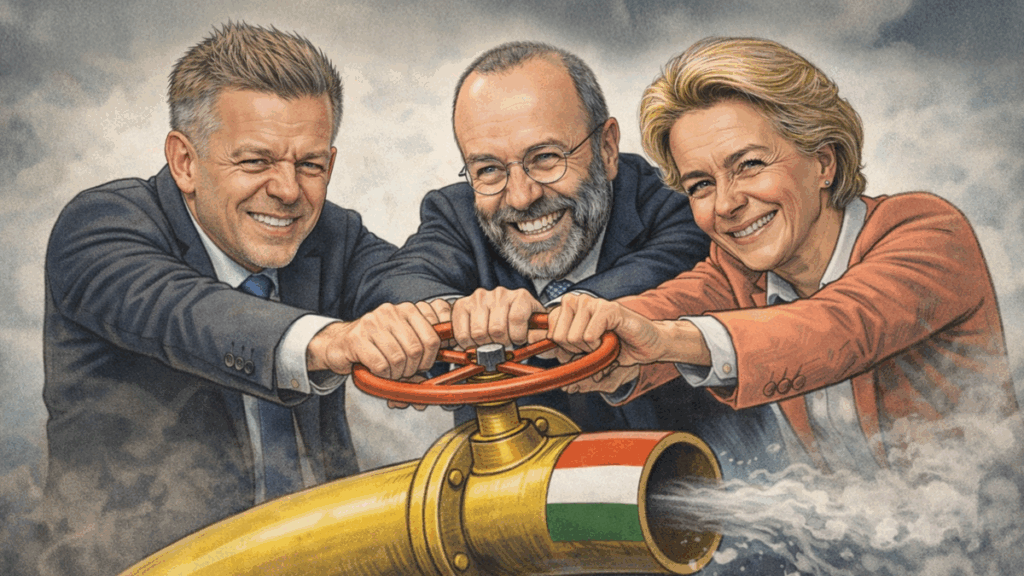
The third danger is the political left, specifically the Tisza party, which is nothing more than a political product created in Brussels. This is no accident, but part of a deliberate strategy. Under the leadership of Merz, Weber, and von der Leyen, Brussels is once again attempting to interfere in Hungarian elections. After 2018 and 2022, they now seek to influence the will of the Hungarian people in 2026 through external means. Tisza fits into this scenario not as a national alternative, but as an imported political project,’ Szánthó wrote, relaying the Prime Minister’s thoughts.
‘The message of the anti-war rallies is therefore clear. Hungary can only stay out of the war, defend itself against migration pressure, and keep the Brussels left at bay if it consistently resists external pressure and firmly protects its sovereignty—at a time when more and more actors in Europe are abandoning the old rules,’ Szánthó concluded.
Related articles: