Portugal is preparing for its seventh election in the past three years. This time, the southern EU member state will vote on who will hold the presidency for the next five years. Recent polling suggests an extremely tight first round, with a run-off all but certain.
Voters will go to the polls on 18 January for the first round, with a potential second round scheduled for 8 February. The election is taking place amid significant volatility, both internationally and domestically. As new political forces—most notably André Ventura’s right-wing, anti-immigration Chega—continue to gain ground election after election, traditional parties are struggling to retain influence in Portugal, a dynamic that is clearly reflected in the presidential race.
According to the latest poll by Pitagórica, published on 8 January, André Ventura leads the field with 21 per cent, just one percentage point ahead of the Socialist Party (PS) candidate António José Seguro. In third place is João Cotrim de Figueiredo, running as an independent, with 18 per cent—level with Henrique Gouveia e Melo and just one percentage point ahead of Luís Marques Mendes, the candidate of the Social Democratic Party (PPD)-led Democratic Alliance (AD).
Europe Elects on X (formerly Twitter): “Portugal, Pitagórica poll:Presidential electionVentura (CH-PfE): 21% (+1)Seguro (PS-S&D): 20% (-1)Cotrim (IL-RE): 18%Gouveia e Melo (*): 18% (+1)M. Mendes (*-EPP): 17% (+1)Martins (BE-LEFT): 3%Filipe (PCP-LEFT): 2% (-1)Pinto (L-Greens/EFA): 1%M.J. Vieira (*): 0% (-1)… pic.twitter.com/NyNWDrWQrv / X”
Portugal, Pitagórica poll:Presidential electionVentura (CH-PfE): 21% (+1)Seguro (PS-S&D): 20% (-1)Cotrim (IL-RE): 18%Gouveia e Melo (*): 18% (+1)M. Mendes (*-EPP): 17% (+1)Martins (BE-LEFT): 3%Filipe (PCP-LEFT): 2% (-1)Pinto (L-Greens/EFA): 1%M.J. Vieira (*): 0% (-1)… pic.twitter.com/NyNWDrWQrv
Other polls point to similar dynamics. Pitagórica’s own survey from 7 January placed Seguro first with 21 per cent and Ventura second with 20 per cent, while the positions of the remaining major candidates remained unchanged. According to Estimador, Ventura currently has the highest probability of reaching the second round, at 69 per cent, followed by AD’s Marques Mendes with 48 per cent.
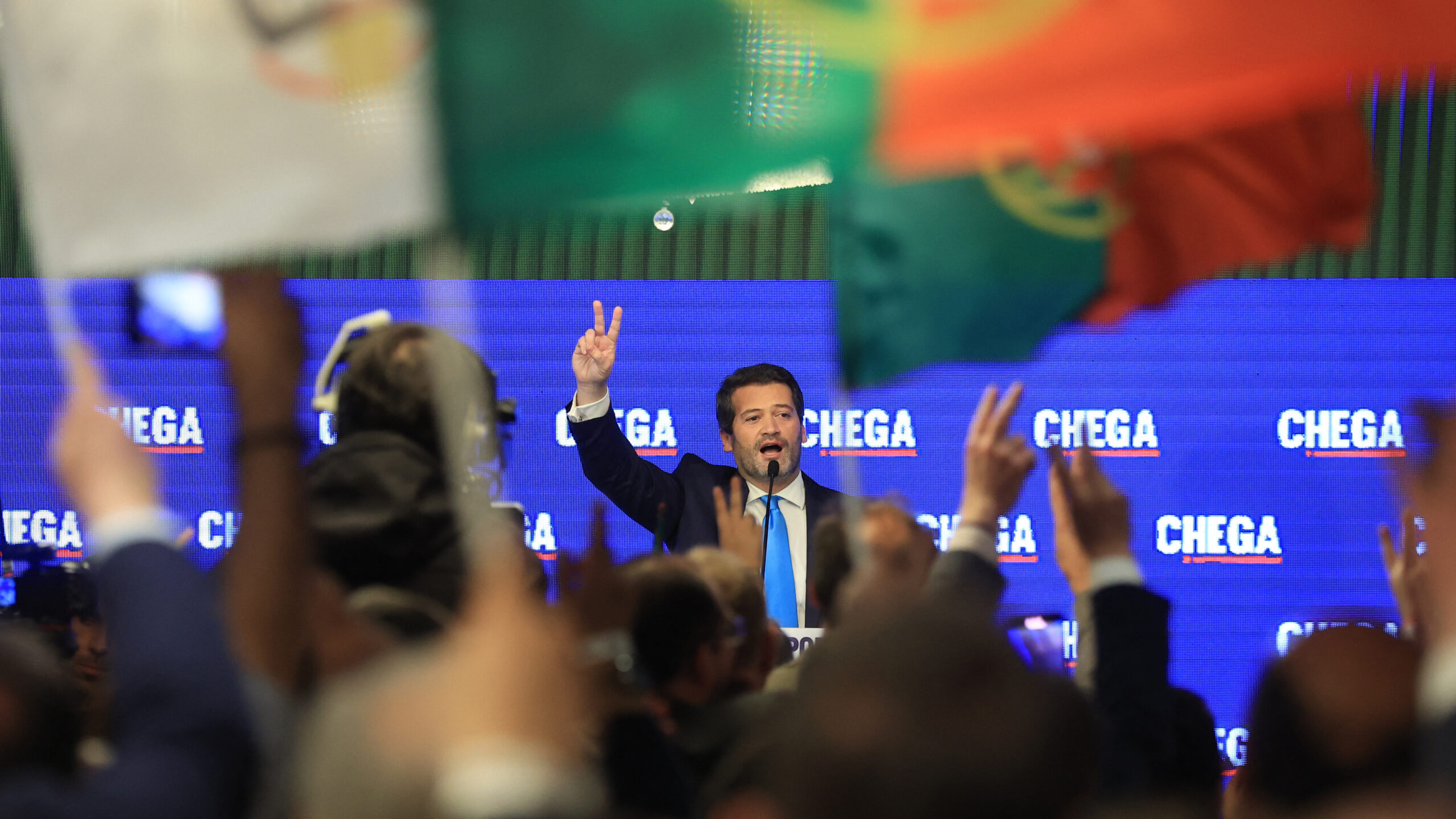
Chega’s rise appears increasingly unstoppable in Portuguese politics, reflecting widespread frustration with political instability and the traditional party system. Founded in 2019 by André Ventura, the party has grown from a marginal force with a single parliamentary seat into the second-largest party in the Assembleia da República. In the May 2025 legislative election, Chega secured approximately 22.8 per cent of the vote and 60 seats, surpassing the Socialist Party and becoming the main opposition force for the first time in Portugal’s democratic history. Following the election, Ventura declared that his party ‘had swept the left bloc off the map in style’.
Like several other southern EU member states, Portugal is grappling with the social and security pressures associated with mass migration. Surveys consistently list immigration among the key issues shaping the presidential campaign, alongside healthcare and labour policy. A majority of Portuguese voters view the current immigration policy as overly permissive, expressing concerns about its impact on crime, wages, and cultural cohesion.
‘Chega’s rise appears increasingly unstoppable in Portuguese politics, reflecting widespread frustration with political instability and the traditional party system’
Ventura and Chega have campaigned on an anti-immigration platform since the party’s founding. Their proposals go beyond general calls for stricter border control and form part of a broader national-sovereignty agenda. As Chega Vice President Pedro dos Santos Frazão previously told Hungarian Conservative, the party advocates stronger border controls, a reduction in mass and illegal immigration, and opposition to open-door migration policies. At the same time, it supports limited immigration from culturally familiar Portuguese-speaking countries and insists that all migrants respect local norms and traditions. The party promotes zero tolerance for illegal migration, the deportation of economically inactive migrants or those with criminal records, regulated labour-migration quotas, and financial incentives for the voluntary return of migrants deemed surplus to economic needs.
Ventura is also a key ally of Hungarian Prime Minister Viktor Orbán within the European political arena. He visited Budapest in May 2023 for bilateral talks with the Hungarian prime minister, during which they discussed the need to unite conservative forces across Europe—an idea that later materialized under the banner of Patriots for Europe. The two leaders met again in February 2025 at the Patriots for Europe ‘Make Europe Great Again’ summit in Madrid. In his speech at the event, Ventura criticized Europe’s political mainstream, arguing that its era was coming to an end and calling for a new leadership rooted in nationalist and conservative forces. He also stressed the need to ‘reconquer a Europe that is ours, and that belongs to us—a Christian Europe’.
Related articles: