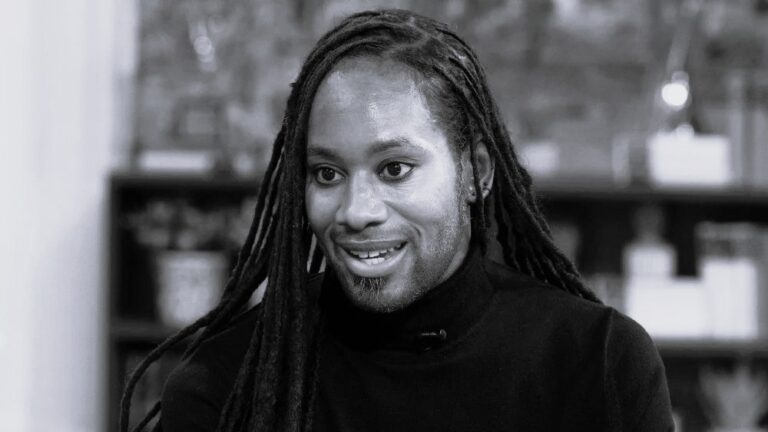
Former Hungarian prime minister Viktor Orbán appointed János Hajdu, the recently dismissed head of the Counter Terrorism Centre (TEK), as Fidesz’s security director on Tuesday, less than a day after prosecutors questioned him as a suspect in the so-called Ukrainian ‘cash convoy’ investigation.
‘From today, János Hajdu is Fidesz’s security director. Anyone who wants to intimidate us had better get up earlier. Welcome back on board, General,’ Orbán announced. Fidesz said Hajdu, who held the same party position before 2010, would take up the role immediately.
Hajdu led TEK from its establishment after Orbán returned to power in 2010 until Prime Minister Péter Magyar removed him from office at the end of May. Formally responsible for counter-terrorism operations, hostage rescue, the apprehension of dangerous suspects, and the protection of senior officials, TEK also provided Orbán’s personal security under Hajdu. Magyar and the Tisza Party portrayed TEK as an excessively personalized institution closely tied to the former prime minister, frequently characterizing it as ‘Orbán’s private army’.
The appointment is a clear public show of support following the Budapest Investigative Prosecutor’s Office’s decision to question Hajdu on Monday over seven counts of unlawful detention involving the alleged mistreatment of the victims. Hajdu denied committing any offence, lodged a complaint against the suspicion, gave evidence, and remains free while the investigation continues.
Prosecutors allege that Hajdu briefed operational commanders on 4 March and ordered the interception of two Ukrainian armoured vehicles carrying large quantities of cash and investment gold from Austria through Hungary to Ukraine. The following day, TEK officers stopped the vehicles at the Alacska rest area on Budapest’s M0 motorway and forced the seven Ukrainian crew members to the ground, handcuffed them behind their backs, and covered their eyes with improperly fitted hoods.
‘Orbán had already described the investigation as a politically motivated reprisal ordered by Magyar’s government’
According to the prosecution service, Hajdu personally directed the operation and kept the Ukrainians in custody even after the National Tax and Customs Administration (NAV) had classified them as witnesses rather than suspects. NAV officers allegedly asked repeatedly for their handcuffs to be removed and indicated that no further procedural action was planned.
Prosecutors said the seven men were nevertheless deprived of their liberty without legal grounds for at least nine hours. They remained handcuffed even while sleeping, while the hoods were allegedly used in a manner that violated their human dignity and caused suffering beyond that normally associated with detention.
Orbán had already described the investigation as a politically motivated reprisal ordered by Magyar’s government, calling Hajdu a model officer who had protected Hungary. Responding to news of the questioning, Magyar asked: ‘Who will be next?’, most likely referring to Orbán himself, as the former prime minister’s name had surfaced in media reports as a potential subject of the investigation.
An alleged internal prosecutorial document dated 9 June and obtained by Hungarian outlet 444 named Orbán, former national security state secretary Örs Farkas, Hajdu, and former senior NAV official Tamás Demeter as the individuals who allegedly made the key decisions or issued instructions.
Prime Minister Magyar last week called on the Prosecutor General to interrogate Orbán in connection with the investigation.
The document reportedly stated that investigators should focus primarily on establishing the four men’s potential criminal liability and that sufficient grounds already existed to question Farkas and Hajdu as suspects. The Prosecutor General’s Office has neither authenticated the leaked document nor explicitly denied its contents, although it previously confirmed that reasonable suspicion had arisen concerning several senior figures.
‘Magyar last week called on the Prosecutor General to interrogate Orbán in connection with the investigation’
The convoy, intercepted on 5 March, carried €35 million, $40 million, and nine kilograms of investment gold, together valued at more than HUF 27 billion. NAV continues to investigate suspected money laundering, while prosecutors are separately examining alleged unlawful detention and official misconduct surrounding the operation.
The seized assets were returned to Ukraine in early May. Orbán has not been formally named as a suspect, and prosecutors have not announced whether further senior officials will be questioned.
Related articles:
At a time when public debate is increasingly polarized and superficial, Hungarian Conservative remains committed to depth, intellectual honesty, and independent conservative thought.
Producing high-quality journalism requires resources. Your contribution helps us expand our coverage, reach new audiences, and keep our content accessible.

Please consider supporting our mission.