Many have already forgotten about the biggest corruption scandal to hit the European Union, Qatargate; now, almost exactly three years later, we are witnessing another major scandal involving the top of the Brussels elite. On Tuesday, 2 December, Belgian authorities detained former EU foreign policy chief Federica Mogherini and one of the EU’s most senior diplomats, Stefano Sannino, as part of a fraud probe.
According to media reports, police detained three suspects and searched the European External Action Service (EEAS) and the College of Europe over alleged corruption in the establishment of a training academy for diplomats. The searches—conducted at the request of the European Public Prosecutor’s Office (EPPO) and approved by the Belgian police—took place at the EEAS in Brussels, in buildings of the College of Europe in Bruges and at private homes, according to an EPPO statement.
Prosecutors allege that the public tender for the nine-month European Union Diplomatic Academy, an EU-funded training programme for junior diplomats, run by the EEAS, was rigged to favour the College of Europe. According to the charges, the College (with Mogherini as its rector) received confidential procurement information—including selection criteria—in advance, giving it an unfair competitive advantage. This alleged bias in favour of the College may amount to procurement fraud, corruption, undue conflict of interest, and a breach of professional confidentiality rules.
‘The accusations concern procurement fraud and corruption, conflict of interest, and violation of professional secrecy’
Federica Mogherini led the EEAS from 2014 to 2019. Since September 2020, she has served as rector of the College of Europe in Bruges—a prestigious institution that trains many future EU diplomats. Stefano Sannino was previously Secretary-General of the EEAS (2021–2024) and, as of 2025, Director-General at the European Commission’s Directorate-General for Middle East, North Africa and Gulf.
Authorities released the suspects on Wednesday without bringing charges, Euronews reported. The EPPO said in a press release on Wednesday morning that the three individuals were formally notified of the accusations. They also noted that the third suspect is a senior staff member of the College of Europe. According to the Italian press, the suspect is also an Italian national.
‘The accusations concern procurement fraud and corruption, conflict of interest, and violation of professional secrecy. They were released, as they are not considered a flight risk,’ the press statement said.
Von der Leyen in Trouble
The European Commission confirmed the raids in a statement on Tuesday; however, it declined to comment on any further details. The College of Europe said in a statement that it will cooperate with authorities in the case. ‘The College remains committed to the highest standards of integrity, fairness, and compliance—both in academic and administrative matters. The College takes all necessary measures to ensure the continuity of its activities.’
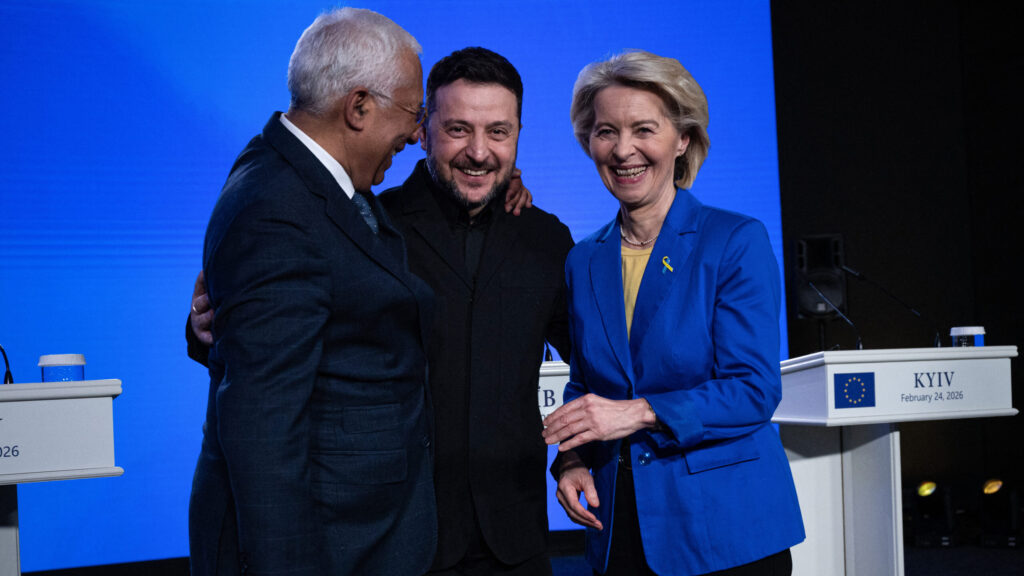
Both Mogherini and Sannino worked closely with European Commission President Ursula von der Leyen, making the current probe especially painful for Brussels. Von der Leyen’s mandate is already weak: she has survived three motions of censure in recent months, filed by political groups from left and right. One of these motions questioned the Commission President’s transparency and accountability in the so-called Pfizergate case. After the detention of Mogherini and Sannino, von der Leyen is already facing renewed calls for another, fourth motion of censure.
Zoltan Kovacs on X (formerly Twitter): “🔥 Another Blow to the War Mafia: Brussels’ prominent pro-war @eu_eeas leaders arrested for corruption🏛️ For years, the European External Action Service (EEAS) has operated as the de facto headquarters of the EU’s pro-war, pro-Ukraine political establishment. Its leadership… pic.twitter.com/OmiEFfoDfk / X”
🔥 Another Blow to the War Mafia: Brussels’ prominent pro-war @eu_eeas leaders arrested for corruption🏛️ For years, the European External Action Service (EEAS) has operated as the de facto headquarters of the EU’s pro-war, pro-Ukraine political establishment. Its leadership… pic.twitter.com/OmiEFfoDfk
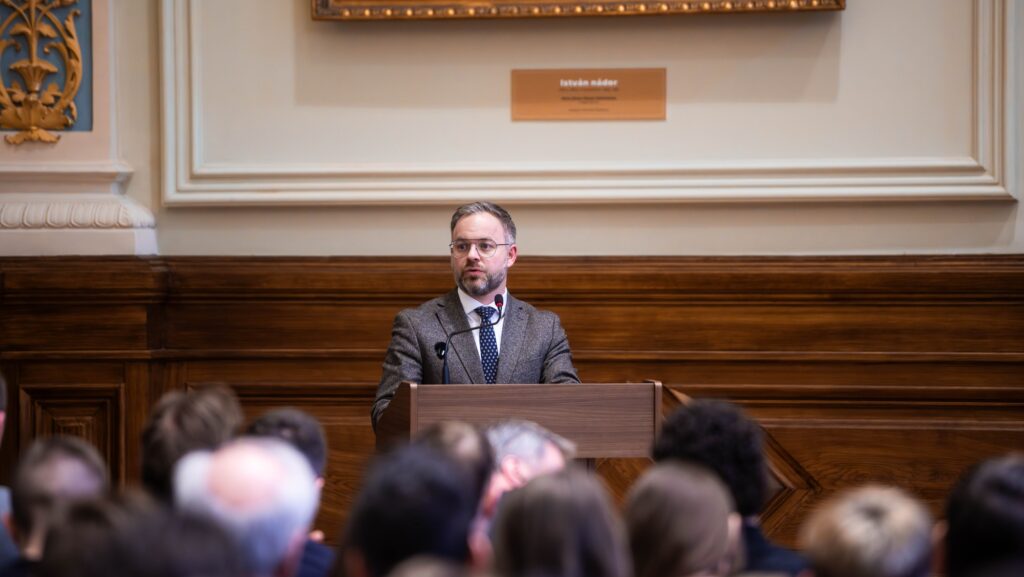
In a post on X, Hungarian State Secretary Zoltán Kovács stressed that the arrests are major setbacks for the ‘EU’s war mafia’—a network which has driven Brussels’s pro-Ukraine, pro-war foreign-policy agenda for years. He argued that the investigation exposes systemic problems within the EU’s foreign-policy machinery. He linked the case to broader allegations of opaque tenders, insider networks and ideological capture, suggesting parallels between suspected misconduct in Brussels and high-profile corruption scandals in Ukraine.
Cristiano Sebastiani, the staff representative of one of the EU’s major trade unions, Renouveau & Démocratie, told POLITICO Brussels that, if proven, the allegations would have ‘a disastrous impact on the credibility of the institutions concerned, and more broadly on citizens’ perception of all European institutions.’
Related articles: