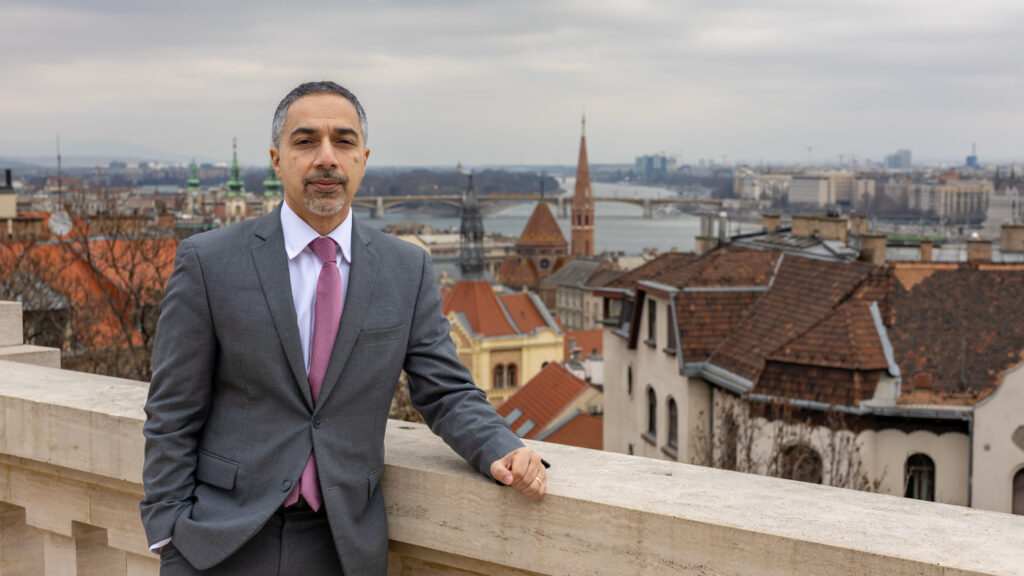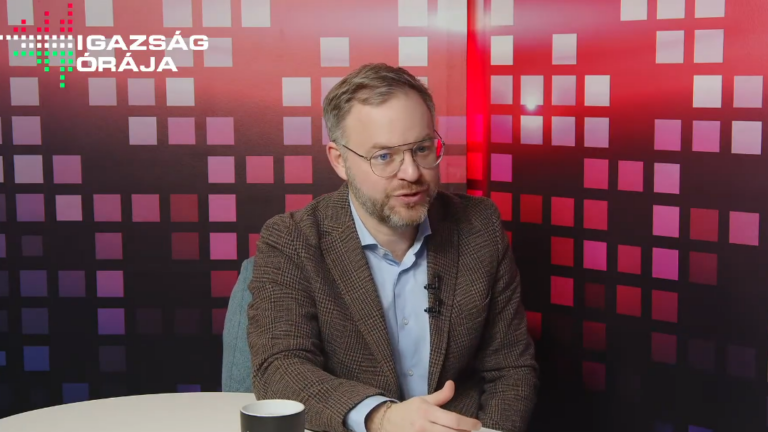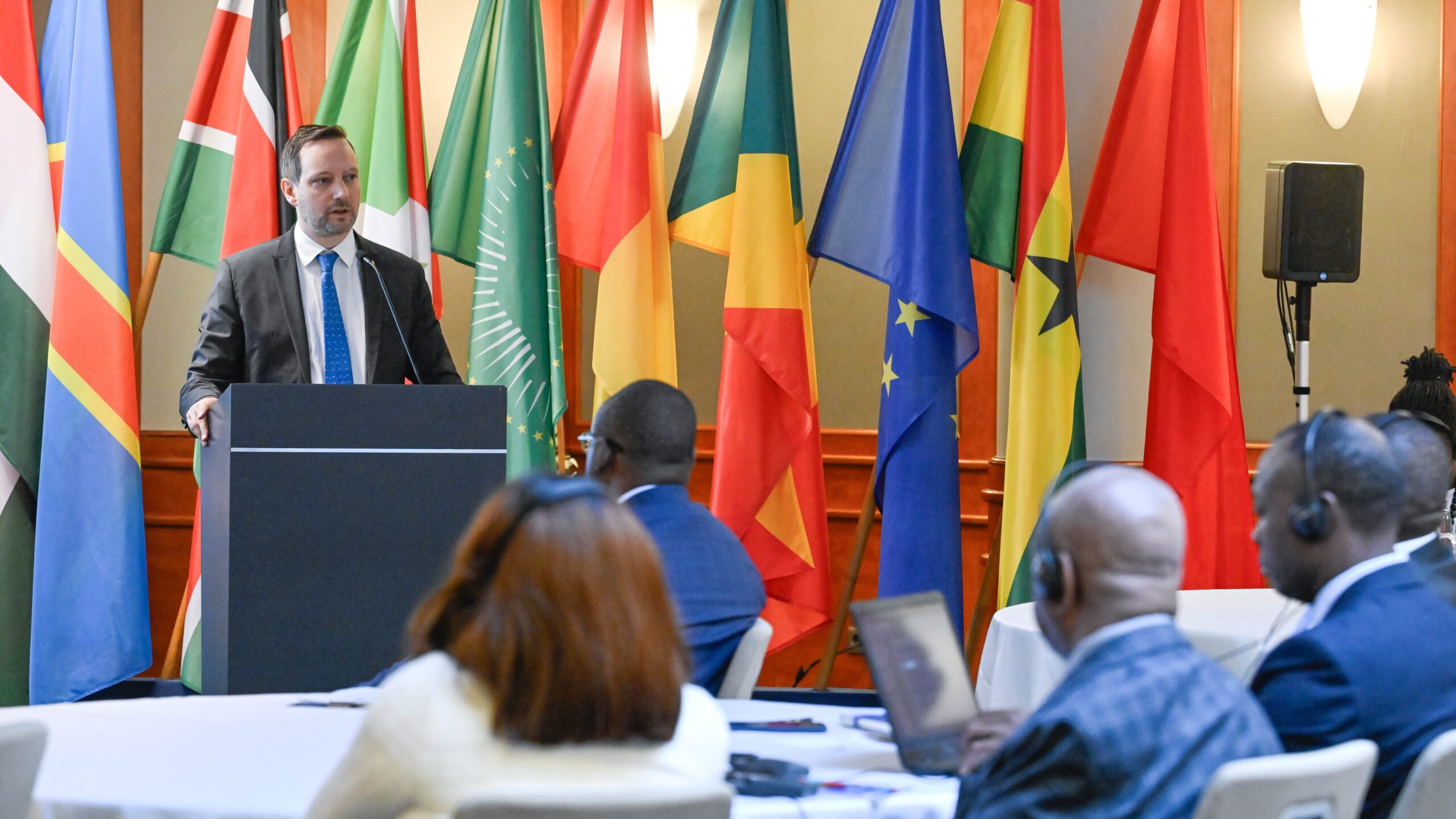
On 4 February, Director of the Hungary Helps Agency Tristan Azbej signed a Memorandum of Understanding with the United States State Department. This event signals a synergy between the current US administration and Hungary on the approach to international development as well.
Hungary is a relative latecomer to focusing specifically on religious freedom within international development, largely due to the country’s relatively young democracy. While an emphasis on national and civilizational identity emerged quickly in domestic political discourse after the fall of communism, this was not initially reflected in foreign policy, least of all in development policy. Hungary did stress—often amid mixed signals from the West—the protection of its minorities in neighbouring states. Beyond its immediate region, however, Hungarian resources were largely channelled through multilateral bodies, following the lead of dominant Western structures rather than pursuing an independent path.
The change that meant the creation of the Hungary Helps Program (later an agency) was a logical development of the emerging and even strengthening emphasis of national and, after all, civilizational identity. It focuses on helping persecuted Christians by distributing aid through churches and faith-based organizations, ensuring its use is maximized at the local level, among its direct recipients.
It was long regarded as a peculiarity in Western eyes, but by now it has also received recognition from the United States. At the 2026 International Religious Freedom Summit, the Hungary Helps Agency received an award for its work among persecuted Christians. A few days later, on 4 February, Michael J Rigas of the United States Department of State signed a Memorandum of Understanding with Tristan Azbej, State Secretary of the Hungarian Government for the Aid of Persecuted Christians, ‘to advance religious freedom, public-private partnerships, and peace and reconciliation in the Middle East and sub-Saharan Africa.’ With this step, the Trump administration recognized the Hungary Helps Agency as a major partner in its emerging vision for international development—one that places greater emphasis on the plight of persecuted Christians worldwide.
‘With this step, the Trump administration recognized the Hungary Helps Agency as a major partner in its emerging vision for international developmen’
Defending religious freedom has been a longstanding goal of US humanitarian actors since the 19th century. When the field of international development emerged after the Second World War, however, far less attention was paid to religious minorities within the new, lavishly funded agencies and programmes of the 1950s and 1960s, such as the now-defunct United States Agency for International Development and regional initiatives like the Alliance for Progress. The dominant vision was that of a ‘universal and homogeneous state’ of humankind, shaped by Cold War modernization theory, rather than the protection and nourishment of distinct communities. Yet a persistent tension remained between advancing broad humanitarian and development goals and their impact on highly differentiated local communities, particularly in parts of the developing world.
In this sense, we can now observe an interesting process in which the Hungary Helps model converges with US state objectives. The pivot of a small, semi-peripheral nation towards a distinctive approach to international aid preceded that of the United States, long regarded as being at the forefront of organizational innovation. In effect, Hungary responded to a crisis originating in the Global South—namely the 2015 refugee crisis—by reorienting its development policy, while the US responded to its own, far more severe crisis in 2001 with a securitized approach alongside largely unchanged humanitarian goals.
US cooperation with Hungary Helps now marks a step toward finding a new way to deliver humanitarian aid in the post-USAID era. Of course, how the specific model will be utilized in this regard is up for question. What is clear is that there will be much more focus on reaching persecuted Christians as a specific group.
This will potentially enhance not just the living standards of Christians. As the Hungary Helps model has demonstrated repeatedly, helping Christian communities with infrastructure benefits all locals, as these are public institutions (like a hospital, a school, or a well) that can be used by people of all faiths. What is more, these spaces can bring people from different communities together, enabling them to meet in person and, hopefully, recognize their mutual interest in living together.
Another way in which the Hungary Helps model may enhance American aid policy is by recognizing limits. For a small country with constrained capacities, a targeted, faith-based agency with a clearly defined and relatively narrow mandate is a rational choice. While the United States may not wish to narrow its focus in the same way, articulating more limited objectives openly and honestly—rather than relying on sweeping modernization claims—can be rhetorically and practically beneficial.
One lesson of post-1945 global history is clear: no nation can do everything for the world, and the reach of human institutions is not omnipotent. Cooperation between Hungary Helps and US state agencies may therefore foster more resilient and effective development practices to assist developing nations in the 12st century.
Related articles: