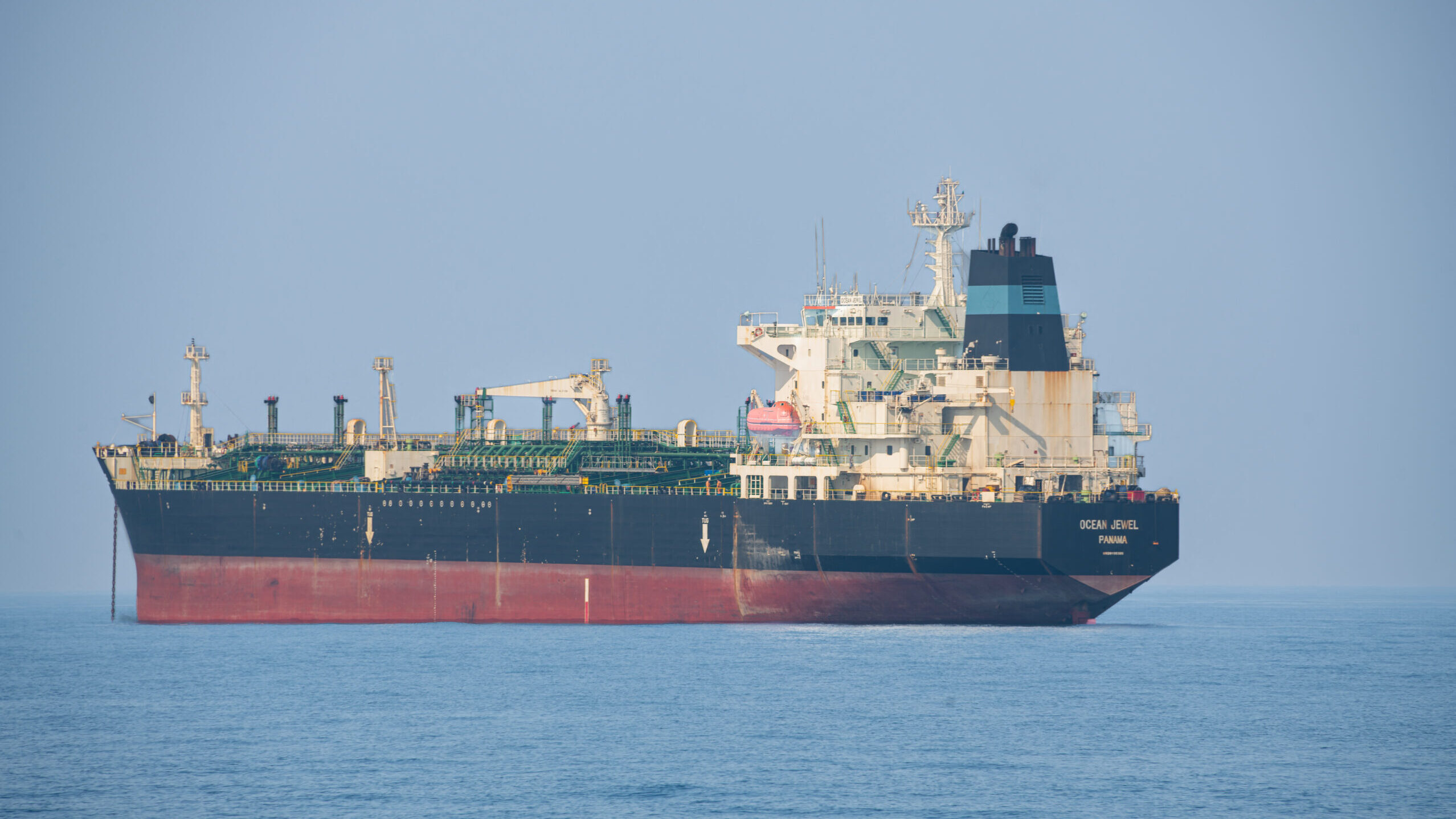
After the US–Israeli joint military operation against Iran and the subsequent retaliatory strikes by the Persian regime against America’s allies in the region, what is now unfolding appears to be one of the most serious energy crises Europe has faced in recent years.
With the effective closure of the Strait of Hormuz—the most important artery of global trade, accounting for around 20 per cent of global oil and gas flows—oil prices skyrocketed immediately, with Brent crude rising by 13 per cent in early trading to reach a 14-month high of $82 per barrel on Monday.
Even more concerning, gasoil futures soared by 15 per cent on the International Exchange to $869 per metric ton over the weekend, before jumping an additional 21 per cent on Monday amid reports that one of Saudi Aramco’s largest refineries, Ras Tanura, was hit by a drone strike, forcing its closure. According to MarketWatch, Monday’s surge could lead to the highest close since November 2023, when gasoil futures reached $910 per metric ton, and is on pace for its largest percentage increase since May 2020, when it rose by over 23 per cent.
‘European citizens are already feeling the impact: gas prices rose by as much as 28 per cent’
Gasoil is a crude oil derivative, commonly known as diesel, used for agricultural machinery, shipping, and rail transport, making it a crucial industrial fuel. These developments could deliver a serious blow to European economies, which have only recently begun to recover after years of negative growth and stagnation. They also make the European Commission’s plan to phase out Russian energy imports increasingly costly—more so than it already is—which, according to a recent analysis by the Hungarian Institute of International Affairs, is already severe: 5.4 million jobs lost, rising to 32.3 million in the long term; 2 per cent of EU GDP wiped out, increasing to 12 per cent over time.
European citizens are already feeling the impact: gas prices rose by as much as 28 per cent—the largest increase since August 2023—on Monday morning. Power prices across the continent have also risen in response to higher gas and oil costs.
Hungary Placed in Dire Situation Ahead of Election
Hungary’s situation differs fundamentally from that of most EU member states when it comes to external shocks affecting energy and utility costs, due to the utility price cap system introduced by the government of Prime Minister Viktor Orbán in 2013. This system includes a multi-layered mechanism designed to protect households by absorbing and redistributing price shocks across the state, companies, and the broader economy. As a result, Hungarian citizens do not immediately feel price hikes in situations such as the current crisis in Iran.
One of the fundamental pillars of this system is access to relatively cheap Russian energy, including oil delivered through the key Druzhba pipeline via Ukraine. However, since 27 January, Kyiv has deliberately blocked transit through Druzhba, citing operational issues that have been proven to be factually untrue. On Monday, 2 March, the Hungarian government released satellite imagery showing that the pipeline is fully operational, making it clear that Ukraine—alongside the implicit support of Brussels—is exerting pressure on Hungary and threatening the country’s energy security at a time of global disruption.
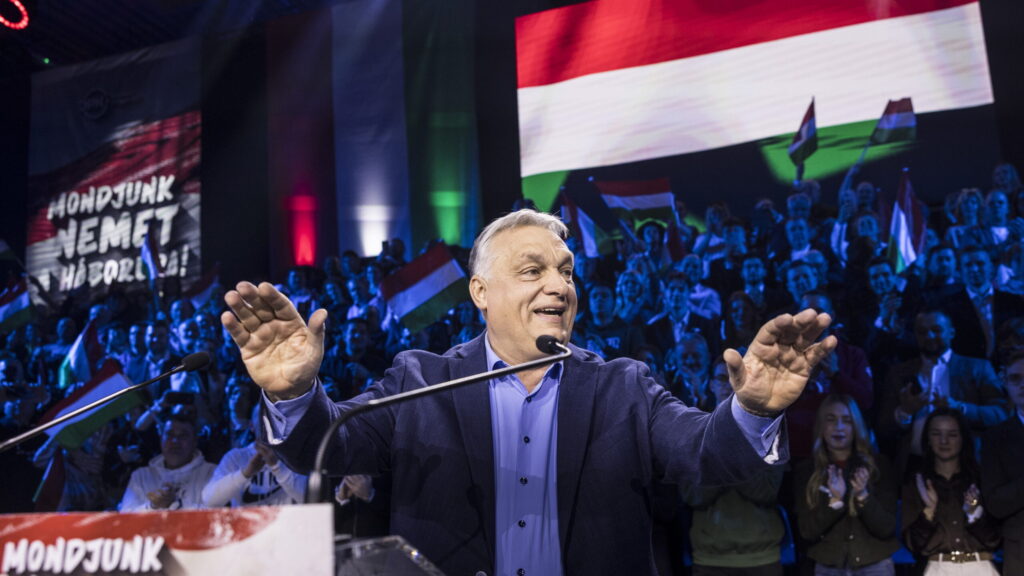
Kyiv’s objective is also increasingly clear: to create instability in Hungary as the country approaches its April election, thereby undermining Viktor Orbán and the governing Fidesz–KDNP alliance. Speaking at a rally over the weekend, Orbán stated that, under such circumstances, Ukraine cutting off Hungary’s oil supply constitutes a ‘double crime’. He noted that while Hungary had previously been denied access to gas supplies, it was able to compensate by securing deliveries from the south, bypassing Ukraine. Oil, however, presents a different challenge. According to Orbán, Ukraine misled Hungary for weeks by suggesting that supplies would resume, only to later indicate otherwise. Hungary’s refineries cannot simply switch to alternative crude, as adapting to more expensive Western oil would require major modifications taking one to two years.
Orbán also warned that without prior preparations, Hungary would face severe difficulties. He added that without oil supplies, the government would lack sufficient resources to maintain the utility price cap system. ‘Zelenskyy did this not against MOL [Hungarian oil company], but against all Hungarians,’ he stated.
‘Kyiv’s objective is also increasingly clear: to create instability in Hungary as the country approaches its April election’
Closing his remarks, Orbán said he believes oil deliveries through Ukraine will resume only after Hungary’s election, claiming that Kyiv, Brussels, and the opposition are working together to weaken the government through the blockade. ‘There is a deliberate intention behind this blackmail,’ Orbán declared, calling for national unity in these challenging times.
How long the Iranian crisis will last remains uncertain. On Monday, US President Donald Trump reportedly said that the conflict could continue for the next four weeks, which would coincide with the final stretch of Hungary’s election campaign. In a worst-case scenario, however, it could evolve into a prolonged ‘quagmire’, similar to Iraq or Syria, leading to a sustained structural crisis in global energy markets.
Related articles: