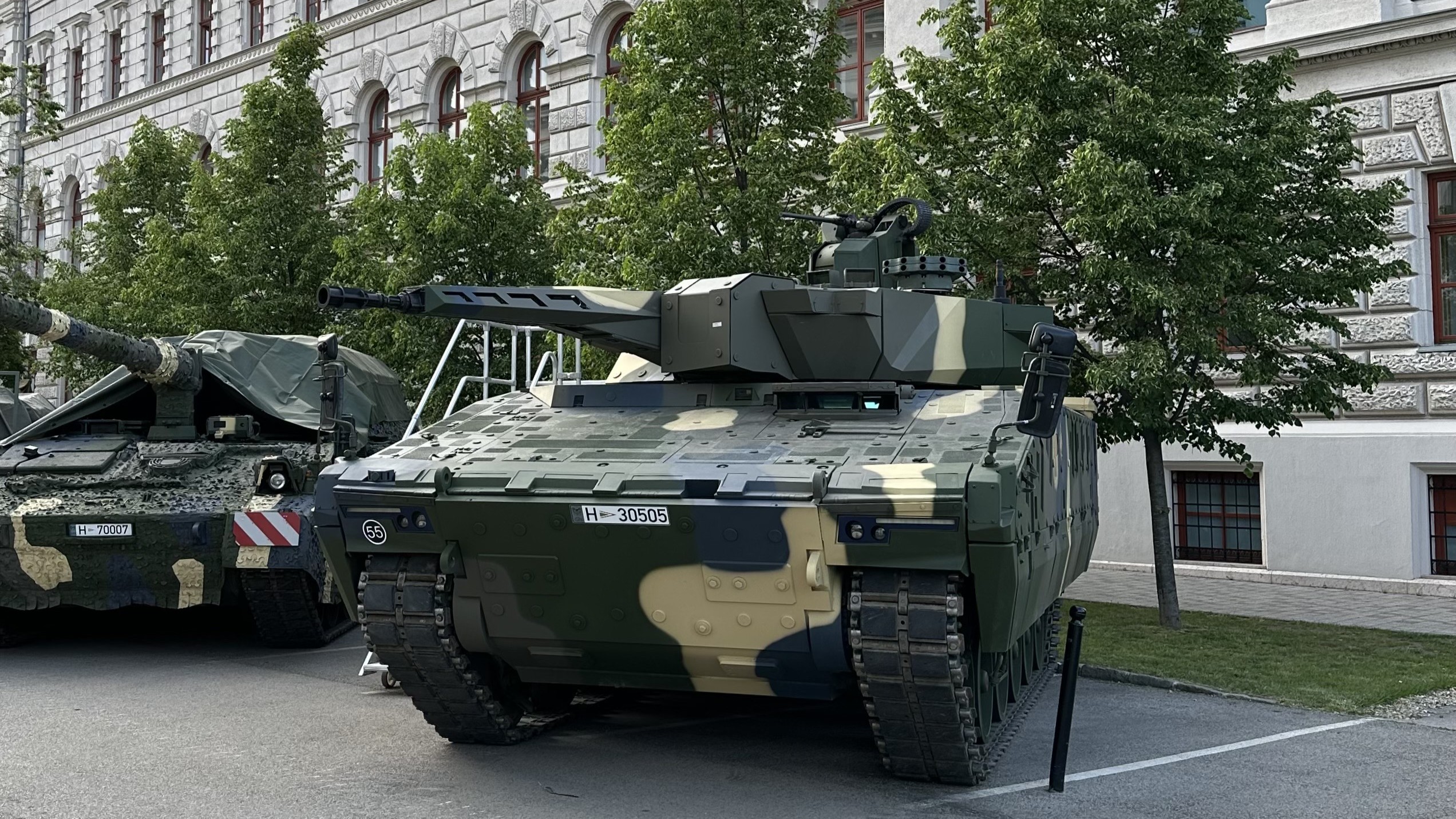
The Hungarian-manufactured Lynx has proven itself. Ukraine is set to initiate its own production line with Rheinmetall’s support.
Ukraine has officially chosen the Rheinmetall Lynx KF41 armoured infantry fighting vehicle, according to Defence Network sources. The decision was significantly influenced by the prototype manufactured in Hungary, which was tested in Ukraine at the end of 2024 and yielded positive results.
The Hungarian Connection: From Zalaegerszeg to Ukraine
The European history of the Lynx programme began in Hungary, after Rheinmetall received an order from the Hungarian Defence Forces in 2020 and commenced domestic production of the vehicles in Zalaegerszeg.
Merely two years after the order, on 17 October 2022, the company delivered the first Lynx to Hungary, making the country the first international operator and production partner of the type.
The first Hungarian-built Lynx was sent to Ukraine at the end of 2024 for testing purposes. The experience gained there has now led to the Ukrainian Armed Forces selecting this model as the basis for their future platform. Following the tests, there was a period of silence surrounding the project, but it has now become official: Ukraine will build its own Lynx production.
German–Ukrainian Agreement: Domestic Factory to be Established
According to Defence Network, at last week’s meeting in Ramstein, the defence ministers of Germany and Ukraine signed an agreement for a joint industrial project to produce Lynx vehicles in Ukraine.
Rheinmetall’s Chief Executive Officer Armin Papperger has previously spoken of the possibility of a framework contract for several hundred vehicles, which could become Ukraine’s most significant defence-industrial cooperation during the conflict.
The Lynx: A Hungarian–German Development Success
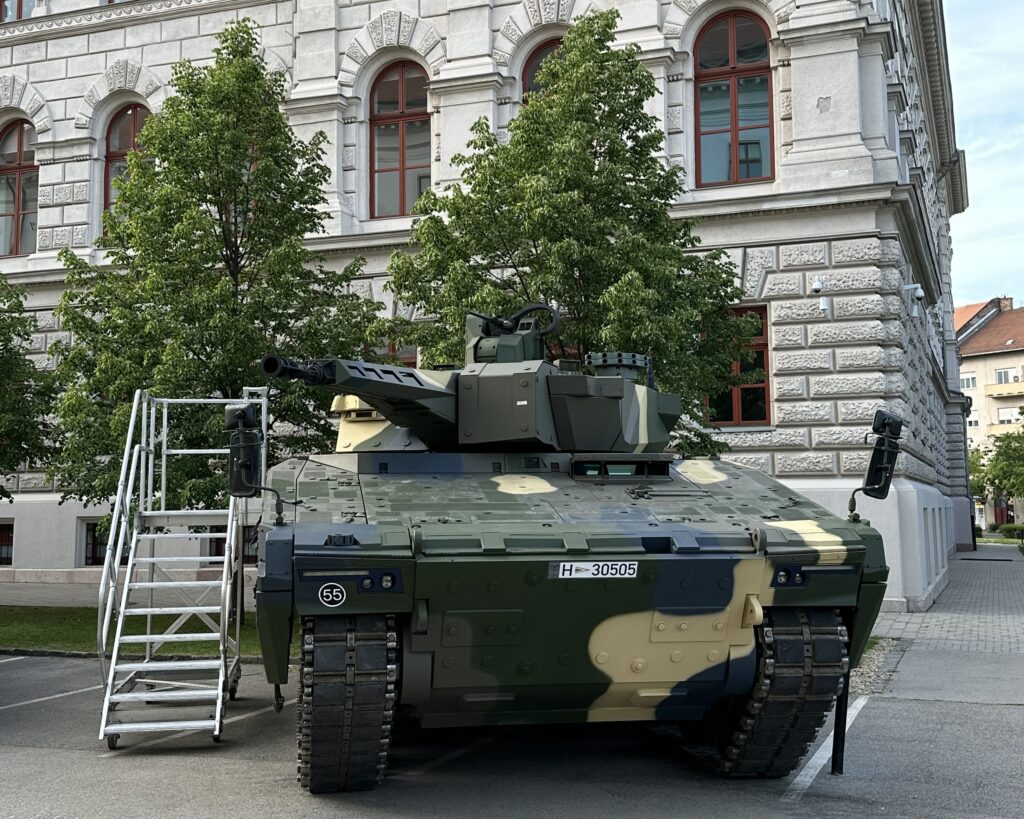
The Lynx armoured infantry fighting vehicle is a success story for the German and Hungarian defence industries. Its development builds upon experience from the Puma and Boxer programmes, with the aim of creating a modular vehicle suitable for multiple roles.
The vehicle consists of two main units—a drive module and a mission module—which can be exchanged swiftly using a crane. This allows it to be adapted for various tasks, including air defence, mortar operations, or anti-armour roles.
During Hungarian production, Rheinmetall collaborates with Hungarian engineers and suppliers, meaning that the type is significant not only militarily but also industrially for Hungary.
Modular Capabilities and International Interest
If Hungary integrates the Skyranger air defence system into its Lynx, the system could later be adopted by other nations, including Ukraine. Italy has also opted for the Rheinmetall infantry fighting vehicle and plans to introduce it in several variants, including heavy reconnaissance with a 120mm gun, air defence with Skyranger, electronic warfare with jammers, 120mm mortar, and anti-tank with Spike. All these modules would subsequently be available to Ukraine as well.
Furthermore, the Lynx remains under consideration for the United States XM30 Mechanized Infantry Combat Vehicle Programme, formerly known as OMFV. The winning system is intended to replace the Bradley infantry fighting vehicles of the American armed forces, thereby offering significantly more usable mission modules.
Towards a European Standard
The Lynx KF41 accommodates a crew of three and an infantry squad of nine. It has a maximum weight of 50 tonnes, is powered by a 1,140-horsepower engine, and can reach speeds of 70 kilometres per hour.
First exhibited at Eurosatory 2018, the Lynx has since been selected by Hungary, Italy, and now Ukraine, establishing itself as one of Europe’s most modern and versatile fighting vehicles.
Related articles: