The following is an adaptation of an article written by Anna Taraczközi, a research fellow at the Europe Strategy Institute of the University of Public Service, originally published on the Five Minutes Europe blog of Ludovika.hu.
Political Breakthrough and Agricultural Turmoil in January 2026
At the end of 2025, the fate of the EU–Mercosur agreement took a turn worthy of a political thriller. Before analyzing the turmoil, it is worth recalling the earlier fundamentals.
When, in mid-December, everything seemed ready for the historic signing, last-minute obstacles, led by Italy’s delaying tactics, unexpectedly postponed the ceremony. Ursula von der Leyen’s original plan was to conclude a quarter-century of negotiations on 20 December 2025, in Brazil, but Italian Prime Minister Giorgia Meloni requested more time at the last minute to review the texts and work out further guarantees. Italy’s role as ‘kingmaker’ was most evident here: the postponement requested by Rome was not only technical in nature but also allowed the Commission to soften critical member states with further concessions before the final decision in January.
‘The voting ratio…clearly reflects the deep divisions within the bloc’
The diplomatic marathon finally broke through on 9 January 2026, when the ambassadors of the EU member states authorized the European Commission to sign the agreement by a qualified majority in a written procedure. The voting ratio (21 in favour, 5 against, and 1 abstention) clearly reflects the deep divisions within the bloc.
The ‘no’ camp remained illustrious and determined: in addition to France, Poland, Austria, Ireland, and Hungary also voted against the agreement, while Belgium abstained. This alignment clearly shows that although geopolitical and industrial interests prevailed, mainly due to pressure from Germany and Spain, the bloc representing agricultural interests put up considerable resistance.
In order to win the support of Italy and other uncertain states, Brussels had to make significant financial and regulatory concessions. On 6 January Ursula von der Leyen made an unexpected promise: European farmers would be given accelerated, advance access to Common Agricultural Policy (CAP) budget resources, and a special crisis management fund would be created to alleviate market disruptions.
One of the most dramatic aspects of these events is the struggle of French President Emmanuel Macron, for whom this decision amounts to a serious diplomatic defeat. Although Paris has consistently indicated that it will not support the document, the president’s domestic political weakness—a fragile government majority and ongoing social tensions—has significantly undermined his influence in Brussels. While France had previously been able to organize a blocking minority, it has now become isolated on the issue, which analysts see as a decline in French hegemony in EU decision-making.
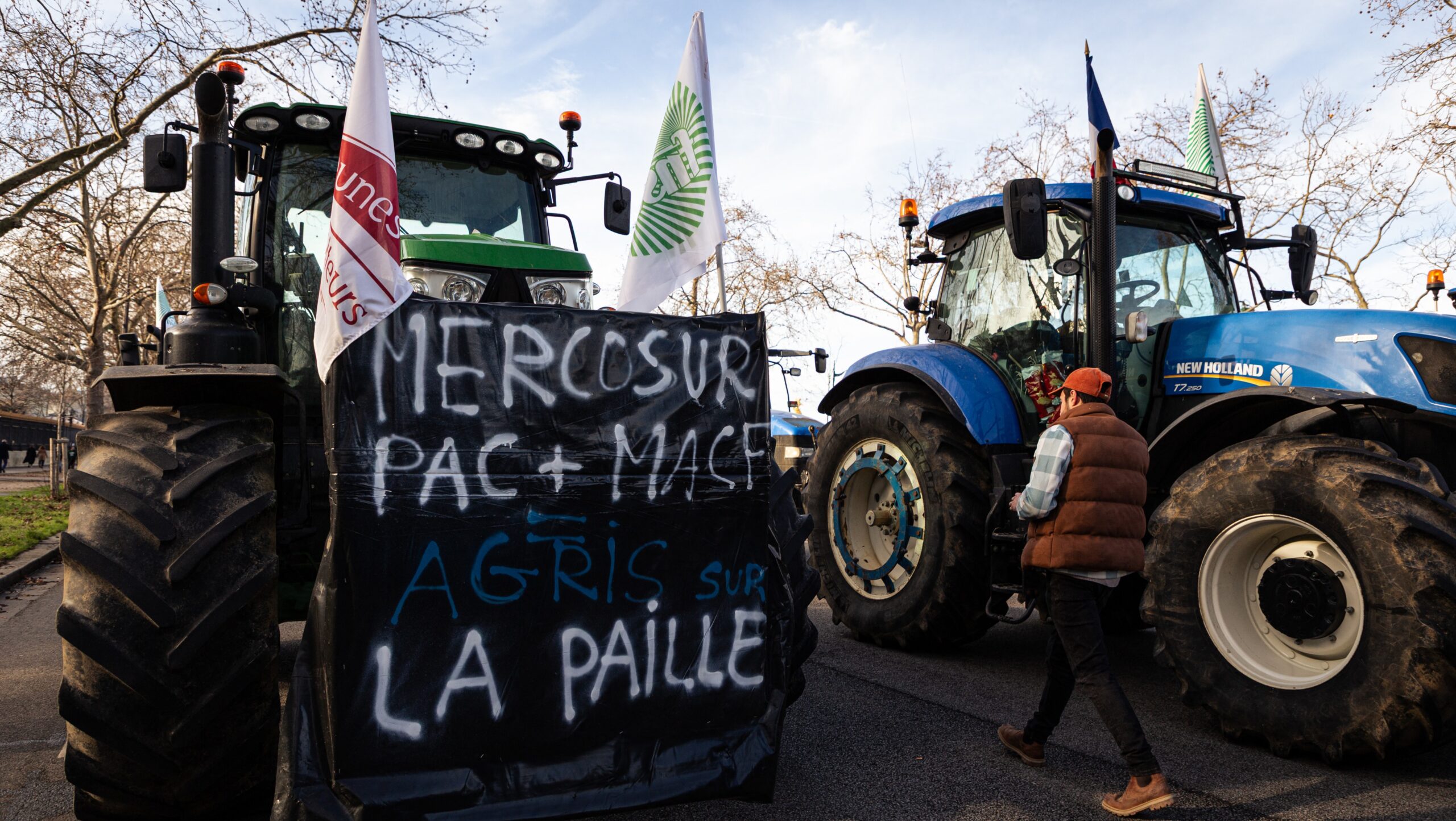
The French government’s ‘no’ vote ultimately remained symbolic, as it was unable to gather enough allies to block the agreement. This failure prompted an immediate response on the streets: in the first days of January, tractors flooded Paris and Brussels, as farmers believe the agreement is a ‘death sentence’ for European agriculture, since South American imports do not meet EU environmental standards.
‘The Hungarian position remained firm even after the January decision, emphasizing that food sovereignty should not be sacrificed on the altar of free trade’
The Hungarian position remained firm even after the January decision, emphasizing that food sovereignty should not be sacrificed on the altar of free trade, especially given that the quality control of South American imports continues to raise many questions. The process is now entering its formal stage: the signing ceremony is scheduled for 17 January 2026, in Asunción, Paraguay, where Ursula von der Leyen and António Costa will personally put an end to 25 years of wrangling.
However, the signing is not the end of the road, but the beginning of a new struggle. The trade part of the agreement must also be approved by the European Parliament, where the greens and conservative factions are expected to put up fierce resistance, yet full ratification requires the approval of all member state parliaments.
In summary, the Mercosur issue brought victory for ‘geopolitical realism’ in early 2026, but the taste of victory remains bitter due to internal social tensions and agricultural unrest, which will determine the European political agenda for a long time to come.
Related articles:
Click here to read the original article.