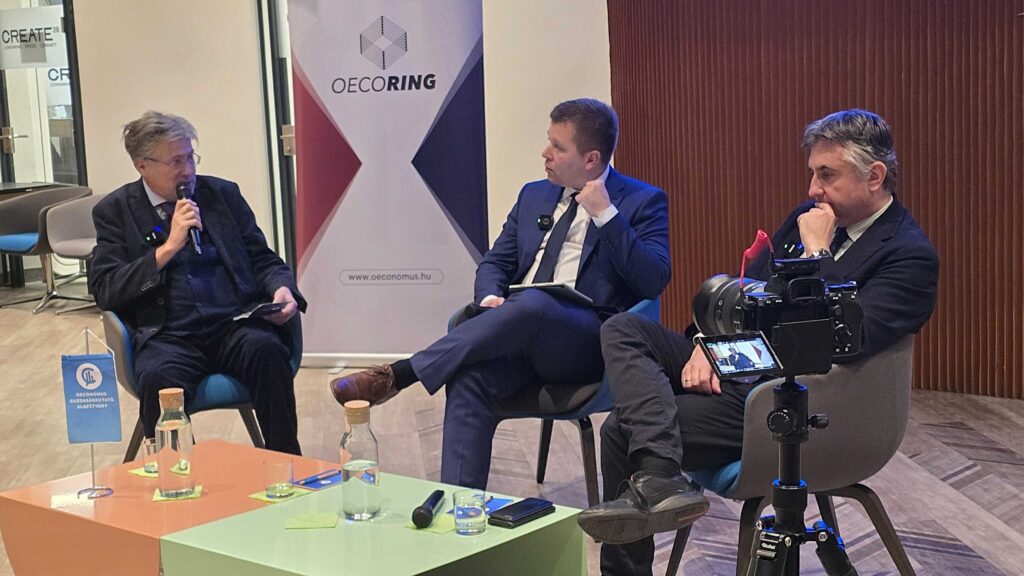
‘The Trump Doctrine: Chaos or a New World Order?’—this was the title of a panel discussion held on 10 February by the Oeconomus Economy Research Foundation. At the latest OecoRing event, experts assessed the foreign policy pursued over the past year by Donald Trump, along with the United States’ recently released National Security Strategy, examining its implications for both Europe and Hungary.
The discussion featured István Szent-Iványi, former Chairman of the Foreign Affairs Committee of the Hungarian National Assembly and foreign policy expert, and Attila Demkó, Head of the Strategic Futures Programme at the John Lukacs Institute of the National University of Public Service. The debate was moderated by Oeconomus Director Anton Bendarjevskiy.
Europe: Partner or Subordinate Player?
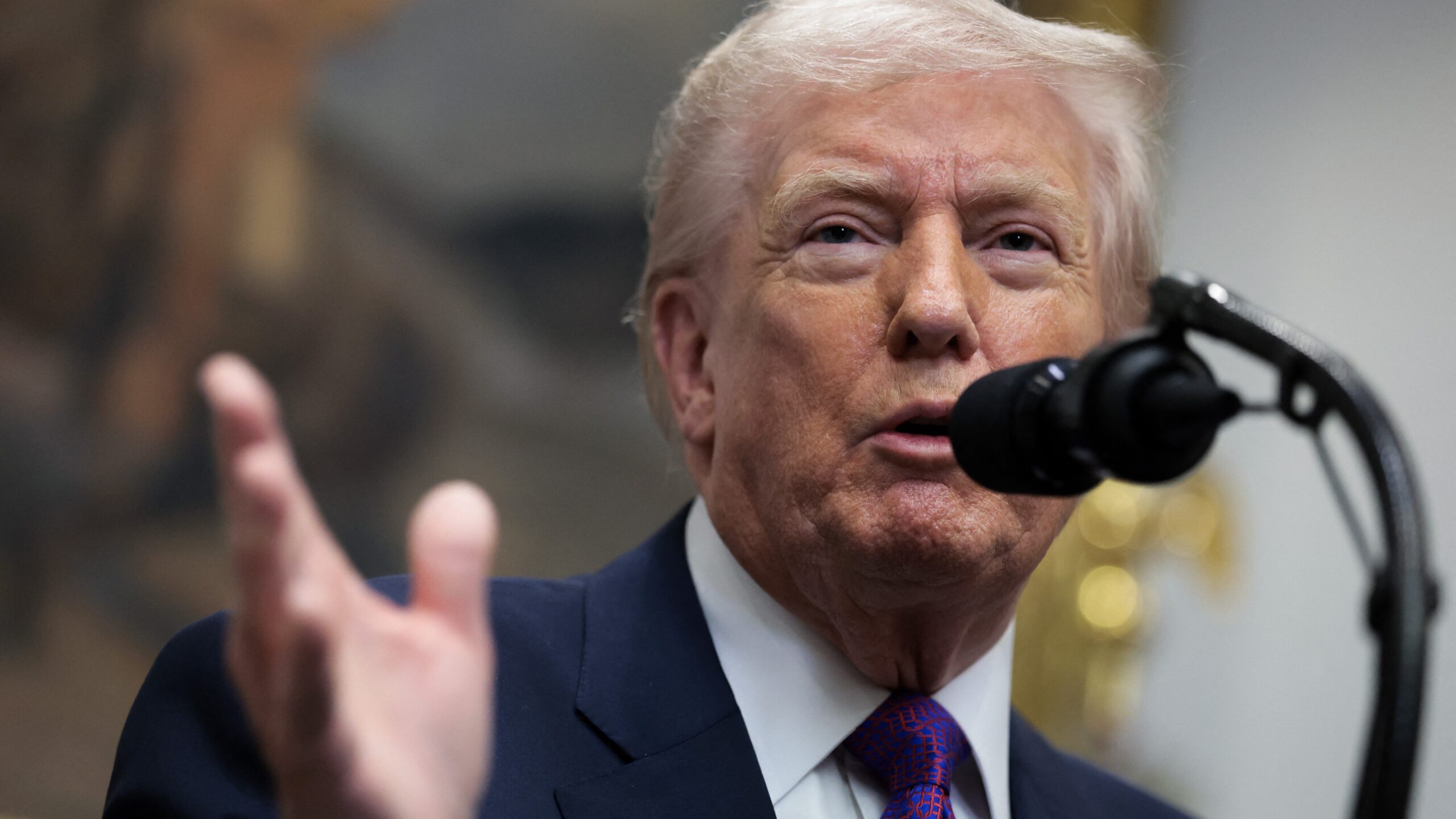
Opening the debate, Szent-Iványi argued that the current US administration can no longer be regarded as Europe’s traditional ally. In his view, the US president often treats allies more harshly than adversaries. Such an approach, however, could prove counterproductive: by alienating its allies, Washington may ultimately push Europe closer to China.
Demkó Attila offered a different perspective. He likened the United States to a ‘coach’ pushing Europe to perform better. If the continent draws the right lessons, he argued, it could ultimately emerge stronger from this period. In his interpretation, Donald Trump’s role has been to compel Europe toward more independent strategic thinking. He added that Europe’s reactions to Trump often resemble those of an ‘offended and frustrated child’ rather than responses befitting its geopolitical weight.
Demkó acknowledged that Trump’s style is undeniably more abrasive. Substantively, however, he sees less of a break with previous administrations than many assume. The real difference, he argued, lies in Europe’s reaction. As an example, he pointed to the Afghanistan withdrawal under Joe Biden, noting that Washington had already decided to pull out but failed to properly inform its European allies, even in the final stages.
Unresolved Internal Tensions
Both experts agreed that the West is currently experiencing a kind of ideological civil war, though they diverged sharply on how to address it. Szent-Iványi stressed that while Washington criticizes Europe, the United States itself is grappling with serious internal tensions. In his view, Donald Trump has not resolved these issues either—for example, he did not implement deportations on the scale he had promised.
‘I would not want Budapest to resemble certain parts of Brussels’
Demkó, meanwhile, raised a pointed question: ‘Is Donald Trump really weakening Europe? Or is it the fact that we have admitted millions of people whom we are unable to integrate? Over a 50–100-year horizon, this will fundamentally reshape our societies.’ Referring to migration policy failures, he added: ‘I would not want Budapest to resemble certain parts of Brussels.’
According to Demkó, the American message to Europe is clear: the continent is unlikely to be brought down by external enemies, but rather by its own unresolved internal tensions.
Eastern Europe Gaining Importance
When asked whether Central and Eastern Europe could serve as a bridge between the United States and Western Europe, Demkó responded that it already does. He emphasized that Hungary, relative to its size, has gained particular prominence in this role, creating a new dynamic within the transatlantic alliance.
Szent-Iványi took a more critical view. He argued that the United States has increasingly become a self-interested great power, one that pursues its own priorities even at the expense of its allies. Such an approach, he said, is hardly favourable for Europe or Hungary. In this context, he noted that the regional visit of Marco Rubio is unlikely to be accidental and will likely come with expectations—not all of which will be easy to accommodate.
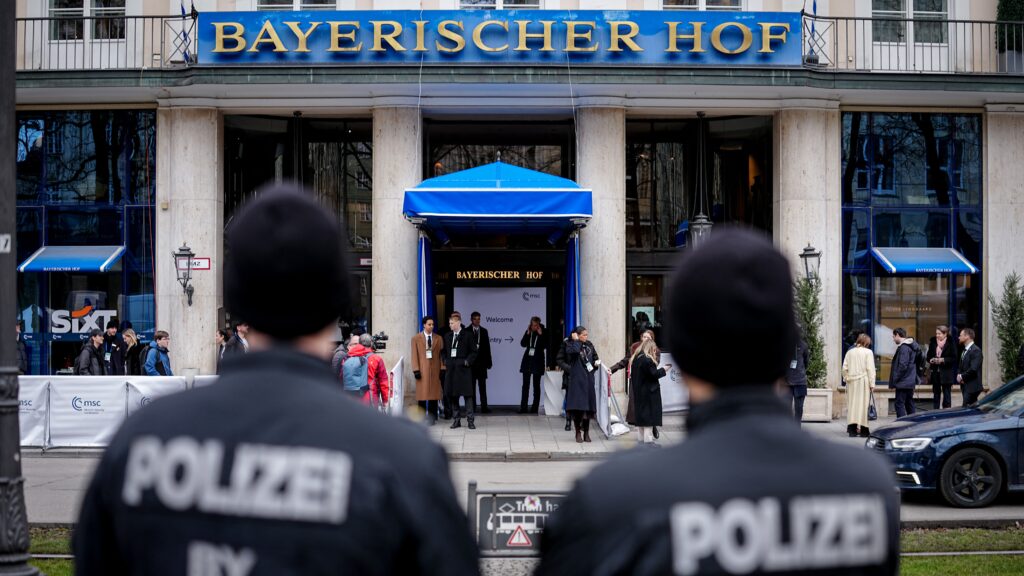
The US Secretary of State is scheduled to visit Slovakia and Hungary on 15–16 February 2026, following the Munich Security Conference. In Budapest, he is expected to hold talks with Hungarian officials on strengthening bilateral and regional cooperation, particularly regarding peace initiatives and US–Hungarian energy relations.
The EU Pressures Its Members While Losing Ground Geopolitically
Turning to Europe’s broader challenges, Demkó argued that the European Union has openly exerted pressure on member states such as Hungary by linking Ukraine’s potential accession by 2027 to the threat of suspending voting rights. At the same time, he contended, the EU continues to lose competitiveness and lacks sufficient power-projection capabilities to safeguard its interests in strategically important regions.
‘The emperor has no clothes,’ Demkó remarked. ‘The European Union is openly threatening us: either we admit Ukraine by 2027, or we lose our voting rights. What kind of Europe is that?’
He stressed that a strong Europe is not built on eloquent declarations, but on tangible capabilities—industrial strength, military readiness, and strategic coherence. In his view, Donald Trump’s pressure could even serve as a catalyst in this process.
‘The European Union is openly threatening us: either we admit Ukraine by 2027, or we lose our voting rights’
On one issue, the two speakers agreed: in the short term, Europe is not capable of defending itself independently. Szent-Iványi, however, believes this could change within six to eight years, as Europe gradually regains strategic momentum. Demkó argued that Europe is overly focused on the Russian threat, despite the fact that coordinated European defence would already be sufficient for deterrence. Meanwhile, other regions—including parts of Africa—could generate crises that directly affect Europe. He also pointed to Europe’s limited success in protecting its interests in its immediate geopolitical neighbourhood, citing the Gulf of Aden and the challenges posed by Yemeni Houthi forces as a telling example.
Related articles: