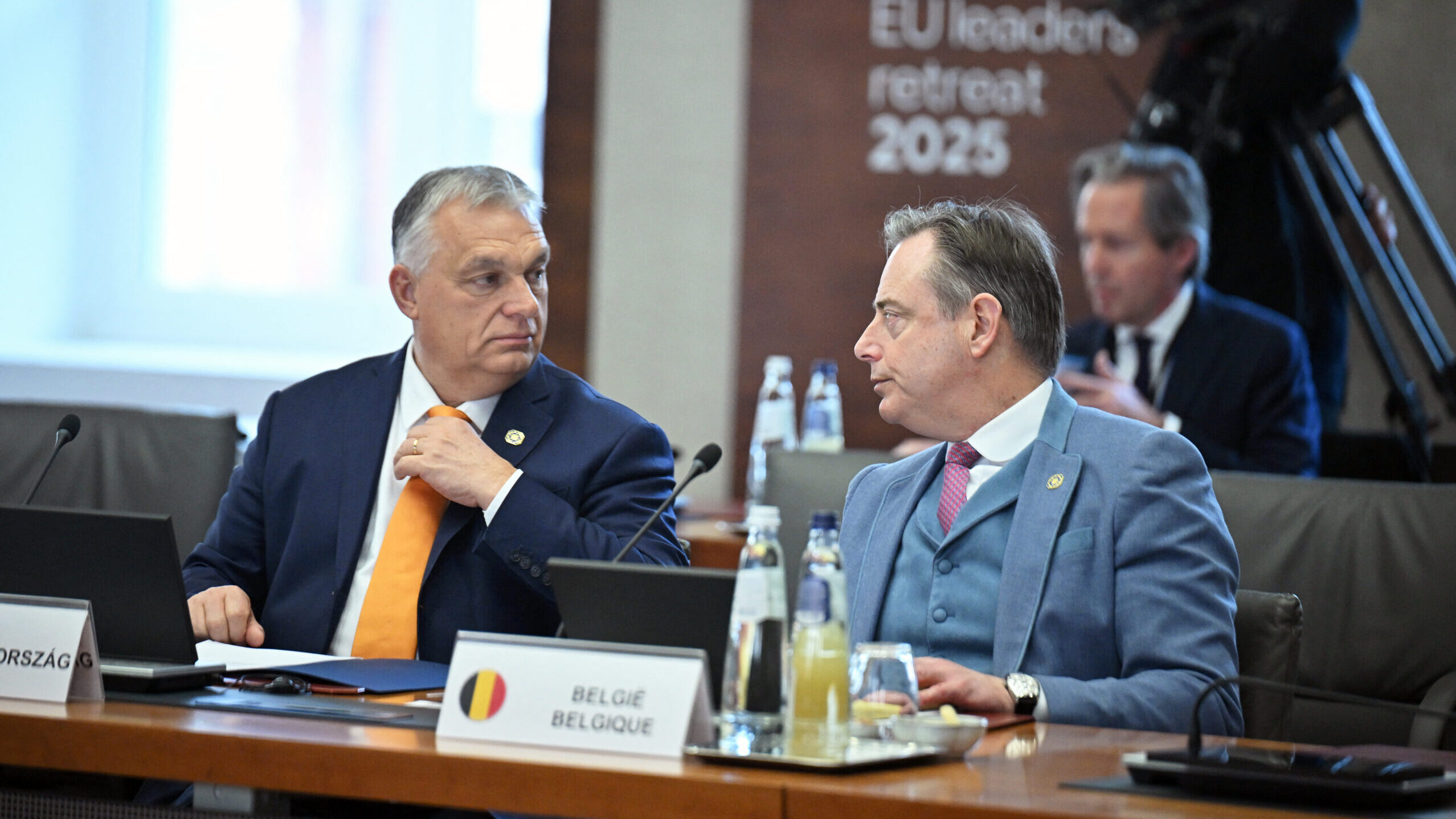
Belgium could soon face the same treatment as Hungary in the European Union, according to POLITICO Brussels. A recently published article by the EU elites’ mouthpiece indicates that if Belgian Prime Minister Bart De Wever will not give in to the European Commission’s plan to use frozen Russian assets as collateral for a €165 billion reparations loan for Ukraine, the country—one of the founding members of the EU’s predecessor, the European Coal and Steel Community (ECSC)—will be isolated in the European decision-making system.
‘If De Wever continues to block the plan―a path he’s been on for several months, putting forward additional conditions and demands―he will find himself in an uncomfortable and remarkable position for the leader of a country that for so long has been pro-EU, according to an EU diplomat with knowledge of the discussions taking place,’ POLITICO Brussels wrote, adding that ‘the Belgium leader would be frozen out and ignored, just like Hungary’s Viktor Orbán has been given the cold shoulder over democratic backsliding and his refusal to play ball on sanctioning Russia.’
‘The Belgium leader would be frozen out and ignored, just like Hungary’s Viktor Orbán’
Yet again, just like in the example of Hungary, the EU is blackmailing one of its member states for the simple reason that it would not want to betray its citizens for Ukraine. This is a clear warning sign for anyone who did not believe Hungary for the past years: the European Union is (not so) slowly becoming an authoritarian dictatorship, where you cannot have a dissenting opinion from the majority or else you face discrimination, oppression and blackmail.
The message to Belgium, POLITICO Brussels continued, is that if it does not come ‘on board’, its diplomats, ministers and leaders ‘will lose their voice around the EU table.’ ‘Its phone calls will go unanswered,’ one diplomat said to the outlet. ‘It would be a harsh reality for a country that is both literally and symbolically at the heart of the EU project,’ the article stated.
According to the plan presented by European Commission President Ursula von der Leyen, the €165 billion reparations loan includes €25 billion of immobilized Russian state assets held in private bank accounts across the bloc, in addition to €140 billion held in the Euroclear bank in Belgium. Ukraine would only have to repay the loan if Russia ends the conflict and pays war reparations, which is seen as an unlikely scenario.
Within the reparations loan, €115 billion has been earmarked to finance Ukraine's defence industry, while €50 billion will cover Kyiv's budgetary needs. The remaining €45 billion of the package will be used to repay a G7 loan to Ukraine from 2024.
Belgium rightfully fears Russian retaliation against the state and the financial depository holding the frozen assets, Euroclear. The government is demanding financial guarantees from EU capitals if Moscow successfully recovers the money. The EU is reluctant to give financial guarantees for Belgium.
Member state leaders will gather on 18 December to decide on the issue in one of the most high-stakes European Council summits of recent years. It is up to them not to let the European Union, the so-called defender of democracy, slide into a dictatorship ruled by von der Leyen and her bureaucrats. While POLITICO Brussels tries to portray Belgium as the only country opposing the plan—it is actually a familiar tactic used against Hungary as well to make the country look isolated—there are several other member states that are not quite supportive of it: Slovakia, Hungary and, with Andrej Babiš taking office, Czechia is also against such a legally hardly defendable proposal.
Related articles: