Ireland assumed the rotating presidency of the Council of the European Union on Wednesday, 1 July, placing one of the bloc’s most socially progressive and instinctively pro-Brussels governments in charge of its legislative machinery for the next six months.
Minister of State for European Affairs Thomas Byrne said the presidency offered an opportunity to drive ‘meaningful progress across Europe through partnership, ambition and action’.
Dublin’s official programme is organized around competitiveness, values, and security under the motto ‘Strength with Unity’. The presidency chairs Council meetings and preparatory bodies, controls negotiating timetables, and represents the member states in negotiations with the European Parliament and the Commission, giving a politically committed government considerable scope to determine which legislative files gain momentum and which compromises form the basis of agreement.
The most difficult—and arguably most significant—task will be negotiating the EU’s 2028–2034 Multiannual Financial Framework. Ireland must bridge the divide between wealthier northern member states demanding a smaller budget and southern and eastern countries seeking to preserve agricultural and cohesion funding. It is also expected to advance discussions on new EU own resources ahead of an October European Council meeting, with proposals ranging from corporate and digital levies to a share of carbon-market revenues.
Time is not on the EU establishment’s side. European Council President António Costa wants an agreement by December before elections in several member states—notably France, where right-wing National Rally leader Jordan Bardella is projected by most opinion polls to win the presidency—make compromise considerably more difficult.
Ireland will simultaneously be expected to advance the Industrial Accelerator Act, ‘Made in EU’ procurement preferences, deeper capital-market integration, an EU-wide corporate regime, and measures intended to reduce dependence on American and Chinese technology. Taoiseach Micheál Martin acknowledged an ‘urgent need’ to improve European competitiveness, while Costa described Ireland as ‘well placed’ to guide implementation of the One Europe, One Market programme.
Yet the programme also illustrates why Ireland’s presidency is likely to concern conservatives. Its ‘values’ pillar promises further equality reforms, stronger minority protections, with special focus on sexual minorities, action against gender-based violence, and the promotion of rights, tolerance, and non-discrimination. These are presented not merely as domestic priorities but as principles to be embedded throughout EU legislation and applied to candidate countries through the enlargement process.
Dublin also intends to promote an EU-wide ‘digital age of majority’ and stronger age-verification requirements for social media. Although presented as a child-protection measure, such a system would require reliable user identification and could further erode online anonymity.
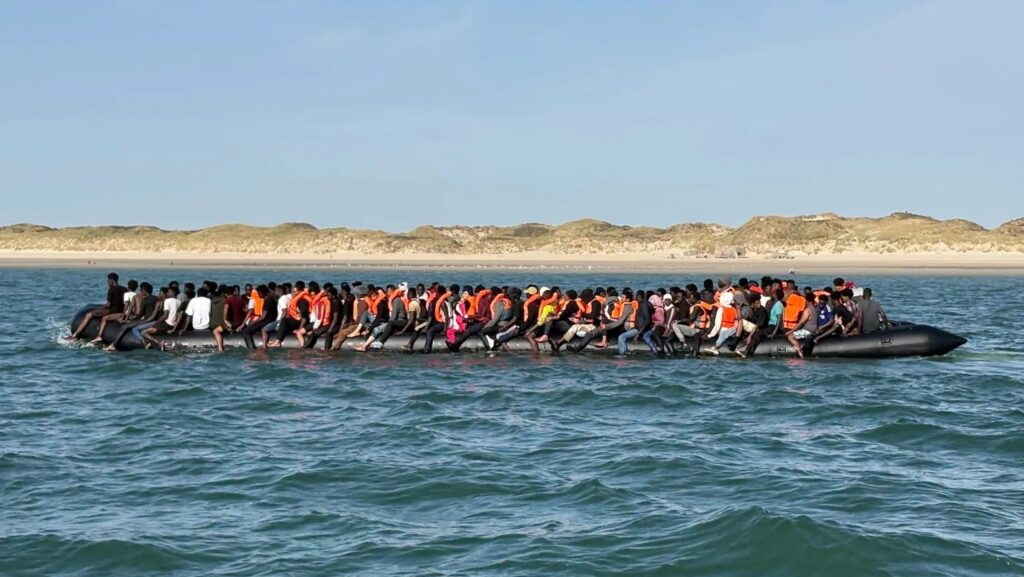
Ireland will also oversee further work on the Migration Pact, EU deportation policy, and the mandates of Frontex, Europol, and Eurojust, while seeking to advance accession negotiations with Montenegro, Ukraine, and Moldova.
For the European right, the concern is not that Ireland will prove ineffective but that it may efficiently translate the Commission’s progressive priorities into lasting legislation. In a post on X, MCC Brussels described Ireland as the EU’s ‘model member state’: a country whose political establishment has repeatedly demonstrated loyalty to Brussels and is now positioned to export its own political model.
The conservative think tank highlighted the proposed €10 billion AgoraEU programme, warning that it could become a funding mechanism for favoured NGOs and activist media organizations. It also criticized digital identity-based age verification, the possible use of enlargement negotiations to pressure candidate countries on gender recognition and same-sex unions, and an EU budget that could weaken agricultural funding while introducing new corporate levies.
John O’Brien, MCC Brussels’ Head of Communications, argued that Europe was becoming ‘poorer, less competitive and less secure’ while its leaders remained preoccupied with regulating speech, financing activist organizations, and exporting progressive social ideology. That criticism strikes at what conservatives see as the central contradiction of Ireland’s programme: competitiveness appears first among its priorities, yet is repeatedly tied to climate objectives, social inclusion, and an expansive interpretation of so-called European values.
Related articles:
At a time when public debate is increasingly polarized and superficial, Hungarian Conservative remains committed to depth, intellectual honesty, and independent conservative thought.
Producing high-quality journalism requires resources. Your contribution helps us expand our coverage, reach new audiences, and keep our content accessible.
Please consider supporting our mission.