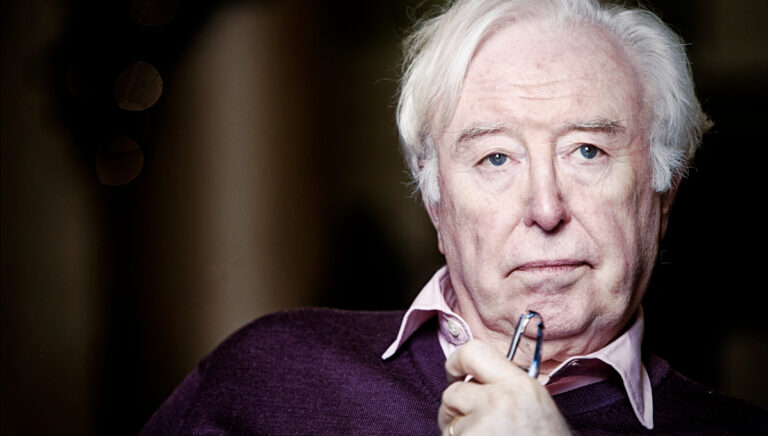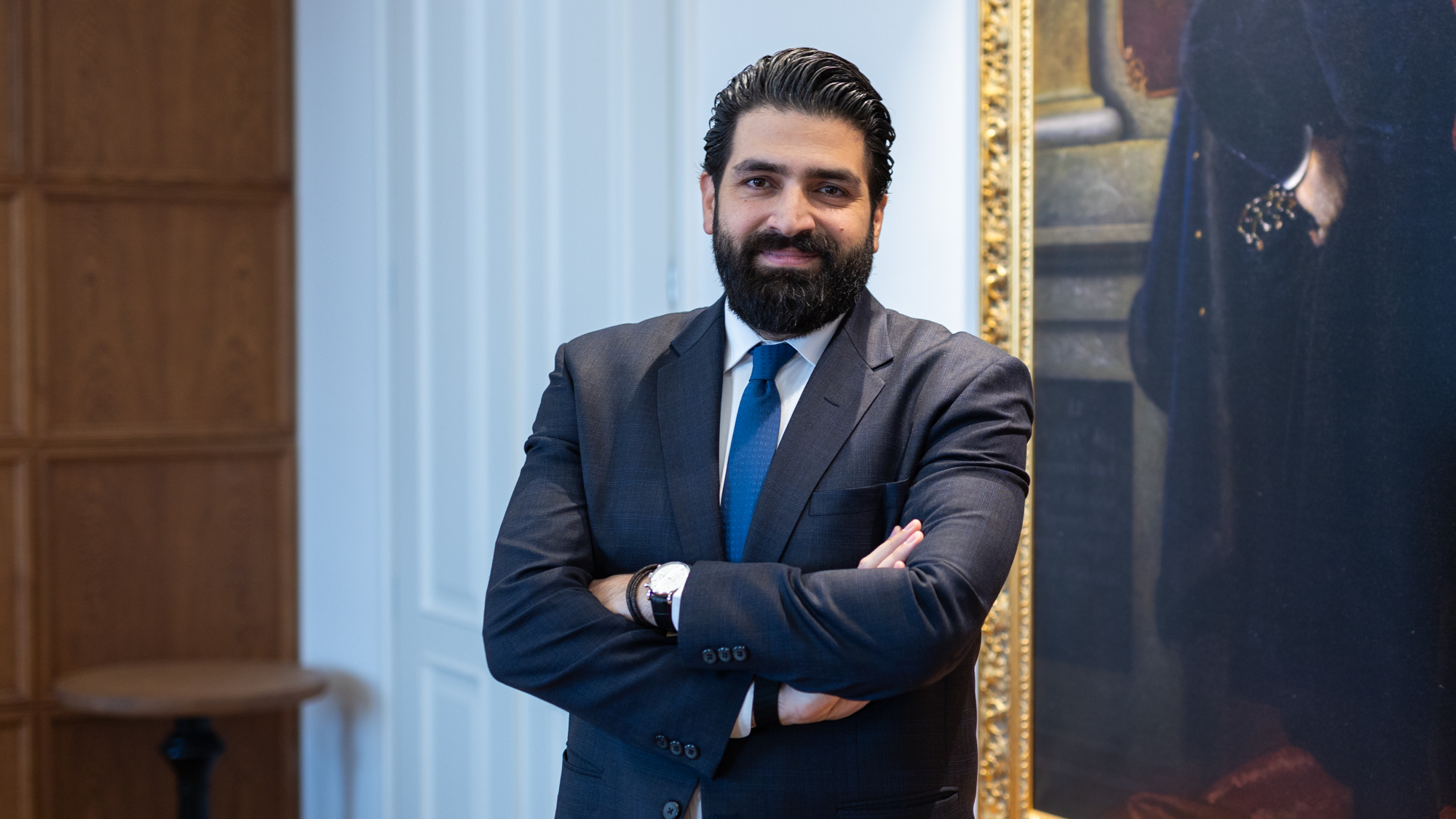
Marwan Abdallah is Head of the Foreign Affairs Department at the Lebanese Kataeb Party. He began his political activism in high school opposing the Syrian occupation of Lebanon and was elected to the Student Council at the Lebanese American University in 2009 while studying International Affairs and Political Science. While pursuing an MA in Diplomacy and Strategic Negotiations, he worked in public policy at the Lebanese Parliament. Abdallah is the co-founder of three NGOs and previously served for five years as the Kataeb Party’s International Secretary. In 2022, he was elected Vice Chairman of the International Democracy Union.
***
Were you surprised how quickly and efficiently Israel eliminated the leadership of Hezbollah in the war?
Actually, yes, we were surprised. We lived, and we’re still living, with an entity called Hezbollah. This entity sold promises, ideas, and ideologies to their people, to the Lebanese, and to the rest of the world. They sold the idea that they were a deterrent force against Israel and the West. Most of the Lebanese believed them—that this was the way to build a strong deterrent force and create a balance where they could do whatever they wanted.
Apparently, these ideas were all fake and delusional. In the war between Israel and Hezbollah, the brief conflict from the end of September to November 2024, Hezbollah was annihilated—totally destroyed from both the leadership and military perspectives. So yes, we were surprised, but now everyone is paying the price, including us, who were against what Hezbollah did in Lebanon from day one.
It’s fascinating how a party, because it’s a parliamentary party and a militia as well, could take the whole country hostage. I mean Hezbollah immediately joined Hamas to execute an attack against Israel on 7 October, and they did it from the territory of Lebanon without the consent of the state. How could they be so strong?
It’s very interesting the way you put it. Hezbollah was established in Lebanon in 1982 by the Iranian Revolutionary Guard. The Iranian Revolutionary Guard is the military entity of the revolution in Iran, a separate entity within the state. They control parts of the state and make sure everyone is in line with the Islamic revolution. The IRGC established different groups in the region; the main targets were the Shia communities.
They reached out to the Shia in Lebanon in 1982 during the civil war, seeing fertile ground to start what is now Hezbollah. Hezbollah is a militia and an ideology. After the Civil War, there was a decision to dismantle all militias and integrate them into the army, or allow them to become parties. Hezbollah, with the help of the Syrian regime occupying Lebanon and the Iranian regime’s growing influence, was not dissolved. They kept their weapons, claiming to be the resistance force against Israeli occupation.
After 2000, when Israel withdrew from Lebanon, Hezbollah went from just being a militia and political entity to becoming part of the parliament and government. They wanted their ideology and political discourse to be integrated into the Lebanese state, especially after Syrian troops withdrew in 2005, leaving them unprotected.
‘They kept their weapons, claiming to be the resistance force against Israeli occupation’
And since 2005 we have seen many political assassinations. We saw a war between Hezbollah and Israel in 2006. They started it, by the way, a similar way that they started the war in 2024 by kidnapping two Israeli soldiers on the border.
But they got votes. They became one of the government parties; they have social support.
Yes, but when you have weapons and money, and illegal ways to reach people, of course you get votes. Whoever doesn’t accept the money, the services, or share their values can be threatened with force. This is how they consolidated their power. Hezbollah is not an entity that convinces everyone; it uses both the carrot and the stick—the intimidation of others—to gain power. That’s why they are so strong politically and militarily.
How visible are Hezbollah’s men in the state institutions of Lebanon?
Hezbollah started as a separate entity, then became a state within the state, and eventually the most powerful entity in Lebanon, exercising significant control. They are visible: politicians, MPs, ministers, and officials in government, making structural changes. Many resign, others are appointed—but not military leaders, who would risk Israeli attacks. They focus on political appointments, moving toward being more of a political party than a militia. Yet the foundation of Hezbollah remains ideological and military; transforming it into a true political party would require changing not just operations, but also its name and ideology.
What we care about as Lebanese is the free will of the Shia community in Lebanon to choose who would represent them in the central government, and secondly, to stop importing foreign goals and policies that are related to foreign governments, and imposing them on the Lebanese people.
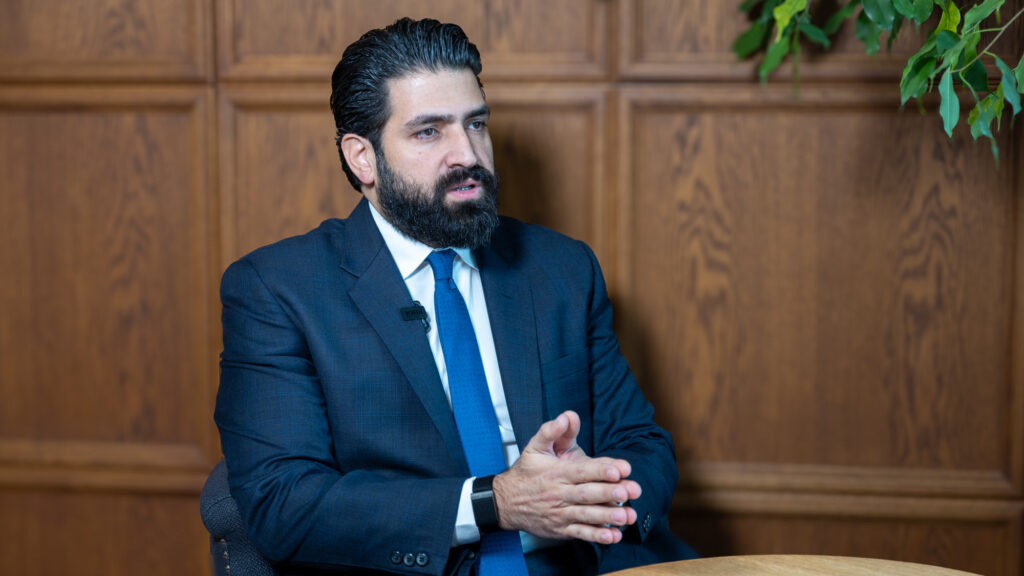
You said in a Lebanese interview: ‘Iran used Lebanon as a proxy state through Hezbollah.’ How strong is the Iranian influence now in Lebanon after Hezbollah’s military wing was eliminated?
Iran’s influence was always via Hezbollah. So if Hezbollah is strong, then Iran’s influence is strong. Today it is very weak because Hezbollah is weak. We have a president, prime minister, and government in Lebanon that are sovereign and do not accept interference. However, Iran is always trying to find new ways to influence Lebanese politics via Hezbollah. We believe that as Iran lets its proxies go, you will see Hezbollah less linked to Iran and maybe working more with the Lebanese state.
The other part of Iran’s efforts is the Shia community. But the Shia learned the hard way in the last war that they were left alone by Iran: they were killed, and the Iranians did nothing. So in the Shia community there is a counter-Iranian effort that rejects affiliation with Iran.
How strong is the Syrian interference that after 30 years occupation they left the country in 2005?
Under the years of the Assad regime, they had in mind to control all Lebanon. They didn’t believe that Lebanon is a sovereign state. So they had in mind, first, to control the security apparatus of Lebanon, because it’s our backyard and our weak spot that anyone can harm Syria from. Second, it’s a way to launder money, do all the mafia work, and escape whatever sanctions the West impose. Syria used Lebanon as a way to get support and money. Now it’s not the case anymore, because the regime in Syria is very weakened, and the role of Syria on the regional level is also weakened. Our role as Lebanese is to build a strong state, a strong coexistence between the Lebanese people in whatever format we can find for a political system.
‘Syria used Lebanon as a way to get support and money’
The spillover from Syria would be disastrous for Lebanon in the future, if there were a security or war spillover from Syria.
Is Lebanon an independent state? I mean, does it have full sovereignty, full territorial integrity?
No, of course not. One: we don’t have fully demarcated borders with Syria and Israel. Second: we still have issues in managing our security and defence structure, as we still have Hezbollah. We only believe in one army, one police institution, and the sole monopoly of the state over the use of force and weapons. Until we achieve territorial sovereignty, security sovereignty, and policy-making sovereignty—where Lebanon’s decisions are influenced only by the Lebanese people via democratic institutions—we cannot say that Lebanon is a sovereign and independent state.
Some analysts say that if Lebanon and the new Syrian government joined the Abraham Accords, that would solve these problems. Is this the way Lebanon should follow?
This should be the end goal, of course, but it’s not as simple as we think. No people in the world live to fight, right? You fight to live. So the purpose of the Lebanese people should be to live peacefully with their neighbours. We have now a new regime in Syria, we have new dynamics in the region, vis-à-vis the relation of Israel. The Palestinian cause is important; we think that all people have a right to have a country. We support the two-state solution, but this is the issue of the Palestinians; they have to deal with it with the support of the countries that can actually help them.
They need Lebanon too to help them.
I don’t think so. The Palestinians need the support of the big Arab countries, and on the world stage, the Europeans and the Americans to engage in a solution for the problem with Israel. About Lebanon: we have issues like any other country in the world. We have border issues, historical issues between the two countries, and resources that we need to agree on how to share, like gas and oil in the eastern Mediterranean, and many companies are now coming to explore the potential of this field. So we need to agree on how we deal with that. We should see what is in the best interest of the Lebanese.
‘We support the two-state solution, but this is the issue of the Palestinians’
If the UAE, Bahrain, Morocco, Egypt and Jordan before settled their relations with Israel, and Saudi Arabia is also in talks with Israel, then why should we be the only ones who are not allowing ourselves to benefit from an agreement? So, yes, this should be the end goal.
Bahrain and the United Arab Emirates signed a deal with Israel without mentioning the Palestinian issue. Lebanon and other Arab countries can stick to the original idea of the two-state solution in order to sign the deal. Are you in it? And can there ever be an independent Palestinian state?
I’m not conditioning the signing of any agreement on the two-state solution. To have permanent peace in the region, especially between the Palestinians and Israelis, there should be a clear aim. Today, the best idea on the table is the two-state solution. It’s up to the Palestinian people to decide, and the Lebanese will not impose a condition for signing an agreement with Syria or Israel. We care about Lebanon. If we see an agreement where all points clearly benefit our people, then it is a mutually beneficial agreement. The Palestinian cause is a separate topic that we are ready to engage with if we can help.
What is the status of the Christian communities in Lebanon? Do they have full rights, and what’s their security situation?
The Christians of Lebanon enjoy political and economic power and hold a very influential role in the Lebanese political system. Lebanon as a country, as an idea, was built to protect the minorities in this land. Christians here are positively engaged in the system and in the culture as main contributors to the country. In the rest of the Middle East, unfortunately, Christians are often treated as second-class citizens. In Lebanon, their numbers are declining, mainly due to continuous wars and conflicts, economic hardships, and over the past 15–20 years, because of Hezbollah’s grip on the country.
‘The Christians of Lebanon enjoy political and economic power and hold a very influential role in the Lebanese political system’
However, we have respect from the other communities, and no decision is taken without the Christians being engaged. Still, we have a lot of work to do to ensure that this system protects minorities.
What room for manoeuvre is there for a small Christian centre-right party like yours, the Kataeb Party in Lebanon?
We believe we have the right position, the right mission, and the right project for the country, so people will engage with us in the future. We were established in 1936, before the independence of Lebanon. We played a major role in the fight for Lebanon’s independence in 1943, were key players in building the state and drafting its laws, and remain part of our society today. We opposed the Palestinian attempt to take over Lebanon in 1975, resisted the Syrian troops during the civil war from 1975 to 1990, and later participated in the independence efforts after 2005 against Hezbollah. We also lost many ministers and MPs, who were assassinated for defending the idea of Lebanon.
Yes, we are a minority, but a disciplined minority with a goal. Now we have elections in May. We are future-oriented; we want to influence Lebanese policymaking to build a better country—a country where people can prosper and live peacefully, while preserving strong values, culture, history, and, hopefully, a very bright future.
Watch the full podcast below:
Related articles:
At a time when public debate is increasingly polarized and superficial, Hungarian Conservative remains committed to depth, intellectual honesty, and independent conservative thought.
Producing high-quality journalism requires resources. Your contribution helps us expand our coverage, reach new audiences, and keep our content accessible.

Please consider supporting our mission.