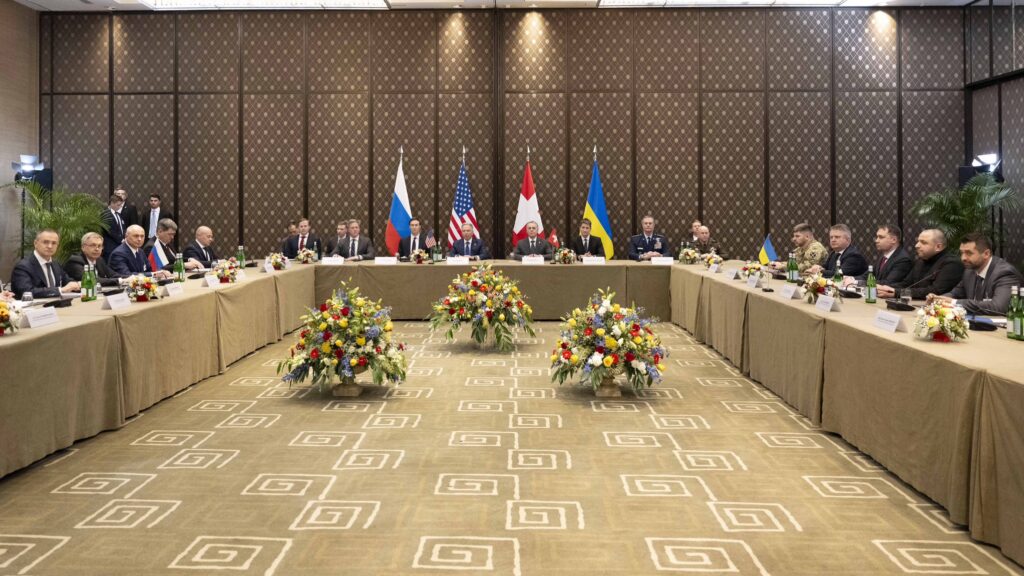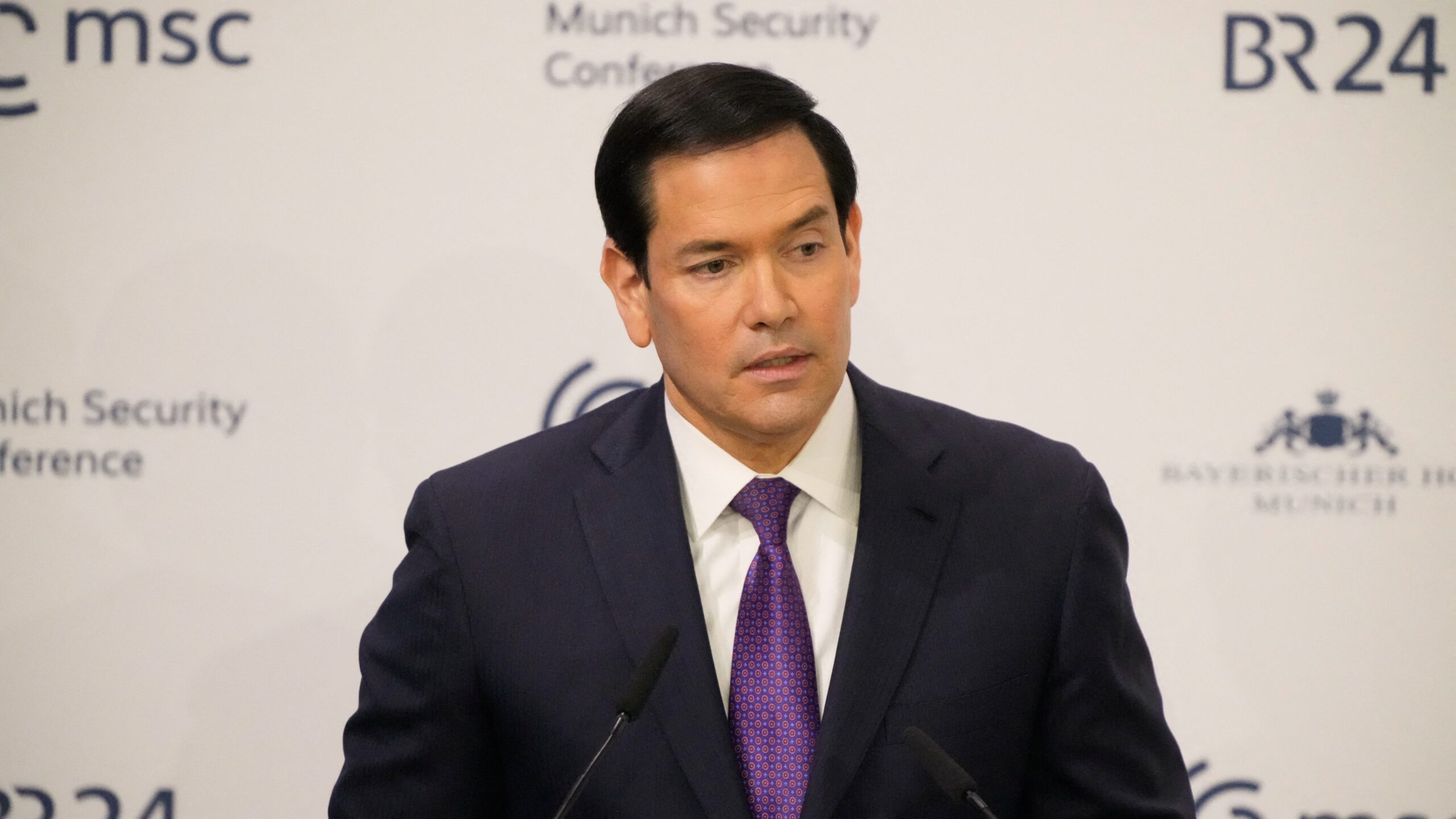
For the second consecutive year, the main American speech at the Munich Security Conference sent shockwaves throughout the continent. After last year’s denouncing of European shortcomings on free speech and common defence obligations by Vice-President Vance, this year’s speech by Secretary of State Marco Rubio centred on a concept long-forgotten in liberal European circles: that of civilizational spheres.
Rubio’s speech was not a direct attack on specific European institutions or leaders, even if it was taken as such by some of those present. It was, instead, a call for major, systemic change, less a reform and more a restructuring of Western policymaking away from the liberal internationalist dogmas that have defined it since the end of the Second World War.
At the stage of a conference that had been founded in the aftermath of the Cuban missile crisis and had become a symbol of the West-as-liberal-order, Rubio—and, through him, Washington—called for a return to a civilizational understanding of the West. From the pulpit of a West in crisis, stripped of its universalizing pretensions, the bloc’s leading power called for a renewal based not on a new ideology, but on the principles that allowed for that specific civilization to flourish in the first place.
The picture painted by Rubio was a bleak one, one that leaders in Brussels, Berlin, and Paris would rather turn a blind eye to than to acknowledge. The end of the Cold War made the West overly sure of its own protagonism and of the universality of its founding principles. The ‘end of history’, proudly announced and later denounced by Francis Fukuyama, was taken as doctrine. And, over the last decades, hyper-liberal and so-called postcolonial ideologies born in Western European and American universities elevated collective national guilt and the rejection of patriotism and national identity to a quasi-state ideology.
Against this backdrop, the European Union seeks to rearm itself, reassert itself, and to project power in an increasingly multipolar world. In Munich, Rubio asked the Europeans what President Trump asked Americans in 2024 during that memorable campaign: what, if anything, is worth fighting for? Armies, as Rubio said, ‘do not fight for abstractions. Armies fight for a people; armies fight for a nation.’ These two concepts—people and nation—are now the central tenets of American foreign policy, as antithetical they may be to the ears of some of the attendees.
‘These two concepts—people and nation—are now the central tenets of American foreign policy’
The fundaments of Rubio’s speech can be found in a major policy document published a few months ago by the United States government: the 2025 National Security Strategy, or NSS for short. The ideas outlined in the NSS now orient much of the crafting and executing of American foreign policy. Concerns with international institutionalism that have characterized our world order since 1945 give way to State realism and military pragmatism. It sees the world through its cultural–civilizational cleavages, taking them as a central, rather than parallel concern in policymaking—something much of the West, unlike the rest of the world, had ceased to do.
Relations with Europe, America’s Western counterpart across the Atlantic, are reframed in the basis of common cultural and civilizational ties and challenges. Civilizational continuity, and its preservation across the North Atlantic, is thus elevated into the core element of America’s European policy, and a key aspect of its national security.
To hear such a speech, let alone by a US Secretary of State, would have been unthinkable before 2025. Though Trump had attached a great level of importance to the interplays between culture and geopolitics even in his first term, the elevation of a quasi-Huntingtonian ‘civilizational doctrine’ into State policy is an unprecedented step in post-War America.
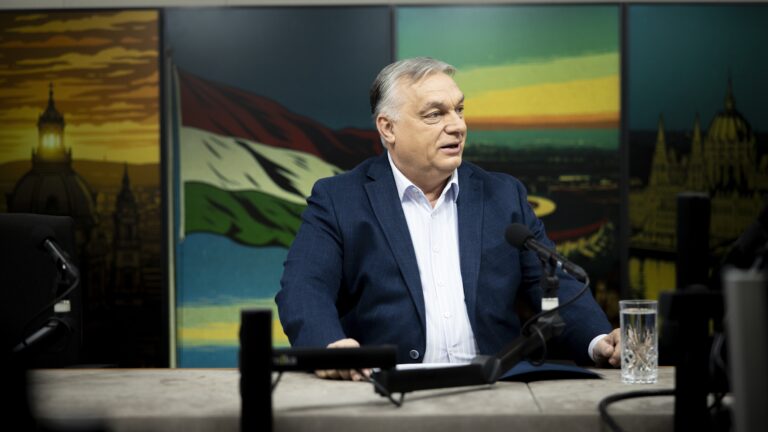
The magnitude and durability of these political and philosophical shifts will only be known in the years to come. In the short term, however, the new American approach upends Europe’s power balances in favour of its conservative bloc, today led by Italy and Hungary, the latter having served as a lodestar for national conservative revival across the Western–Atlantic sphere since the mid-2010s.
This comes, naturally, at the detriment of the Paris–Berlin–Brussels axis. At the national level, right-leaning, sovereigntist personalities such as Polish President Karol Nawrocki, a staunch Catholic conservative with a notably pragmatic approach to governance, also stand to gain.
The US National Security Strategy recognized that, in pursuing its new policy, Washington would be faced with resistance from liberal-leaning European governments. In the coming years, the main fault line in European politics will be less political and more historiographic: between those who see the West as having started 2000 years ago, and those who see its birth as intrinsically tied to a 20th-century political model.
Related articles: