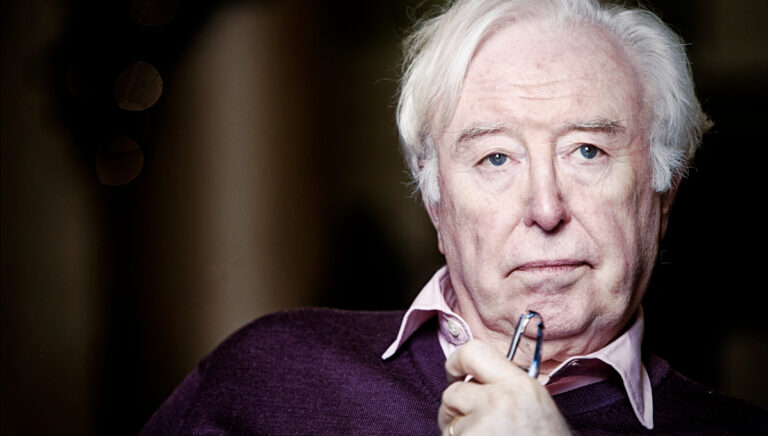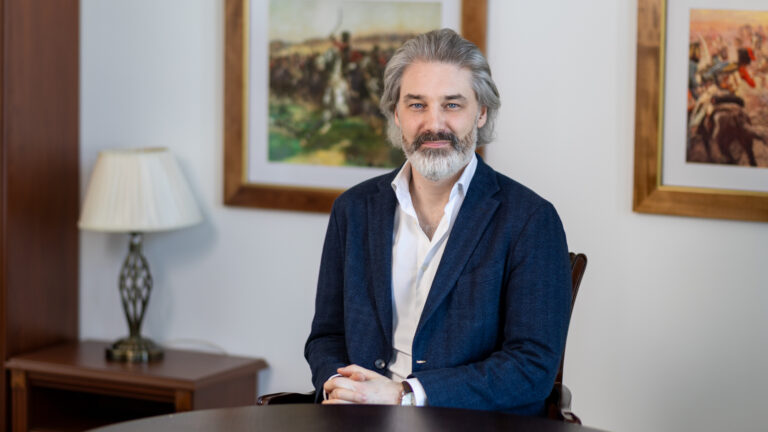
Matthias Victorian, widely known online as Code Victorian, is a rapidly rising conservative content creator whose work blends traditional European aesthetics with nationalist political commentary. Visiting Hungary at the invitation of the Scruton Hub, he spoke to Hungarian Conservative about the growth of his social media presence, the intellectual and personal experiences that shaped his worldview, his vision for a renewed European identity rooted in Christianity, family, and cultural continuity, and why he believes Hungary represents a rare stronghold of civilizational self-confidence in today’s Europe.
***
Your Instagram page, Code Victorian, has gone viral over the past few months. First of all, could you tell our readers what you are doing that generates such buzz?
I started the Code Victorian Instagram page slightly over a year ago, in January. At the beginning, it mainly focused on traditional European aesthetics—how to dress, beautiful architecture, and our civilization. But I think traditional aesthetics in general are very much linked to political developments as well.
I began to combine these two elements, which I think generated significant attention for my Instagram page, because I do not know many other creators—on Instagram or any other platform—who do this in quite the same way. I believe that uniqueness also contributed to the page’s success. Today, we have just reached 340,000 followers.
As for why I started, I think this applies to many people. You first go to high school. I was already involved in politics from a very young age, leaning more towards classical liberalism, individual freedom, etc. After finishing high school, I began pursuing a bachelor’s degree in economics at Erasmus University in Rotterdam. I moved to the second-largest city in the Netherlands, and there I saw what I consider to be the detrimental effects of mass immigration on society.
I live in a relatively good part of town, but if you move two or three blocks further, you see only Arabic shops and Turkish shops—you see no Dutch people whatsoever. I know from many female friends that they feel very unsafe when they go out at night and have to cycle back home. They are attacked—not by native Dutch people, but by people with immigrant backgrounds.
During my studies, many of my political ideas were shaped by first-hand experience. At some point, you finish your degree and start pursuing a career. In my case, I worked in the corporate world—and I still do. I have a full-time job at a large multinational company. Then you come in every morning, fill out numbers in an Excel spreadsheet, and ask yourself: Is this the only thing I am going to do with my life?
I want to have a meaningful impact on the society around me—thinking about ideas, policies, and inspiring people to support the same cause. I think we are both fighting for the same cause.
So I started this page first to showcase amazing traditional aesthetics, but also because I want to communicate a political message to my audience and inspire other people—convincing them of our political ideas. I also want to show that we have something worth fighting for: the beauty and grand architecture built over centuries, which is now being threatened, especially in Western Europe.
We are fortunate to be here in Hungary, which is a bastion of conservative thinking, with a government that is on our side. I hope to inspire people through this and to bring as many people as possible towards our political ideas.
What is the core political message you want to deliver to your audience?
I would say that, in terms of concrete policy—because ideas are valuable, but especially today, men often do a lot of talking and not enough acting—one of the core policies we should pursue is remigration. Of course, this should be voluntary. But in the case of second- or third-generation immigrants who do not assimilate, continue to cause trouble, or commit criminal acts, I would say: that is enough. If you do not feel at home here, do not want to contribute, and do not speak the language properly, we could offer a sum of money for you to return to your country of origin and start your life there. Apparently, you feel more connected to that country than to your host country—in this case, the Netherlands.
I think the bedrock of European civilization that we must revive and preserve is Christianity and family values. I try to reflect that in my content. And we should aim for real-world impact. Recently, I launched the Europe First Community, where I hope to build a pan-European movement in which people can connect, organize meetups, and truly influence the real world. Social media already has influence—but I want direct impact.
I am glad you mentioned remigration. From my conversations with other conservative influencers and political commentators, it seems that the Netherlands is at the centre of a growing movement advocating remigration. One only needs to look at Eva Vlaardingerbroek, for example. Why do you think your country has become the heart of such a movement?
Eva Vlaardingerbroek is doing great work, and I think she has achieved a great deal. She is also a very eloquent and highly intelligent speaker, and I am proud that she is leading the movement in that sense. She also appeared relatively early on Tucker Carlson’s programme in the United States and became very well known. It is excellent that she is doing this work.
Why the Netherlands? If you look at major cities—not only in the Netherlands, but also in France, Germany, and the United Kingdom—there are places where more than 60 per cent of the population is of non-Western background. Even if we ignore statistics, because people are tired of statistics, we all have eyes and ears.

Take a bus in Rotterdam or sit in the metro for 20 minutes, and you will see exactly what I mean. Go to the southern part of the city, where most immigrants live—you do not feel at home. You have no idea where you are. It can feel like walking through a market in an Arabic town or somewhere in Africa rather than a Dutch city.
You see this cultural and demographic shift so clearly that many people are tired of it and want change. And it is not only the Netherlands. If you go to Brussels or Paris, it is even worse.
Despite this, we seem trapped in a cycle in which right-wing leaders are elected—as in the Netherlands with Geert Wilders—yet cannot make a real difference on immigration policy for several reasons, including resistance from the establishment. What can these politicians do in response, and what can ordinary people like us do?
I think individuals—and I hope my content contributes to this—can already engage in political activism on a small scale. I always say that you can begin by becoming politically active yourself. People can use their phones to create content, join a political party, or do something more impactful.
I understand that this can be frightening, especially if you have a career. You may fear losing your job or being judged by family and relatives. But even those with such concerns can act in smaller ways. For example, instead of buying groceries from a large supermarket chain, go to a local butcher who sells Hungarian meat from local farmers. Instead of buying clothes from Primark, which promotes LGBTQ or Black Pride Month messaging, go to a local tailor who produces beautiful garments. Even small choices—such as paying with cash rather than a bank card—can become forms of political action.
If someone is already doing that and wants to do more, they could consider joining a nationalist or reactionary conservative party, attending debates, consuming helpful content, or reading books. And if they want to go further still, they can do what I have done: go public with their full name. Everyone now has a phone. Meta has lifted many previous restrictions on this type of content. Anyone can become an activist by creating reels, posts, or other material.
Social media clearly has influence. Younger generations increasingly encounter these issues while scrolling on Instagram or TikTok, where right-wing talking points gain traction. You have insight into your audience—what do you observe?
That is a very good question. I have a broad audience. The core demographic is aged between 24 and 34, making up about 45 per cent. Most followers are actually from the United States. Around 80 per cent are male and about 20 per cent female.
This type of content is consumed mostly by men, which I consider problematic, because one of the core values of our civilization is family. You find a wife, marry, and have children—that is how civilization survives. However, if ideological differences between men and women continue to grow—women becoming more progressive while men become more reactionary, conservative, or nationalist—how will society cope?
We must bring these positions closer together. If people hold fundamentally different beliefs, how will they marry, live together, raise children, or decide what values to teach them? These are deeply fundamental questions.
This is a serious problem, and I am not sure how it will be solved. I hope that, over time, more women will also embrace conservative or nationalist ideas, because we need one another. We must come closer together, form families, and raise children. That is the cornerstone of any properly functioning society.
Returning to policy: if nothing changes in Western Europe—if the same establishment and mainstream parties remain in power and do not meaningfully address mass migration—what future do you foresee for Europe?
If we cannot stop it, then I think Europe is finished. If we cannot halt this trend or develop viable remigration policies, we are heading towards a very dark future.
That is precisely why I am doing what I am doing. We must organize and unite people to preserve and revive our continent, built over centuries by our ancestors and representing the most advanced civilization yet. We must do everything possible to raise awareness.
I also hope the community I launched recently can contribute to this cause and create real-world impact. My content already has a tangible influence. I hope it reaches not only those who are already nationalist or right-wing, but also more apolitical people who simply appreciate beautiful architecture.

Many of my videos go viral. People see a striking building, engaging music, and visual style—then hear an idea that interests them. They investigate further and conclude that the message is correct. In this way, even apolitical viewers are drawn towards right-wing political ideas.
I aim for direct impact—through the Europe First Community, through awareness, and by communicating political messages in a beautiful form. Beauty itself is one of the essential values of European culture, as we see even in the salon where we are sitting now.
You already mentioned launching a political community twice. Could you elaborate?
I want the Europe First Community to have a direct real-world impact. The problems facing most European nations are now so severe that we must find a pan-European solution. Focusing only on the Netherlands is insufficient. We live in the Schengen area, with free movement of people and goods. We must organize and unite people across the entire European continent—and ideally those of European heritage worldwide. That includes our brothers and sisters in the United States, Canada, Australia, and South Africa.
‘I would tell Hungarians to look carefully at what is happening elsewhere in Europe. Consider why Hungary—even Budapest today—remains so well preserved’
Through the Europe First movement, I hope we can connect these people, build close relationships, host livestreams, and eventually organize meetups and exchanges of ideas. The Discord server linked to the community will launch on 14 February—Valentine’s Day—symbolically declaring love for our continent.
That is only the first step. As the movement grows, we will organize gatherings, collaborate with political parties defending similar causes, and work to reverse current trends.
I think you could already count Viktor Orbán’s Fidesz in. Speaking of which—Hungary faces a crucial election in April. What is your message to the Hungarian people?
I would tell Hungarians to look carefully at what is happening elsewhere in Europe. Consider why Hungary—even Budapest today—remains so well preserved, where women can still walk relatively safely, and cultural identity remains strong. Then compare this with Paris, Amsterdam, Berlin, and other major European cities. Judge for yourselves how to vote. I know what I would vote for—but I will leave that to your audience. The answer, I think, speaks for itself.
Related articles:
At a time when public debate is increasingly polarized and superficial, Hungarian Conservative remains committed to depth, intellectual honesty, and independent conservative thought.
Producing high-quality journalism requires resources. Your contribution helps us expand our coverage, reach new audiences, and keep our content accessible.

Please consider supporting our mission.