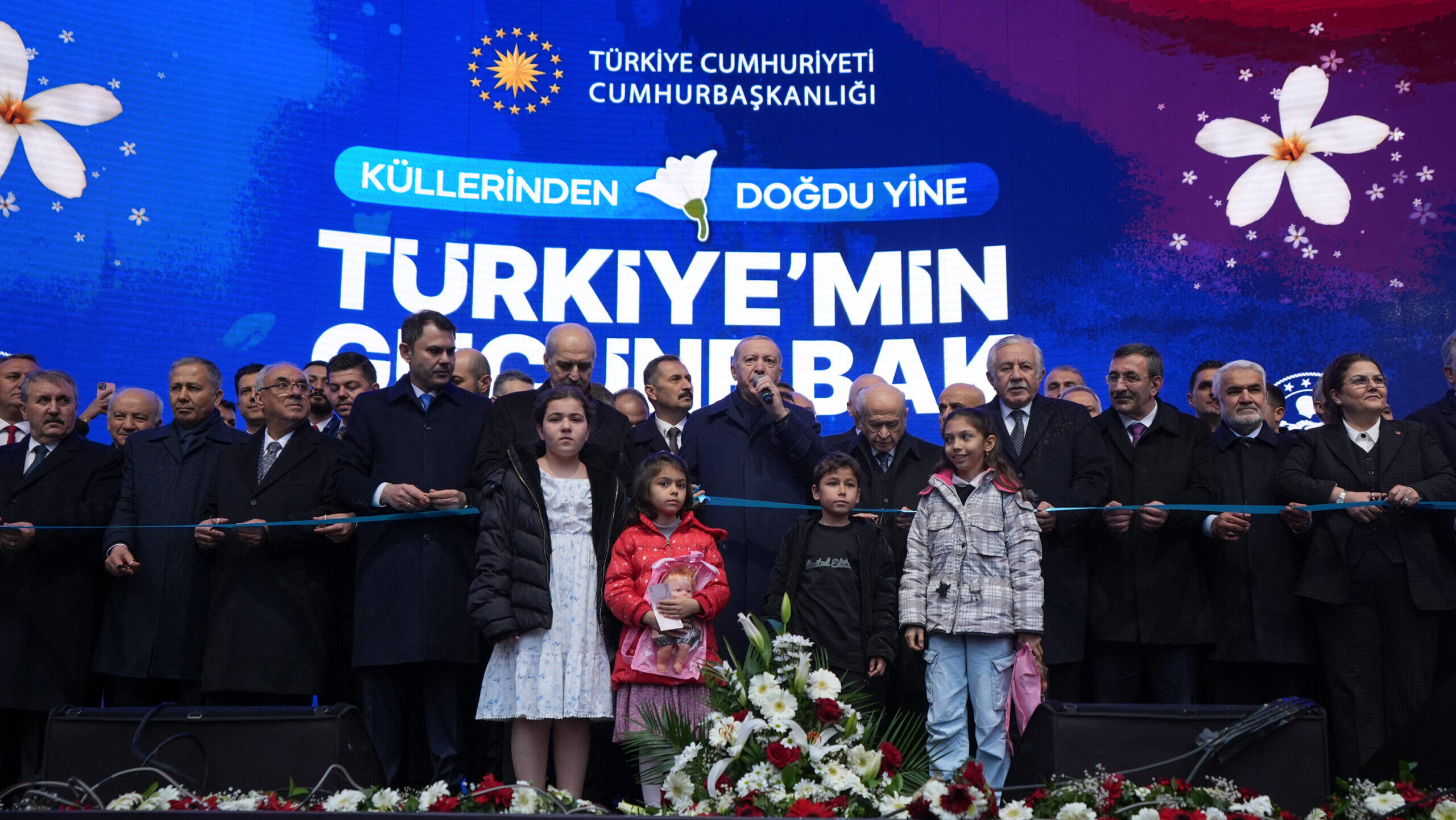
The Anatolian carnation is a native flower indigenous to the part of modern-day Türkiye known as ‘Little Asia’. Known for its resilience and endurance, growing in dry, mountainous areas, its pale pink and white petals have become a symbol of hope in a region struck by disasters from time to time—catastrophes with consequences that we, here in the middle of the Carpathian Basin, can scarcely imagine.
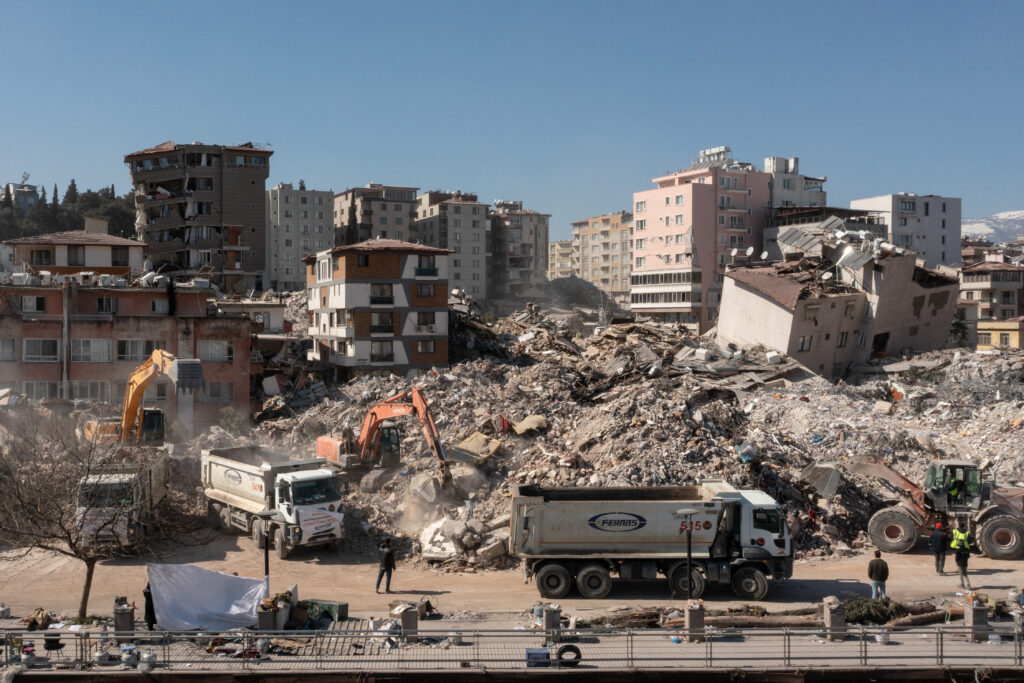
Today marks the third anniversary of the deadly earthquakes that hit 11 provinces in the southern region of Türkiye back on 6 February 2023. People there describe it as the ‘disaster of the century’, which is no exaggeration: more than 56,000 Turks and Syrians lost their lives, around 120,000 were injured, and millions were displaced from the affected area. Besides the human toll, the earthquakes also destroyed industrial and agricultural infrastructure, amounting to $150 billion—or up to 15 per cent of Türkiye’s annual GDP—in indirect losses.
Such tragedies affect societies in many different ways; most importantly, they can ignite national unity, solidarity, and cohesion. ‘I hope we will leave these disastrous days behind in unity and solidarity as a country and nation. Today is the day of being one heart for 85 million,’ Turkish President Recep Tayyip Erdoğan said at the time. Despite the devastating consequences, the Turkish people showed incredible resilience—much like the Anatolian carnation.
Reconstruction of the Century
Hungarian Conservative, alongside many outlets across the globe, including from Germany, Egypt, Bulgaria, Azerbaijan, and the United States, received an invitation to commemorate the third anniversary of the disaster and to gain deeper insight into the unprecedented reconstruction process carried out by the Turkish authorities in cooperation with much of the international community. The results are indeed inspiring and, in some ways, almost unbelievable—yet the work is far from over.
During our four-day stay in the region, the sheer scale of reconstruction was already clear from the moment we arrived. From Hatay to Kahramanmaraş—the epicentre of the earthquake—construction workers and machines were working non-stop, brand-new apartment buildings rose one after another, while some places still remained covered in rubble, reminding us of what had happened three years ago.
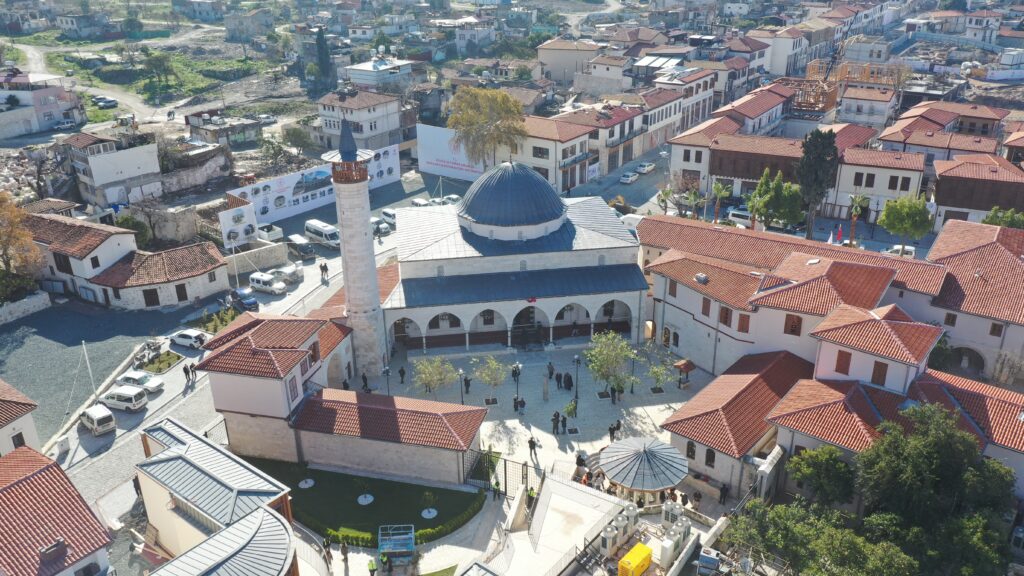
Turkish officials call it the ‘Reconstruction of the Century,’ and they rightfully do so. In just three years, they completed over 455,000 housing units across 11 provinces. That is 23 homes per hours, and 550 per day. President Erdoğan rightfully labelled it the biggest reconstruction effort of the century, something only a few countries could achieve so quickly.
But it goes beyond just housing. The government is moving forward with about half a million new social housing units for survivors throughout the disaster zone. It’s not just about the numbers; the scale feels like they’re rebuilding an entire mid-sized European country, not simply repairing damage after a disaster.
What’s especially striking is the speed. Workers began laying foundations for permanent homes just weeks after the disaster. Not long after, brand new neighborhoods started to appear. Now, construction sites stretch from Hatay to Kahramanmaraş, backed by massive labor, logistics, and financial support from all over the country and from the international community as well. And it’s not only about homes. The push includes infrastructure, transportation, and restoring economic life as well. It’s a full-scale recovery—aimed at bringing back daily life, not just putting up new buildings.
‘In just three years, they completed over 455,000 housing units across 11 provinces’
They’re not only building quickly; they’re building better. Decades of earthquake experience have taught tough lessons. Turkish regulations now require earthquake-resistant engineering and anti-seismic standards, according to Environment, Culture and Urbanisation Minister Murat Kurum. These standards apply to both new construction and retrofitting older buildings. The minister, whom we had the chance to speak with in Kahramanmaraş, said that the most modern urban planning models were applied during the reconstruction process.
Officials have also prohibited building on fault lines, liquefaction zones, stream beds, and other hazardous areas, a clear shift toward prevention, not just reacting to disasters. The aim is to make the 2023 tragedy a true turning point for urban planning—to make resilience a permanent feature of city life. One of the main reasons behind the high amount of deadly casualties during the earthquakes was decades of weak enforcement of legal codes, poor building materials and zoning amnesties for unsafe structures. The disaster, however, finally made all of these impossible to ignore.
Hungary Came to the Rescue
As mentioned earlier, alongside the Turkish authorities, the international community also played a major role in both the rescue and reconstruction processes. Hungary itself, owing to the excellent relationship between the two countries, responded to Turkish needs from the very beginning. Immediately after 6 February, a 55-member search-and-rescue unit—including firefighters, military doctors, ambulance staff, and rescue dogs—was flown to Türkiye with around 90 tonnes of equipment. The team alone rescued at least 17 survivors from the rubble.
Beyond rescue work, Hungary also provided shipments of roughly 10 tonnes of aid supplies and 120 tonnes of hospital equipment. Hungary likewise played an important role in the reconstruction process, particularly in the cultural centre in Osmaniye. Preserving religious and cultural sites was a crucial part of the reconstruction effort, as many ancient symbols of Turkish identity had been devastated by the catastrophe. Hungary also helped rebuild the Syriac Orthodox St Peter and St Paul Church in Adıyaman.
Our journey ended in Osmaniye, where President Erdoğan delivered his commemorative speech on 6 February. Speaking in front of a boulevard fully packed with people, he stressed that the victims would remain central to the nation’s collective memory. ‘Today, with Allah’s permission, we have overcome this challenge and rebuilt and revived our cities in as short a time as three years. We kept our word,’ he stressed, adding that the reconstruction was a demonstration of unity and strength. ‘Through state–nation solidarity, we healed the wounds together and once again demonstrated Türkiye’s strength to the world,’ Erdoğan declared.
Related articles: