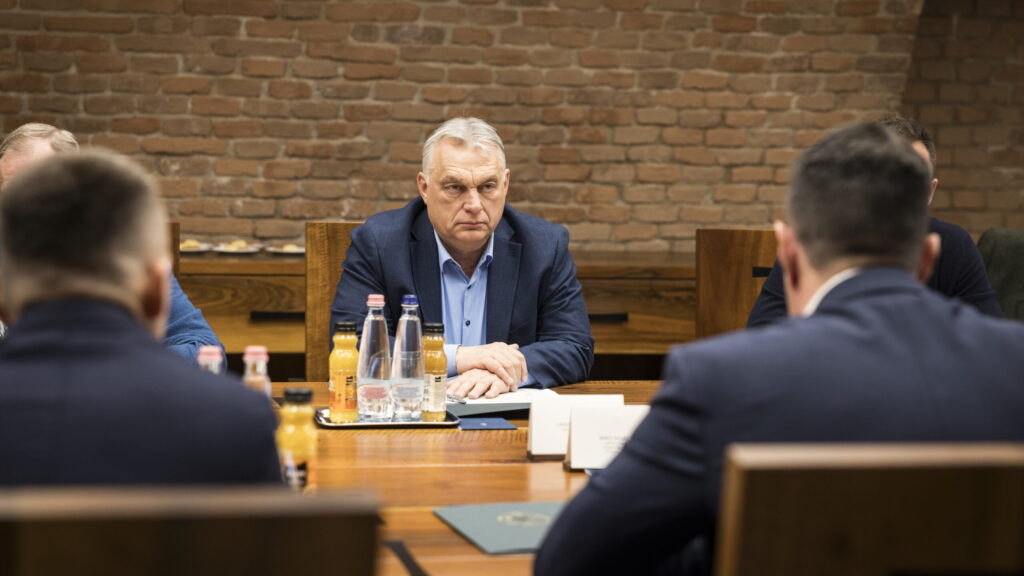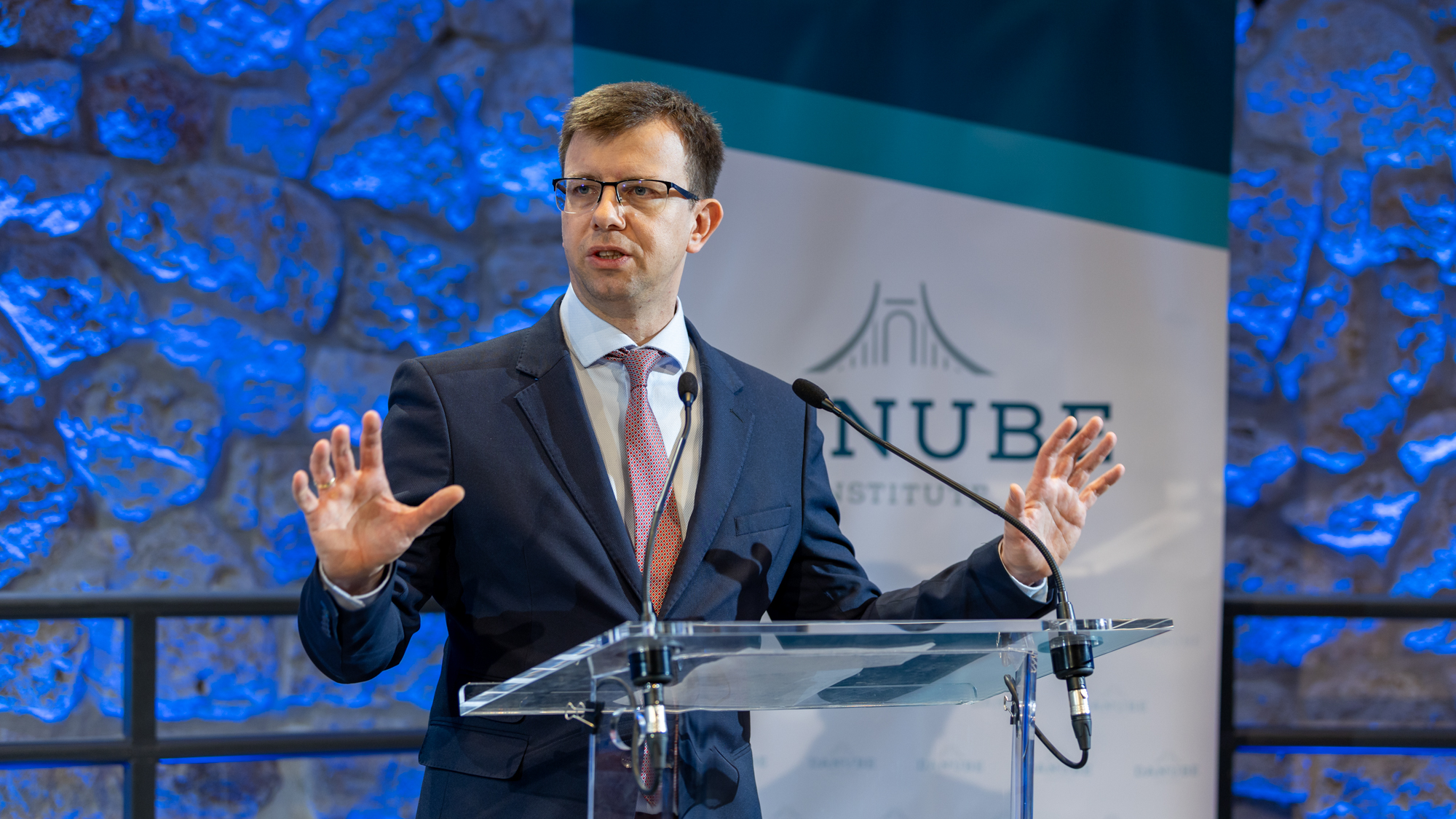
The Danube Institute, Ludovika University of Public Service, and Israel-based David Institute for Security Policy hosted an event on 21 January titled A Pivotal Year: Israel, the Middle East, the US, and Europe Come 2026. Experts discussed Hungary and Central Europe’s unique role as Israel’s natural allies, their potential leadership within the EU, the influence of international institutions, and Hungary’s position in the Abraham Accords.
At the event, Commissioner for the Coordination of the Fight against Antisemitism János Bóka also gave a speech.
Changes in Global Governance
The Hungarian minister for European Union affairs opened his speech by addressing the fundamental changes in global governance. According to the minister, ‘the institutions that were designed for simplicity, the liberal institutional framework, are becoming less and less functional.’
He went on to explain that big-power politics now shapes the emerging multipolar world. In this context, global institutions are losing relevance, and greater attention will be given to developing new ones, though, as János Bóka noted, nobody yet knows what these institutions will look like.
Time Matters
The minister emphasized that the new global governance is not about persons like President Putin or Trump, but about politics. János Bóka acknowledged that each leader has their own personality and gives different solutions to the same problems. At the same time, he highlighted the trend that the challenges states face are the same, as are domestic political expectations.
János Bóka added that it takes time to see clearly in which direction the modern world will go, but he warned that ‘we will have to be prepared for a global governance that will be significantly and fundamentally different from what we have known in the past.’
The Right Strategy
In this new environment, the central task for national leaders is awareness. Understanding global change requires presence: being at the tables and in the rooms where information is exchanged is one of the most important things. This awareness allows states not only to defend themselves against growing risks, but also to recognize and exploit new opportunities.
According to the minister, Hungary is particularly well positioned, led by a government capable of acting decisively and independently. In a rapidly shifting global order, such leadership enables Hungary to protect itself from risks, mitigate threats, and seize the opportunities that arise.
The European Union in Its Biggest Crisis Now
János Bóka also stated that the European Union is facing the greatest crisis in its history. The European Union faces an intensifying triple isolation: its influence on the global stage is weakening; the divide between Brussels and its member states is growing; and the European identity crisis is deepening. This last development is particularly concerning, as Europe’s identity cannot be separated from its national identities and their shared Jewish–Christian civilizational foundations.
According to the minister, in Western Europe, antisemitism is emerging more frequently and in increasingly aggressive forms. The rise of antisemitism across the continent is a symptom of a deeper civilizational crisis. Combating it is therefore not only about protecting Jewish communities, but also about safeguarding Europe’s own identity and heritage.
The EU mainstream, which is progressively distancing itself from Israel, risks undermining efforts to combat antisemitism and, by extension, the very civilizational foundations of Europe. Addressing this new form of antisemitism effectively requires building a strategic partnership with Israel.
Related articles: