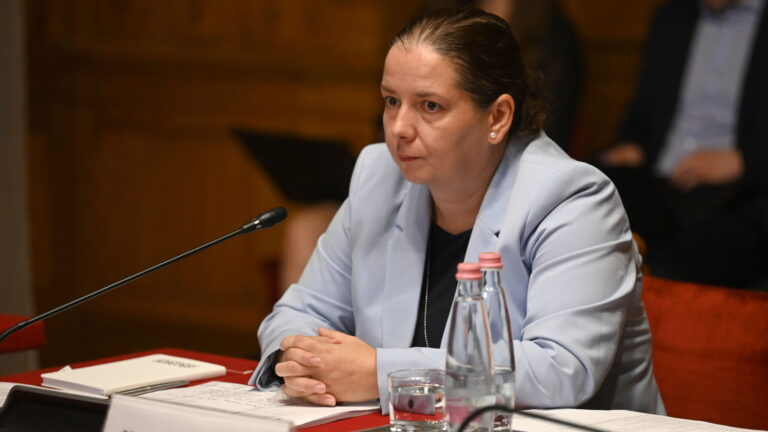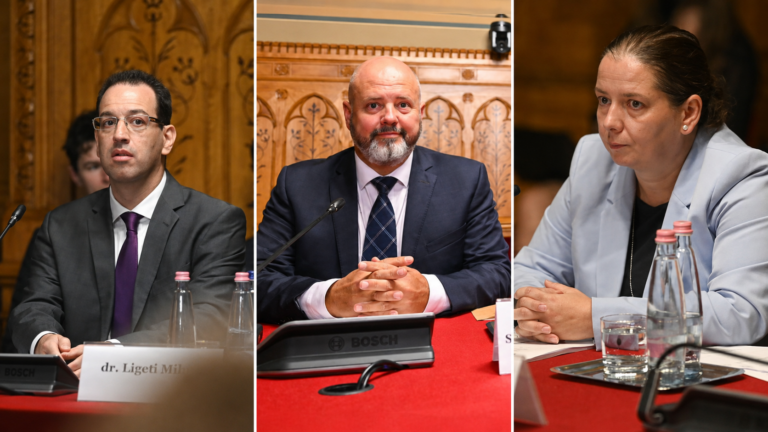
Fabio De Masi, a non-aligned member of the European Parliament from the left-wing Bündnis Sahra Wagenknecht (BSW), sued the European Commission over its alleged lack of transparency.
The representative objected to the Commission’s and Ursula von der Leyen’s team’s lack of transparency on their contacts with the arms industry and defence lobbyists. Arguing that the Commission violated EU treaties and the EP’s democratic oversight when it failed to sufficiently respond to his written question, MEP De Masi sued von der Leyen on 7 January before the European Court of Justice.
Under the Treaties, MEPs have the right to request written explanations from the European Commission, which is obliged to respond. These procedures are intended to ensure transparency and democratic oversight of the Commission. De Masi believes his lawsuit could result in a precedent-setting ruling that strengthens the European Parliament’s ability—and right—to obtain comprehensive answers from the Berlaymont on matters of critical importance.
The MEP submitted its first question for written answer about the Commission’s contacts with the arms industry in March 2025, adding a related question to the list in November 2025. In the first question the representative asked: ‘What contacts (physical meetings, telephone calls, videoconferences, emails and correspondence) has Commission President von der Leyen had with defence contractors since the European Parliament elections in June 2024?’, while in his November correspondence the MEP extended the same question to ‘senior officials in Commission President Ursula von der Leyen’s Cabinet (namely the Head of Cabinet, the Digital Adviser and the Diplomatic Adviser)’.
Under Rule 144(3) of the Rules of Procedure of the European Parliament, the Commission has six weeks to respond to representatives’ questions—a deadline the Berlaymont missed in De Masi’s case. Determined to obtain an answer, the German politician contacted the President of the European Parliament after six months of delay, asking Roberta Metsola to remind the Commission of the unanswered request. Subsequently, the German MEP received a written reply to his first question, which had been submitted in March, in October 2025.
‘The German MEP received a written reply to his first question, which had been submitted in March, in October 2025’
However, De Masi deemed the answer he had waited seven months for as ‘incomplete.’ In its response, the Commission argued that Ursula von der Leyen’s meetings are listed in an online public calendar and in the Transparency Register, and therefore the reply provided no detailed breakdown of the meetings or the topics discussed with defence lobbyists. The Commission’s response made no specific reference to lobbyists or interest representatives the President has met since the EP elections in 2024. It is also important to note that the Commission’s contracts are not publicly available. Together, these omissions leave many questions unanswered about the nature and content of the Commission’s contacts with the defence industry. ‘This is not about personal curiosity, but about democratic oversight,’ De Masi said.
It is not the first time that it has taken the European Commission months to respond to information requests. A very similar situation occurred at the height of the COVID-19 pandemic, when The New York Times requested documents concerning Ursula von der Leyen’s SMS exchange with the CEO of Pfizer. The newspaper suspected that the increased price of Pfizer’s jabs might be linked to the private conversations between the Commission President and the business leader. As in De Masi’s case, the Commission provided a belated and incomplete answer, prompting The New York Times—like De Masi—to take the Commission to court.
In the so-called Pfizergate case in mid-2025 the European Court of Justice issued a ruling condemning the Berlaymont. However, as by this point the correspondence between Pfizer and Ursula von der Leyen was permanently lost, it is still uncertain if there was any corruption involved in the Commission’s acquisition of 1.8 billion vaccine doses. One thing is certain from the von der Leyen cabinet’s post-ruling declaration: a senior Commission official approved to make the SMS exchange permanently disappear after The New York Times had requested to see the messages. In other words, Ursula von der Leyen and her cabinet played an active role in preventing the public from seeing transparently in the matter.
Given the similarity of how the Commission has handled De Masi’s information requests about its contacts with the defence industry, some fear that a Pfizergate-like scandal might repeat itself. Considering the scale of the Commission’s defence plans, the risk of corruption is high—under the ReArm Europe/Readiness 2030 programme, the EU has pledged to spend €800 billion, while under the SAFE programme an additional €150 billion is earmarked for the military.
Related articles:
At a time when public debate is increasingly polarized and superficial, Hungarian Conservative remains committed to depth, intellectual honesty, and independent conservative thought.
Producing high-quality journalism requires resources. Your contribution helps us expand our coverage, reach new audiences, and keep our content accessible.

Please consider supporting our mission.