The United Arab Emirates has announced restrictions on student scholarships to universities in the United Kingdom, citing concerns over the risk of Islamist radicalization on British campuses. According to media reports, Abu Dhabi has expressed particular concern about the activities of the Muslim Brotherhood, which the UAE designates as a terrorist organization.
The country’s education ministry published a revised list of foreign universities approved for government funding and official recognition. The list includes institutions in the United States, Australia, France, and even Israel, while the United Kingdom is notably absent. When British officials sought clarification, UAE counterparts reportedly confirmed that the omission was deliberate.
One individual with direct knowledge of the discussions said UAE authorities are concerned about the risk of Islamist radicalization among Emirati students studying in Britain. ‘They do not want their children to be radicalized on campus,’ the source said.
Data cited in the report indicate that during the 2023–24 academic year, 70 students at UK universities were flagged for potential referral to the Prevent deradicalization programme over signs of ‘Islamist radicalization’—nearly double the number recorded the previous year.
Since the Arab uprisings of 2011, the UAE has adopted a hard-line stance against Islamist movements both domestically and internationally. Under President Sheikh Mohammed bin Zayed al-Nahyan, Abu Dhabi has repeatedly criticized the United Kingdom for failing to ban the Muslim Brotherhood.
The UK, however, is far from the only Western country that has neither banned nor is planning to ban the organization. In fact, outside a limited group of states—including the UAE, Egypt, Russia, Kazakhstan, Saudi Arabia, Bahrain, and parts of Libya—there is no nationwide designation of the Muslim Brotherhood elsewhere. In the United States, the states of Texas and Florida have designated the Brotherhood, but there is no federal-level designation, nor is there an EU-wide one.
Meanwhile, Muslim Brotherhood influence in Europe is widely expanding, ironically in parallel with its decline across much of the Middle East. A 2025 French government report commissioned by the Ministry of the Interior described the movement not only as a long-term challenge to France’s national cohesion but also as engaging in organized influence operations within European institutions. The report argued that Brotherhood-linked networks—including youth and community organizations active across multiple EU member states—have sought to shape policy debates and gain access to EU funding. French officials have also raised concerns that Erasmus+ and other pan-European programmes may be used to support activism tied to Islamist currents, calling for stricter scrutiny of such lobbying and institutional partnerships in Brussels.
‘Muslim Brotherhood influence in Europe is widely expanding, ironically in parallel with its decline across much of the Middle East’
In the United Kingdom, the presence and influence of the organization have also been subject to official scrutiny. In 2015, a government-commissioned investigation ordered under Prime Minister David Cameron examined the Brotherhood’s ideology and networks in Britain, concluding that its foundational texts and some affiliated individuals and organizations espouse views ‘at odds’ with UK values. Despite these findings, no decisive steps were taken to curb its influence.
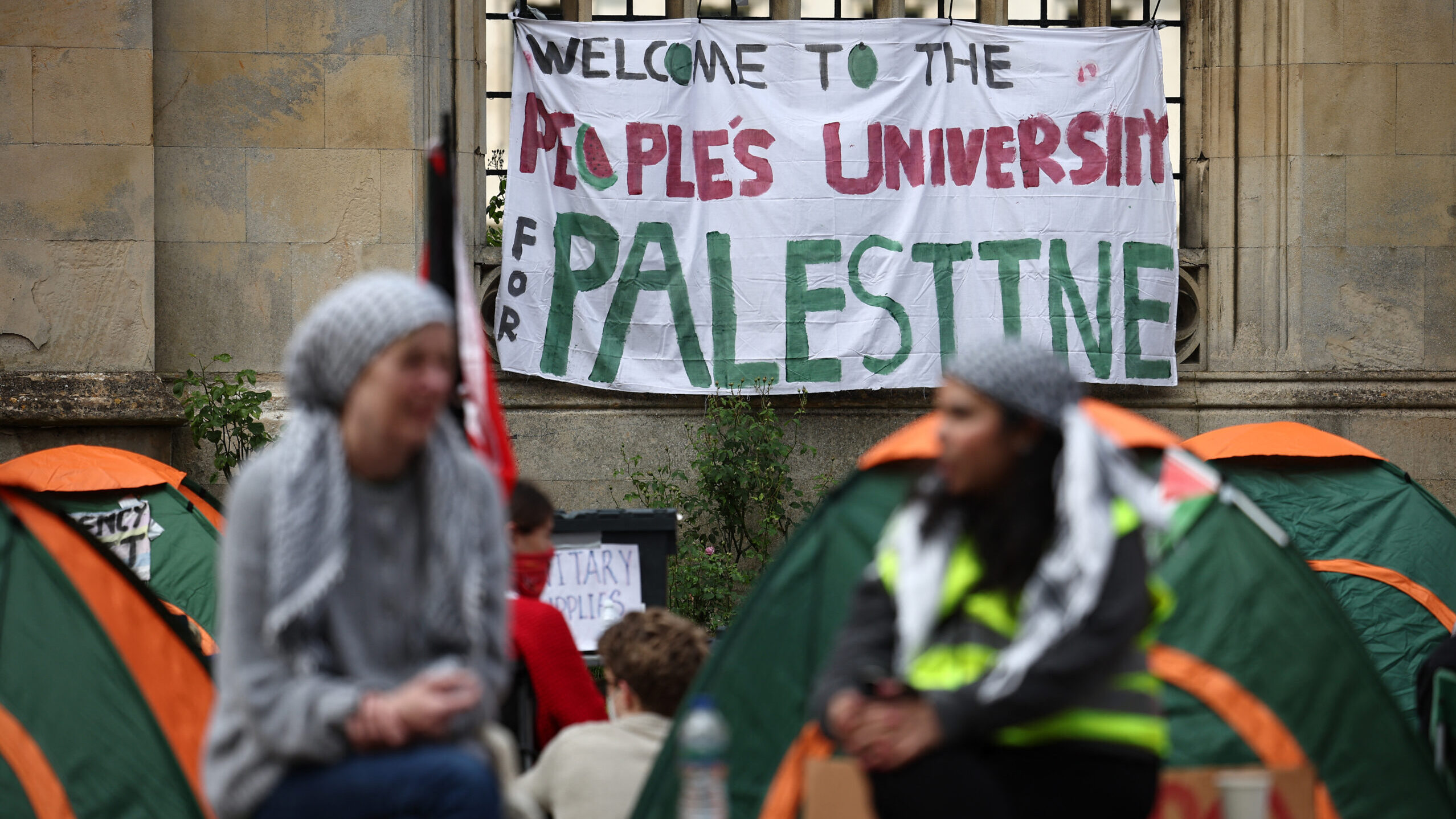
On university campuses, Muslim Brotherhood-linked activity is often described as even more visible. According to reports, student societies at institutions such as the London School of Economics and King’s College London have hosted speakers connected to Islamist movements ideologically aligned with the Brotherhood. Individuals later involved in terrorism, including the so-called Christmas Day bomber Umar Farouk Abdulmutallab, also had notable roles on UK campuses; Abdulmutallab served as president of the University College London Islamic Society. In addition, several UK-based organizations with leadership or origins linked to Brotherhood-influenced networks—including charities and advisory groups such as the Cordoba Foundation, cited in parliamentary reporting for connections to Brotherhood figures—have engaged in advocacy, public events, and outreach that critics argue amount to sustained institutional influence.
Despite the UAE’s policy shift, some Emirati students currently enrolled at UK universities continue to receive funding, and wealthier families are still able to finance studies privately. However, Abu Dhabi has indicated that it will no longer recognize degrees from institutions outside the approved list, significantly reducing the value of UK qualifications for Emirati graduates.
Official figures already point to a sharp decline in Emirati student mobility to Britain. In the year ending September 2025, just 213 study visas were issued to UAE nationals—a decrease of 27 per cent compared to the previous year.
Related articles:
At a time when public debate is increasingly polarized and superficial, Hungarian Conservative remains committed to depth, intellectual honesty, and independent conservative thought.
Producing high-quality journalism requires resources. Your contribution helps us expand our coverage, reach new audiences, and keep our content accessible.

Please consider supporting our mission.