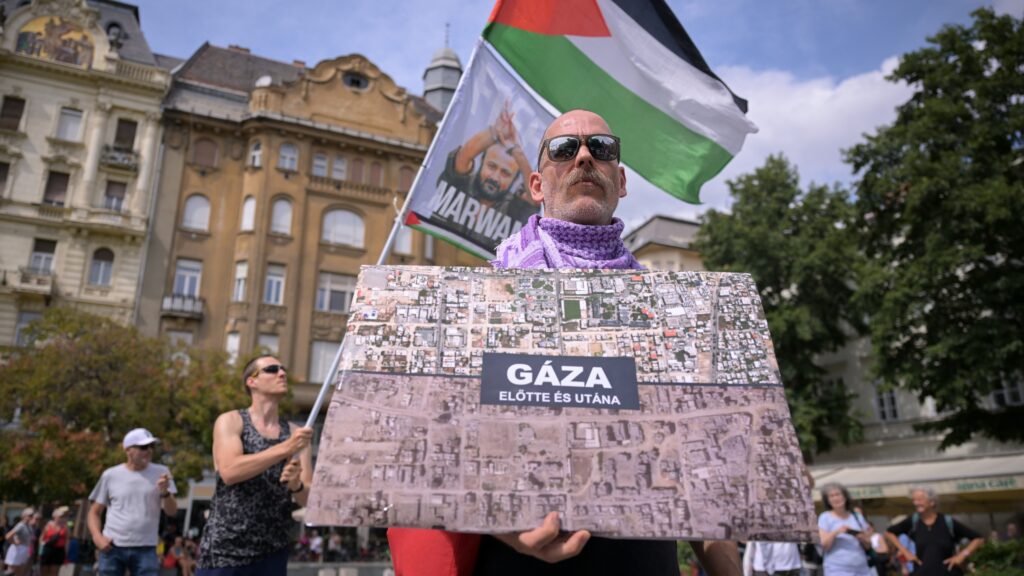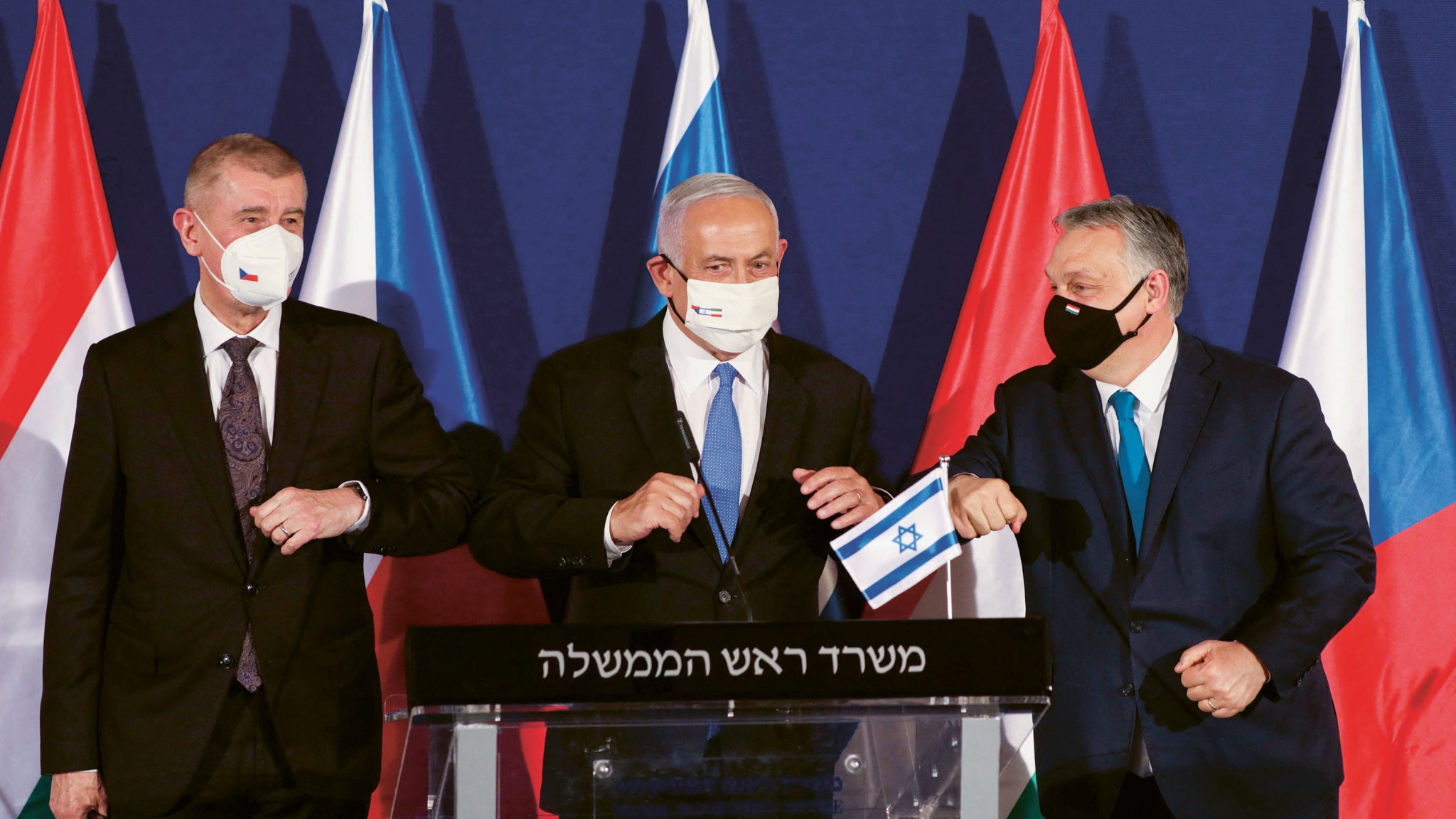
This article was originally published in Vol. 5 No. 4 of our print edition.
As it fights against terrorism in Gaza and the broader Iranian-led militant network in the Middle East, Israel has found itself increasingly isolated internationally—even among its closest allies in the West. As Israeli Prime Minister Benjamin Netanyahu put it in his address to the United Nations in September 2025, ‘in the days immediately following October 7, many [world leaders] supported Israel. But that support quickly evaporated when Israel did what any self-respecting nation would do in the wake of such a savage attack—we fought back. [O]ver time, many world leaders buckled […] under the pressure of a biased media, radical Islamist constituencies, and anti-Semitic mobs.’ 1
Israel, therefore, fits in the mould of an underlying civilizational struggle that divides today’s European Union along societal and political attitudes toward Wokeism and mass migration. In this sense, political attitudes toward Israel are largely derivative of attitudes toward these two menacing phenomena. In Europe, there is no more telling example of a country that outright rejects both Wokeism and mass migration as part of its national credo than Hungary—which also happens to be Israel’s fiercest ally in the EU.
This article explores the ways in which Hungary’s support for Israel carries strategic significance within the EU. It examines Hungary’s track record since October 7 and how its leadership on this topic can serve as a template for other EU member states that likewise oppose Wokeism and mass migration—yet often fail to translate these fundamental elements into unambiguous support for Israel. As such, Israel would be better served if, through Hungary, it could rally a like-minded coalition of Central European countries within the EU to form a Hungarian-led bloc. This coalition could restrain the continuous institutional inertia in Brussels that has become increasingly hostile to Israel and is finding creative ways to circumvent Hungary’s sole blocking vote. But first, in order to understand the true significance of Hungary’s emerging leadership in Europe, one has to look across the Atlantic.
‘MAGA Civil War’
In the US, while the Trump administration has been exhibiting stalwart support for Israel, this support can no longer be considered a mainstream bipartisan reality. Nor can the split regarding the Jewish state continue to be defined as a right–left divide. Recently, Israel has found itself at the centre of a heated political debate within the American right. Leading voices across the American right-wing spectrum have been crystallizing into two distinct camps—Israel-sceptics and ardent supporters of Israel—with some attempting to bridge the divide. The feud has become so prominent that it has been the source of much media attention, podcast episodes, and discussion, at times even framed as a ‘MAGA civil war’.2
On the Israel-sceptic side, prominent voices such as Candace Owens, congresswoman Marjorie Taylor Greene, and podcaster Tucker Carlson have been vocally opposing what they call Israel’s disproportionate influence over American politics, and its military actions that supposedly drag the US into foreign wars. Carlson has also been giving a friendly platform to conspiratorial voices such as known anti-Semite and conspiracy theorist Nick Fuentes, in an episode that garnered 6 million views within two weeks, and in which Fuentes spewed anti-Semitic tropes, claiming that ‘Zionist Jews [are] controlling the media [and] the big challenge…is organized Jewry in America’, and accusing American Jews of having ‘foreign allegiance’ to Israel that precedes their allegiance to the US.3
On the other side of the debate, more traditional conservatives have been voicing their outrage, in particular Jewish podcaster Ben Shapiro. In his episode ‘Tucker Carlson Sabotages America’, he claimed that ‘the fragmentation of the political right…is being caused purposefully by a splinter faction of people’.4 Prominent conservative, classicist, and military historian Victor Davis Hanson harshly criticized Carlson as well: ‘People on the right felt [that] the left has taken down the restrictions [and] mainstreamed anti-Semitism [and then has] taken advantage of that’, he said. Hanson praised Israel as the ‘best friend’ of the US in a ‘sea of Muslims that live under autocracy’.5
Finally, in the middle, voices such as podcaster Megyn Kelly have been attempting to bridge the divide by listening to both parties, urging the conservative movement not to allow this topic to fragment it, but to instead focus their attention on ‘fighting the lunatic left’.6
This social volcano has not erupted in a vacuum, but is the result of a long-simmering disagreement beneath the surface. The war between Israel and Hamas, as well as the strike on Iran, have been the topic of internal conflict within the conservative movement for a while now. A recent Cygnal poll uncovered how Israel’s support base within the American right, long considered to be a given, has been eroding for some time—especially among the younger electorate. Among American voters, Israel’s image is slightly underwater overall, with 41 per cent viewing it favourably and nearly 44 per cent unfavourably. But among voters aged 18 to 44, Israel’s standing is significantly worse—it is deeply underwater with a net favourability of –31. For voters over 55, it is the opposite—Israel has a net favourability of +14.7 The younger the voter, both conservative and liberal, the more sceptical they are of Israel as an ally—which in turn illustrates how scepticism toward Israel is far from being a flash in the pan, even on the right.
Since the Jewish state considers its alliance with the United States a strategic asset, with favourable public opinion being central to maintaining its long-term validity—these forming fault lines should serve as a wake-up call to Israel and its allies.
Hungary Positions Itself as Israel’s Staunchest Ally in Europe
As fissures and fractures emerge in its international legitimacy, it becomes more pressing for Israel to nurture close relationships with other friendly countries, as well as to build coalitions. Hungary has been a staunch supporter of Israel in recent years. The small Central European country has been described as the ‘Last Bastion of Christian Zionism in Europe’.8 Yet the roots of the conservative Hungarian government’s pro-Israel stance go far beyond the repudiation of its dark past in the twentieth century.9
‘Hungary has emerged as Israel’s staunchest ally in Europe, consistently opposing anti-Israel resolutions at the UN and defending Israel’s sovereignty, security, and right to self-defence’
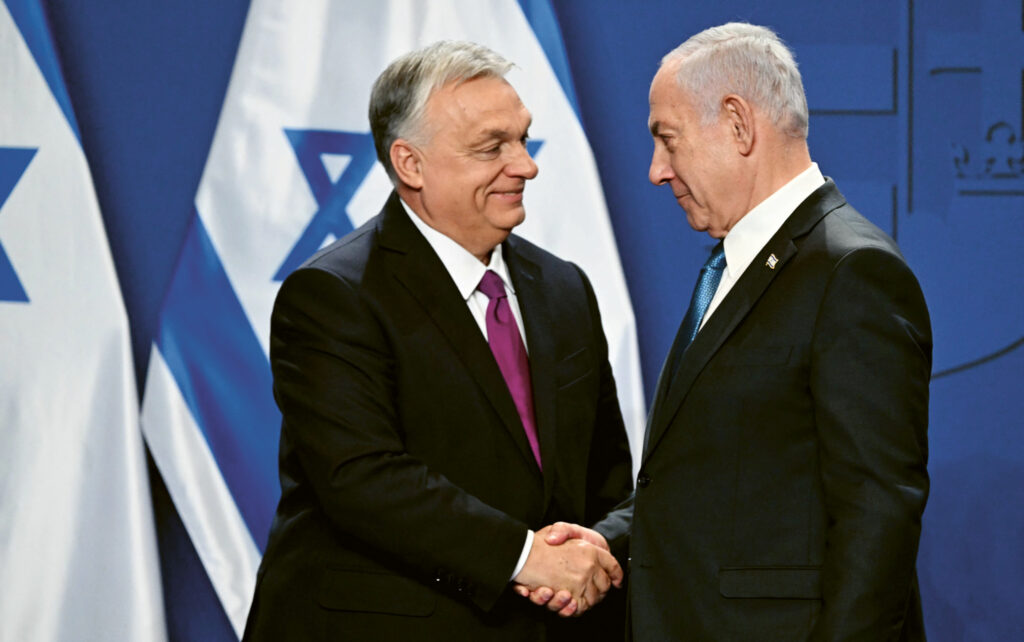
Broadly speaking, Hungary rejects the two main driving forces behind the anti-Israel sentiment in Europe: Wokeism and mass migration. But unlike other countries in Europe that share the same views on these topics, Hungary’s strong pro-Israel stance organically flows from this rejection, and also constitutes an integral part of its conservative vision for the future realignment of the European right. The rationale behind Hungary’s track record of opposition to Wokeism and mass migration was most notably explained by Prime Minister Viktor Orbán during his counterpart Netanyahu’s visit to Budapest in April 2025, when he contrasted Hungary’s record with that of Western Europe:
‘From the very first moment, Hungary made it clear that we stand up for Israel’s sovereignty, its right to self-defence, and the security of the Israeli people; and we have represented this position in world politics everywhere ever since…Israel can count on Hungary in the future as an impregnable European bastion of Judeo-Christian culture…In our country, there is zero tolerance for anti-Semitism…Illegal migration inevitably brings with it an increase in anti-Semitism. The Brussels elite are unable and unwilling to stop this… Hungary, however, shall not yield: Hungary shall not accept any migration.’ 10
Its critics often depict Woke ideology as weakening a society’s resolve to combat the myriad problems (including anti-Semitism) that stem from mass migration. However, violent expressions of anti-Semitism flow directly from Woke ideology as well. Notably, anti-Israeli and anti-Semitic sentiments emanating from Woke ideology engulfed university campuses on both sides of the Atlantic following the October 7 massacre and the subsequent Israeli war against Hamas in Gaza. On US campuses alone, the Anti-Defamation League has identified 2,637 incidents of anti-Israeli assault, vandalism, harassment, protests/actions, and divestment resolutions between 1 June 2023 and 31 May 2024: a staggering 628-per-cent year-over-year increase.11 Campuses in Europe had a bitter taste of that organized effort as well, in the form of encampments, as well as violent protesters going so far as to ‘occupy’ entire campus buildings, only to be removed by the police, as was the case in Sciences Po Paris12 and Tilburg University13 among others.
Among those campus-bred protests, the ‘Queers for Palestine’ movement is particularly notable for its moral double standard. While being outraged by Israel’s military conduct in Gaza and the suffering of Palestinians, that movement has conveniently ignored the fact that Israel guarantees non-discrimination based on sexual orientation, while in territories controlled by Palestinians, gays and lesbians are routinely persecuted14—not to mention tortured and even executed.15
Following the October 7 massacre, the East–West divide within Europe regarding migration policy became crystal-clear, as Western European metropolises were engulfed by displays of imported anti-Zionist and anti-Semitic tribalism. Anti-Semitic attacks spiked all across Europe—as these countries have been importing unassimilable masses of migrants—including a 75-per-cent increase in reported anti-Semitic incidents in Germany between 2021 and 2023, 185-per-cent in France, and 82-per-cent in the UK.16 Massive crowds marched to genocidal chants such as ‘globalize the Intifada’, ‘from the river to the sea, Palestine will be free’, or ‘there is only one solution—Intifada, revolution’ in major cities. These protests notably included a heavy presence of minority Islamic populations, often going as far as carrying Hamas flags—recognized as a Foreign Terrorist Organization by the EU. In Paris and Berlin, the police had to employ force to disperse these violent protests, while the British government was forced to allocate £3 million to protect synagogues and Jewish schools in the days after the massacre.17
In stark contrast, no such vile incidents ever happened in Hungary—a country that both closed its southern border, refused to harbour migrants from elsewhere in Europe, and declared a non-Woke governmental policy. Instead, as proof that the Hungarian government’s stance on Israel enjoys popular backing, thousands marched in support of Israel immediately after the attacks—one of the only openly pro-Israel demonstrations since October 7.18 Other acts of solidarity quickly followed. A former communist-era vacation retreat located on the picturesque shores of Lake Balaton was transformed into Machne Chabad, a Jewish kosher refugee camp. The camp—created by EMIH, the Chabad-affiliated Jewish Federation of Hungary—offers a secure sanctuary for Israeli Jews seeking refuge with their families from the devastation of war, and houses around 200 people.19
Since October 7, pro-Palestinian protests have been banned outright by Hungarian authorities. And as Israeli companies were banned from participating in exhibitions in Paris,20 the largest ever Hungarian–Israeli Business Forum was held in Budapest in November 2025, with 62 Hungarian and 36 Israeli companies taking part.21
Beyond domestic solidarity, Hungary has gone to great lengths to support Israel diplomatically at numerous international fora. The UN—which John O’Sullivan, president of the Danube Institute, has described as a ‘Psychodrama of Western guilt and Third-World accusations’—is infamous for its anti-Israel bias. Since October 7, the UN and its various bodies have condemned the Jewish State 58 times.22 The General Assembly alone has condemned Israel a full 174 times since 2015, while in comparison, the dictatorships of Iran and North Korea have received only 10 condemnations each during the same time period.23 No condemnation against Hamas and the October 7 attack could ever pass the Security Council due to Russia and China’s veto power, which drew harsh criticism even from the Democratic-appointed US ambassador to the UN.24
The anti-Israel bias permeates almost every level of the institution. For example, the pro-Israel watchdog UN Watch highlighted in a report in July 2024 that the UN’s agencies and high officials in charge of refugees were mostly silent on the more than 200,000 Israelis internally displaced (IDPs) in the north and the south of Israel after October 7. Until the publication of the report, the UNCHR mentioned the displacement of Gazans 12 times in 39 general statements, yet Israeli IDPs were only referenced in one of the four conflict-specific joint statements. During the same time period, Special Rapporteur on Internally Displaced Persons Paula Gaviria Betancur issued 26 statements on the war in Gaza, all of them mentioning Gazan IDPs, but none of them mentioning Israeli IDPs.25
For its part, Hungary has been ramping up its consistent support for Israel in the UN General Assembly, voting against 100 per cent of the condemnatory resolutions targeting Israel in 2025, up from 26 per cent in 2023 and 50 per cent in 2024.26 Most notably, Hungary was among the ten countries—and the only one in Europe—that voted against the New York Declaration endorsing a two-state solution. The resolution was subsequently blocked by the US in the UN Security Council.27
It is important to note that a stance alongside Israel in the United Nations goes beyond a mere single vote in a chamber of 193 members. It indicates Hungary’s direct opposition to a widely-promoted narrative and nourished ‘consensus’ that the Israeli–Palestinian issue must be brokered by outside pressure, forcing Israel into concessions along what have often been described as ‘internationally-agreed parameters’. This alleged consensus wishes to impose a Palestinian state while flatly ignoring Israel’s vital security interests, the Jewish people’s ties to Jerusalem as a city of tremendous historical and religious weight, as well as the invalidity of such a Palestinian state in the eyes of most Israelis, or even most Palestinians—given Hamas’s popularity and the mainstream acceptance in Palestinian society of the idea of liberating ‘Palestine’ across the entire Holy Land, in Israel’s place rather than alongside it.28
Beyond the UN itself, another intergovernmental organization in which Hungary has stood up for Israel is the International Criminal Court (ICC). Set up by the Rome Statute in 2002 to prosecute individuals for the crimes of genocide, crimes against humanity, war crimes, and the crime of aggression, the ICC took the unprecedented step of issuing an arrest warrant against Israeli Prime Minister Benjamin Netanyahu and Minister of Defence Yoav Gallant in November 2024. The highly controversial case was slammed by Israel and the United States—notably, by both the Biden and Trump administrations—as politically motivated.
Chief Prosecutor Karim Khan was widely criticized as being selective in his choice of facts, flatly ignoring key aspects of the ICC—most notably the principle of complementarity, which allows democracies such as Israel with independent courts to conduct their own domestic inquiries with no external interference by the ICC. Israel is not a party to the Rome Statute, and so has no jurisdiction over it. The Court’s decision to not only pursue the case, but to discuss violations in the so-called state of Palestine, a non-recognized country with no properly defined borders, was harshly criticized by the minority opinion in the case, Hungarian judge Péter Kovács, as lacking proper legal basis.29 A Wall Street Journal editorial published in May also argued that Khan may have even had personal motivations: namely to distract from the sexual allegations30 levelled against him.31 Khan was forced to step down amid the investigation.
The Trump administration has sanctioned the ICC over the arrest warrant, while the governments of Germany, France, Italy, and Poland eventually declared that they would not enforce the warrant should the Israeli leader visit their countries. Hungary, however, went the extra mile. During an April 2025 visit by Netanyahu to Budapest, Hungary announced its withdrawal from the ICC. The decision fits neatly into the Hungarian government’s strong stance against politically motivated, activist international tribunals and their subsequent encroachment on national sovereignty.
The fact that Hungary chose to withdraw from the ICC rather than simply condemn the warrant and refuse to comply—like other Western countries did—sends a strong signal to the international community. It can be argued that international institutions like the ICC—as part of the ‘rules-based international order’—were originally set up to provide a platform from which the voice of smaller countries could be heard in an otherwise multilateral world defined by great power competition. As a 2024 International Peace Institute report explains, ‘with limited military and economic power, small states depend on rules-based international cooperation to ensure their security and development. Their commitment to international law and multilateralism has allowed them to make significant contributions to global governance.’ 32
Great powers choosing to ignore international institutions or quit them altogether over broad national interest or specific foreign policy goals is nothing new.33 The veto of the UN Security Council was specifically put in place to prevent the General Assembly from encroaching on the interests of great powers. However, a small, democratic country’s decision to quit an institution altogether over a decision that does not affect it directly is a very strong repudiation of that institution’s overall mandate.
Coalition Building Around Israel in the EU
By examining the various EU member states’ track records since October 7, Hungary clearly sticks out as the Jewish state’s fiercest ally. Hungary’s consistent support for Israel becomes ever more noteworthy when one considers that it has often been Israel’s only ally in Europe willing to put its money where its mouth is. For a variety of reasons, the Czech Republic, Poland, Slovakia, Austria, Romania, as well as the Baltic countries Estonia, Latvia, and Lithuania, have voiced extremely pro-Israel positions, yet at times ultimately chose to vote against the Jewish state.
It is important to note, though, that Hungary’s persistent opposition to EU initiatives to condemn Israel’s actions in Gaza, re-examine the bilateral trade agreement, sanction Israeli civilians, or even lay economic sanctions on Israel, predates the savage massacre in southern Israel. Such was the case of the blocked resolution from 18 May 2021, following the 11-day-long conflict between Israel and Hamas, when Hungary was the only EU member state to oppose a call for an immediate ceasefire and an increase in humanitarian aid for Gaza.34
This does not mean that the EU institutions have not attempted to circumvent these efforts. This was most notably demonstrated in the so-called EU26 resolution against Israel in February 2024. All EU member states but Hungary endorsed a resolution that called for ‘an immediate humanitarian pause that could lead to a sustainable ceasefire’ and urged Israel not to launch a planned military offensive against a major Hamas bastion, the southern city of Rafah in the Gaza Strip—despite the critical role of such an offensive in securing Israel’s victory against the terror group. In a rare move, the other 26 member states isolated Hungary by issuing a joint statement without it—even though protocol stipulates all foreign policy-related decisions must be endorsed in a unanimous vote. Unfortunately, there is an alarming trend within the EU to circumvent member states’ veto powers when it goes against the majority consensus on ‘crucial’ issues—including, notably, the recent ban on Russian gas imports effective the end of 2027, which was pushed through against Hungary’s and Slovakia’s opposition.35
It is encouraging to note that some anti-Israeli policies are still considered a bridge too far, even in the current climate in European institutions. The domino effect of recognizing Palestinian statehood has engulfed Europe, with shock announcements by Spain, Slovenia, and Ireland in May 2024, as well as France, the UK (which is no longer an EU member state but remains a prominent voice in Europe), Belgium, Malta, and other prominent nations in September 2025 during the UN General Assembly session. However, not all member states followed. The Italian government has not buckled under domestic pressure, even as massive pro-Palestinian demonstrations have engulfed the country.36 Germany, for its part, preferred to skip the recognition as well, saying the parties should reach a negotiated settlement.37 Multiple other Eastern and Central European nations also refused to join the trend.
Regarding anti-Israel measures at the EU level, Commission President Ursula von der Leyen put forward in September 2025 a proposal to suspend the free trade agreement between Israel and the EU, and impose sanctions and tariffs on Israel, stating that the EU must ‘leverage the tools at our disposal to pressure the Israeli government into changing course’.38 While countries such as Sweden, Denmark, and the Netherlands endorsed the move, Germany moved to block it, with countries such as the Czech Republic, Latvia, Italy, and Austria opposing it alongside Hungary.39
Yet in the coming years and decades, should anti-Israel sentiment and diplomatic momentum in the EU gain steam and reach a peak, it is essential that Hungary does not stand alone as the only consistent ally of Israel among all 27 EU member states—especially given the various ways the EU has found to circumvent Hungary’s veto. As it becomes increasingly à la mode to threaten Israel with diplomatic or even economic sanctions, together with arms embargoes and attempts to impose a Palestinian state, it is vital for Israel to rally a coalition bloc within the EU that comprises more than Hungary.
‘The country’s pro-Israel stance flows from its broader rejection of Wokeism and mass migration, forming part of a conservative vision that emphasizes national sovereignty, Judeo-Christian values, and a civilizational struggle in Europe’
Still, Hungary’s role may be crucial, as it can serve as a trendsetter for a pro-Israel shift among countries who share similar characteristics and philosophies against Wokeism and mass migration, with a strong sense of national pride and heritage. If a coalition of Central European countries coalesces around Hungary on major issues, augmented by Germany and Italy, the notion of a looming diplomatic disaster for Israel in the EU becomes more far-fetched. As a country that has not been shying away from backing Israel unconditionally while taking significant risks, there is no better candidate than Hungary to be leading this coalition.
It is encouraging to note that the Czech Republic has also voiced fierce pro-Israel positions, although it has not always translated this to the voting record. In the UN, the Czech Republic has voted alongside Israel 11 times since 2015,40 including a September 2024 vote condemning the ‘illegality’ of Israel’s actions in the so-called occupied Palestinian territories, with Hungary and the Czech Republic the only European nations to vote against the resolution. The Czech representative argued that the text does not acknowledge Hamas’s use of the Gaza Strip as a ‘launching pad for its rampage of killing of Israelis while systematically using Palestinian civilians as human shields’.41 However, on other occasions, the Czech Republic has abstained or voted against Israel.42 On another vote, held shortly after the October 7 massacre, Hungary, Austria, the Czech Republic, and Croatia were the only European nations to oppose a UN attempt to impose an ‘urgent, durable, and permanent humanitarian ceasefire in Gaza’.43 With the recent victory of Andrej Babiš—a close ally of Viktor Orbán—at the polls in the Czech Republic, the two countries’ policies towards Israel may align more closely in the future.
The time is ripe for other Central European countries to acknowledge the direct link between consistently supporting Israel and the rejection of Wokeism and mass migration, as an integral part of the larger civilizational struggle over the future of the West. Forming this type of like-minded coalition of EU member states can change the old continent’s approach toward Israel. In the words of Viktor Orbán, lamenting Europe’s derailed trajectory, ‘recipes for success that we received from abroad have floundered…a time for reorientation [has come]. Freshly liberated from the communist system, it still seemed natural that for a better, more liveable future, it would be enough to copy Western examples. The events of recent decades have thoroughly refuted that notion. [Europe’s] frontiers are besieged by millions of migrants. This is why we Hungarians have decided to inaugurate a new era in strategic planning.’44 The prime minister’s political director Balázs Orbán (no relation to the prime minister) has argued that ‘it is necessary to revive the capacity…for Hungarian strategic thinking…Within that framework [of universal laws] Hungary can bring to bear its own unique characteristics and advantages.’45
Coalition building in Europe has been an essential part of Hungarian strategic planning, and it is high time to leverage this ability to emphasize the importance of supporting Israel as part of the civilizational struggle for the future of Europe. Other Central European countries with similar values who share this struggle, yet have thus far failed to tie it to support for Israel, should rally around Hungary’s leadership rather than choosing an ambivalent policy toward the Jewish state, preferring to avoid sticking out actively against the mainstream Brussels position. The Czech Republic, Slovakia, and other countries with similar anti-Woke, anti-migration policies already have the fertile ground to move the needle toward supporting Israel’s fight against radical Islam, based on shared Judeo-Christian values. The choice could not be clearer.
NOTES
1 ‘PM Netanyahu’s Speech at the United Nations General Assembly’, Israeli Prime Minister’s Office (26 September 2025), www.gov.il/en/pages/speech-un260925.
2 ‘MAGA Civil War Erupts as Shapiro Berates Alex Jones & MTG’, The Kyle Kulinski Show, video (21 October 2025), www.youtube.com/watch?v=mJhJE_vFMrA.
3 ‘Tucker Carlson Interviews Nick Fuentes’, The Tucker Carlson Show, video (27 October 2025), www.youtube.com/watch?v=efBB0D4tf1Y.
4 ‘Tucker Carlson Sabotages America’, The Ben Shapiro Show, video (3 November 2025), www.youtube.com/watch?v=OaRJlL5mOF8.
5 ‘Victor Davis Hanson: Confronting Conservative Antisemitism’, The Daily Signal, video (10 November 2025), www.youtube.com/watch?v=2h-tiHkyfcM.
6 ‘Elitist Colbert, Shutdown Politics, and Epstein and Israel, w/ Carolla, MTG, John Rich, Lowry, Cooke’, The Megyn Kelly Show, video (18 October 2025), https://youtu.be/EScAKDp5TOw.
7 Alex Tarascio, and Or Yissachar, ‘Pollsters: Generational Divide on Israel Threatens Longstanding Support from American Voters’, Daily Wire (25 September 2025), www.dailywire.com/news/pollsters-generational-divide-on-israel-threatens-longstanding-support-from-american-voters.
8 László Bernát Veszprémy, ‘Hungary, the Last Bastion of Christian Zionism in Europe’, Hungarian Conservative Online (21 July 2024), www.hungarianconservative.com/articles/politics/hungary_pro-israel_lessons-from-history_orban-governance/.
9 Veszprémy, ‘Hungary, the Last Bastion of Christian Zionism in Europe’.
10 ‘Press Statement by Prime Minister Viktor Orbán Following His Meeting with Benjamin Netanyahu, Prime Minister of Israel’, Cabinet Office of the Prime Minister of Hungary (3 April 2025), https://miniszterelnok.hu/en/press-statement-by-prime-minister-viktor-orban-following-his-meeting-with-benjamin-netanyahu-prime-minister-of-israel/.
11 ‘Anti-Israel Activism on U.S. Campuses, 2023–2024’, Anti-Defamation League (16 September 2024), www.adl.org/resources/report/anti-israel-activism-us-campuses-2023-2024.
12 ‘Students Occupy Paris’s Sciences Po University in Pro-Palestinian Protest’, France 24 (26 April 2024), www.france24.com/en/europe/20240426-students-occupy-paris-s-sciences-po-university-in-pro-palestinian-protest.
13 ‘Update on Protests on Campus’, Tilburg University (16 May 2025), www.tilburguniversity.edu/current/update-protest-campus.
14 Steve Rosenberg, ‘The Paradox of “Queers for Palestine”’, Jewish News Syndicate (2 July 2024), www.jns.org/the-paradox-of-queers-for-palestine/.
15 Yuval David, ‘This Is How Hamas Treats Gay People; Why Is the World Silent?’, The Algemeiner (14 June 2024), www.algemeiner.com/2024/06/14/this-is-how-hamas-treats-gay-people-why-is-the-world-silent/.
16 Liv Stroud, ‘Antisemitic Incidents Surge Across Europe and the World, ADL’s J7 Task Force Report Shows’, Euronews (8 May 2025), www.euronews.com/2025/05/08/antisemitic-incidents-surge-across-europe-and-the-world-adl-report-shows.
17 Mónika Palotai, and Kristóf György Veres, ‘European Antisemitism Is Caused by Mass Migration’, Jewish News Syndicate (30 October 2023), www.jns.org/european-antisemitism-is-caused-by-mass-migration/.
18 ‘Budapest March in Stark Contrast with Pro-Hamas Celebrations across Europe’, Hungary Today (11 October 2023), https://hungarytoday.hu/budapest-march-in-stark-contrast-with-pro-hamas-celebrations-in-europe/.
19 Sáron Morvay, ‘“True Friends Show in Times of Trouble”: Hungarian Acts of Solidarity to Israel since October 7’, David Institute for Security Policy (17 November 2025), www.davidinstitute.org/content/140.
20 ‘France Bars Eight Israeli Firms from Paris Security and Defence Expo’, European Parliament Anti-Corruption Platform (12 November 2025), www.eupac.org/france-bars-eight-israeli-firms-from-paris-security-and-defence-expo/; ‘Organisers Shut Four Main Israeli Company Stands at Paris Airshow, Israel Says’, Reuters (16 June 2025), www.reuters.com/business/aerospace-defense/organisers-shut-four-main-israeli-company-stands-paris-airshow-israel-says-2025-06-16/.
21 ‘The Largest Ever Israeli Business Forum in Hungary’, Innovitech (6 November 2025), https://innovitech.hu/en/the-largest-ever-israeli-business-forum-in-hungary/.
22 ‘Resolution Database’, UN Watch, https://unwatch.org/database/resolution-database/, accessed 20 November 2025.
23 ‘UN Watch Database: Is the UN Living Up to Its Founding Principles?’, UN Watch, https://unwatch.org/database/, accessed 20 November 2025.
24 Nahal Toosi, ‘Russia, China Block US-Led Security Council Resolution on Gaza’, Politico (22 March 2024), www.politico.com/news/2024/03/22/russia-china-us-security-council-resolution-gaza-00148536.
25 ‘Updated Report: UN Silent on Displaced Israelis’, UN Watch, https://unwatch.org/report-un-silent-on-israeli-idps/, accessed 20 November 2025.
26 ‘Country Info: Hungary’, UN Watch Database, https://unwatch.org/database/country-info/?country_voted=24198, accessed 20 November 2025.
27 Martha McHardy, ‘All Nations That Voted Against Two-State Israeli-Palestinian Solution’, Newsweek (13 September 2025), www.newsweek.com/un-general-assembly-israel-palestine-two-state-solution-2129372.
28 Or Yissachar, Yossi Kuperwasser, and Amir Avivi, ‘Prize for Terrorism’, IDSF (26 June 2024), https://idsf.org.il/en/papers/prize-for-terrorism/; Sáron Sugár, ‘“Let’s not delude ourselves; Hamas represents a major swath of the Palestinian people”—An Interview with Or Yissachar’, Hungarian Conservative Online (12 December 2023).
29 Or Yissachar, ‘The ICC Has Been Selling Credibility. Now It’s Time to Stop Buying It’, IDSF (8 December 2024), https://idsf.org.il/en/opinion-en/icc-selling-credibility/.
30 Harry Davies, ‘Second Woman Accuses ICC Chief Prosecutor Karim Khan of Sexual Misconduct’, The Guardian (28 August 2025), www.theguardian.com/law/2025/aug/28/second-woman-accuses-icc-chief-prosecutor-karim-khan-of-sexual-misconduct.
31 ‘The ICC’s Tainted Case Against Benjamin Netanyahu’, The Wall Street Journal (16 May 2025), www.wsj.com/opinion/karim-khan-icc-prosecutor-allegations-israel-hamas-benjamin-netanyahu-eb941fa9.
32 ‘Small States and the Multilateral System’, International Peace Institute (September 2024), www.ipinst.org/wp-content/uploads/2024/09/Small-States-and-the-Multilateral-System-web.pdf.
33 David Horowitz, and Daniel Greenfield, We Win They Lose: How to Beat the Left at Its Own Game (Post Hill Press, 2024), 143–147.
34 ‘Hungary Blocks EU Declaration on Israel-Palestine Ceasefire’, Euractiv (19 May 2021), www.euractiv.com/news/hungary-blocks-eu-declaration-on-israel-palestine-ceasefire/.
35 ‘Hungary to Sue EU over Russian Gas Ban’, Euractiv (14 November 2025), www.euractiv.com/news/hungary-to-sue-eu-over-russian-gas-ban/.
36 ‘Meloni: Italy Will Not Recognize Palestinian State, Move Could Be Counterproductive’, Times of Israel (26 July 2025), www.timesofisrael.com/meloni-italy-will-not-recognize-palestinian-state-move-could-be-counterproductive/.
37 ‘Germany Not Planning to Recognise Palestinian State in Short Term’, Reuters (25 July 2025), www.reuters.com/world/europe/germany-not-planning-recognise-palestinian-state-short-term-2025-07-25/.
38 ‘Commission Proposes Suspension of Trade Concessions with Israel and Sanctions on Extremist Ministers of the Israeli Government and Violent Settlers’, European Commission (17 September 2025), https://north-africa-middle-east-gulf.ec.europa.eu/news/commission-proposes-suspension-trade-concessions-israel-and-sanctions-extremist-ministers-israeli-2025-09-17_en.
39 ‘EU Unveils Plans to Hit Israel with Tariffs, Sanctions amid Gaza War Outcry’, Politico (17 September 2025), www.politico.eu/article/eu-unveils-plans-hit-israel-with-tariffs-sanctions-amid-gaza-war-outcry/.
40 ‘Country: Czechia’, UN Watch Database, https://unwatch.org/database/country/czechia-2/, accessed 20 November 2025.
41 ‘General Assembly Adopts Resolution Calling for Immediate, Sustained Humanitarian Truce in Gaza’, United Nations Press Release GA/12626 (18 September 2024), https://press.un.org/en/2024/ga12626.doc.htm.
42 ‘General Assembly Resolution on the Situation in the Occupied Palestinian Territory’, United Nations Digital Library (3 December 2024), https://digitallibrary.un.org/record/4068138?ln=en.
43 Omer Tugrul Cam, ‘4 EU Nations Voted “No” to UN Resolution for Humanitarian Cease-fire in Gaza Strip’, Anadolu Agency (28 October 2023), www.aa.com.tr/en/europe/4-eu-nations-voted-no-to-un-resolution-for-humanitarian-cease-fire-in-gaza-strip/3036531.
44 Balázs Orbán, The Hungarian Way of Strategy (Budapest: MCC Press, 2021), 5–6.
45 Orbán, The Hungarian Way of Strategy, 13–14.
Related articles:
At a time when public debate is increasingly polarized and superficial, Hungarian Conservative remains committed to depth, intellectual honesty, and independent conservative thought.
Producing high-quality journalism requires resources. Your contribution helps us expand our coverage, reach new audiences, and keep our content accessible.

Please consider supporting our mission.